
Travelling from Ireland to rural south west Scotland without a plane.
This is part three of a series of three blog posts about our trip to Galloway Holistic Retreats, Auchencairn, Dumfries & Galloway, Scotland. Part one is about The Dragonfly, the eatery connected to the centre; part two Part two will be about the retreat experience and stay there.
When: 12th July 2019, 15th July 2019
Where: Dublin, Republic of Ireland – Auchencairn, Dumfries & Galloway, Scotland
Earlier this year, I made a pact with myself that I wouldn’t fly this year, to cut down my environmental impacts. In July, I travelled to rural, south-west Scotland from my current home in Dublin, Ireland to the newly opened, Galloway Holistic Retreats in Auchencairn, without involving a plane. I was surprised (and delighted) when my partner expressed that he also wanted to join me. He likes his home comforts and convenience, so it was interesting to have him along for the journey too.
Using an online calculator we calculated that we cut our CO2 emissions in half, compared to travelling to our destination via a plane journey.
The logistics:
The outbound journey was elongated by my trying to get us into Auchencairn, before a certain time, otherwise this would have been much simpler.
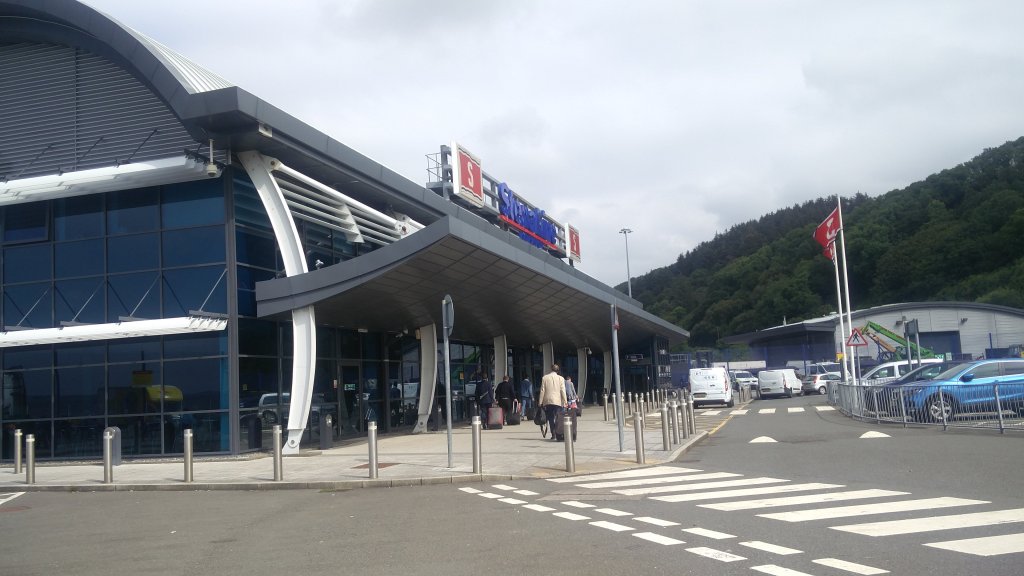
We set off at 5am in the morning with a taxi to Busaras to get on the first bus of the day up to Belfast Europa; then a bus to the ferry port; the ferry across to Cairnryan; bus to Stranraer and then a local service bus to Castle Douglas, where we were collected in a car. It was a long journey totalling around 12 hours, by the time we got to Castle Douglas. My partner was tired and grumpy, as he is not used to long, somewhat discombobulated journeys.
The return was more straightforward, with a single ticket booked with National Express directly from Castle Douglas to Dublin. This involved a coach from Castle Douglas to Cairnryan, ferry across to Belfast port, bus to Belfast Europa and then back down to Busaras.
Is it comfortable?
Comfort wise, it can be as comfortable as you want to make it in some ways. Since being in and out of the island of Ireland since October 2017, I’ve been choosing to travel by ferry where I can, so I’m used to what the journey entails. It’s essential to have patience, especially with ferry arrival and departure times as anything can be happening with the sea or ferries. I don’t mind sharing space with other humans, and I’m pretty adept at being able to sleep where I need to. I pack my own food, vegan options can be few and far between on all the ferries I’ve been on crossing the Irish Sea.
Comparing emissions:
I contacted Stena quite a number of times before I managed to get a response about their emissions in order to write this with any sort of accuracy. They advised that I use a specific CO2 emissions calculator – travelandclimate.org1 – there are many to choose from if you search online. Currently Stena do not have information available for emissions and environmental impact for each route they operate.
Using this, the CO2 emissions in total return for our journey (per passenger) came to 46.25kg, for those interested, I have noted the breakdown of this below2.
In comparison to getting there with a plane this would have been 111.7 kg of CO2 per passenger.
Our route cut our CO2 emissions by more than half!
How accurate a reflection of environmental impacts is this really?
It’s worth pointing out that carbon emissions are not the only source of environmental impacts. Other things to consider that have an impact are; NOx emissions, physical impacts on marine life3, impacts from waste produced on board and produced by facilities offered on board such as restaurants, cinemas and coffee making facilities, the latter often using just disposable tableware.
Additional environmental impacts which are not considered in the calculations include those connected with infrastructure for example from land clearing for airports and their expansions, car parks and facilities, as well as a few of the elements mentioned above, emissions and impact of the manufacture of the vessels, as well as emissions and impact from processes at the end of its life too – neither from sea vessels or planes.
Is there anything else to consider from an ethical point of view?
Stena have been consistent and proud sponsors of the Dublin Horse Show for a few years now. Using horses for entertainment is not in line with vegan principles.
Timing and financial costs:
In this instance, the total travel time would have been similar and the connections as many if we had been travelling on a plane, due to the rural destination, it also worked out around a third cheaper to go travel by ferry. If travelling to major cities, taking a plane could be quicker and cheaper.
The total return cost on the ferry and buses was €90.70 / £101.89, via a plane this would have been €188.08 / £167.034 .
So, what are you saying? Is it really worth it?
In this instance the cost was cheaper and according to the calculator we cut our carbon emissions by around half – 55.85 kg vs. 23.4 / 22.85 kg of CO2.
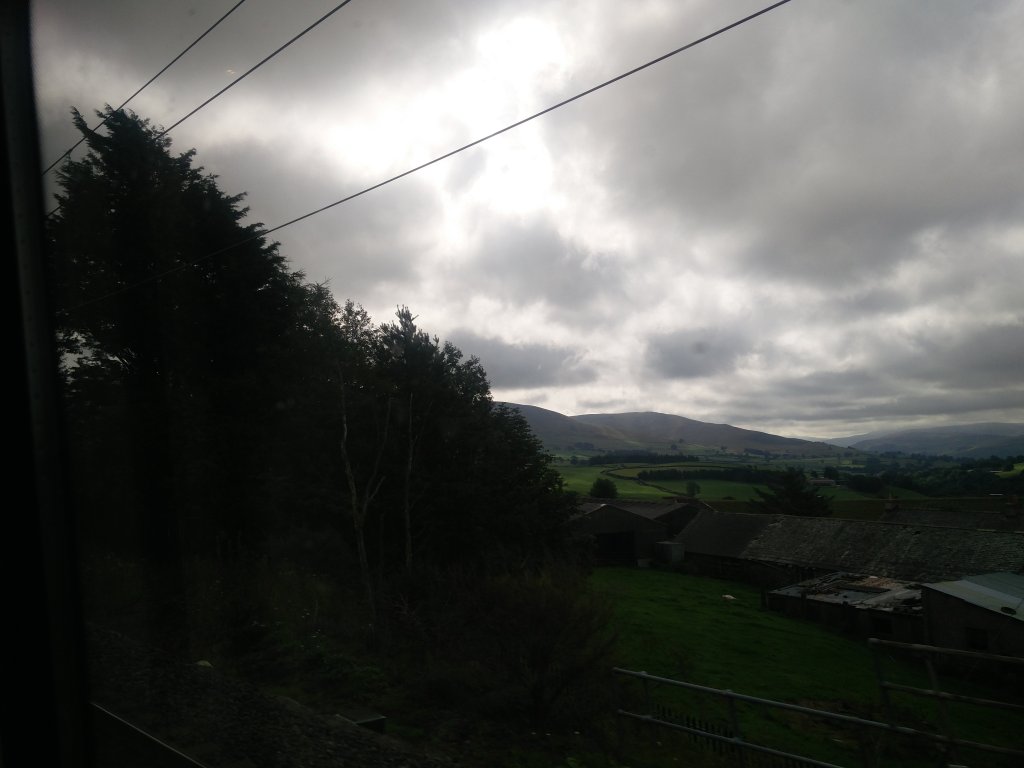
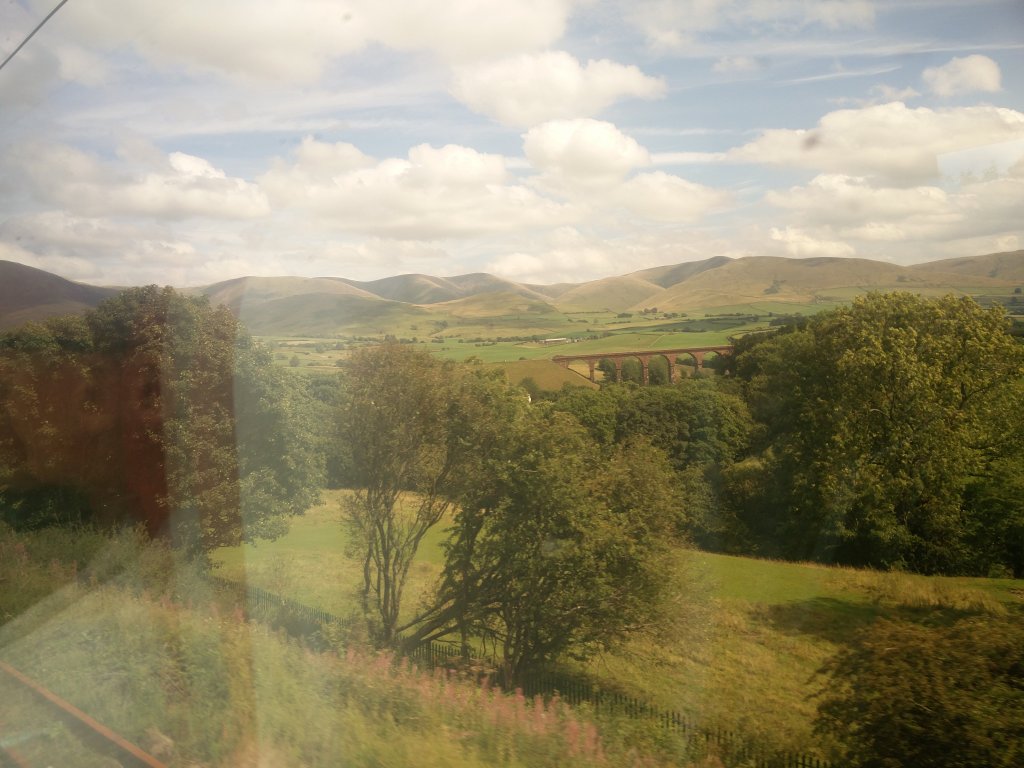
Travelling by ferry and overland is a different experience and enables me to have more of a connection with the reality of the distance you’re travelling. It’s easy to take for granted travelling incredibly great distances very fast and forgetting the world beneath you. It’s a unique experience, and usually treated to some incredible views and scenery that you’d miss on a plane.
In my opinion and experience, there is room for improvement, it’s not perfect, but travelling by ferry is a fun way to greatly reduce your emissions whilst still travelling in this instance from Ireland to the UK and canbe enjoyable. Take something to read or entertain you, and enjoy the views of the sea and landscapes.
Follow The Greedy Herbivore on Instagram and Facebook to keep up with my latest blog posts, reviews and ramblings, or follow through WordPress to receive notifications of new posts direct to your inbox.
References and further information:
1. http://www.travelandclimate.org
2. Breakdown of carbon emissions calculations per leg and financial costs:
Outbound:
Bus Eireann X1 Busaras Dublin to Belfast Europa – 4.5 kg / 167km
Belfast Europa – Belfast Port – coach – 0.15kg / 6.5 km
Belfast Port – Cairnryan – Stena Ferry – 13.6kg / 80.1 km
Cairnryan – Stranraer – minibus – 0.5kg / 17km
Stranraer – Castle Douglas – local service bus – 2.55kg / 96.6km
Castle Douglas – Auchencairn – by car – 2.1 kg / 13.5km
Total carbon emissions: 23.4kg
Inbound:
Castle Douglas – Auchencairn by car – 2.1 kg / 13.5km
Castle Douglas – Cairnryan – Coach – 2.5kg / 93km
Cairnryan – Belfast Port – Stena Ferry – 13.6kg / 80.1 km
Belfast Europa – Belfast Port – coach – 0.15kg / 6.5 km
Bus Eireann X1 Busaras Dublin to Belfast Europa – coach – 4.5 kg / 167km
Total carbon emissions: 22.85 kg
If we had gone on a plane, it would have taken a similar amount of time and still a bus, a plane, a bus, a train, a bus and another bus.
Plane from Dublin to Glasgow – 48.15 kg / 295.5 km
Bus from Glasgow Airport to Waterloo Lane: 0.6kg / 13km
Train Glasgow Central to Lockerbie 5.55kg / 123km
Lockerbie to Dumfries bus – .55kg / 13 miles
Dumfries to Auchencairn bus – 1 kg / 38.5 km
Total carbon emissions: 55.85kg
3. https://clearseas.org/en/underwater-noise/
4. Exchange rate correct as of 06/10/2019
 The Greedy Herbivore