
As it’s now the beginning of the growing season in 2022, seems a good time to review last year and share my experience, though I did have the intention of doing it in real time, things turned out to be a bit chaotic!
We moved to a house in late 2020, which means we are now incredibly privileged to have a garden. So I left behind my little balcony and patch in the community garden and started putting plans together for the little paved back garden. It has two beds at each side of the garden, which I decided to keep for ornamental and bee-friendly flowers, and Oliver bought me a greenhouse for Christmas, enabling some space for vegetables that need a warmer space. I bought some simple frames for raised beds, from a large garden centre chain, I bought 4 and doubled them up, so that I have the option to grow root vegetables needing some extra depth. In early 2021 I was unexpectedly discovered through an MRI scan to gave a slight disc issue, meaning I had to be careful lifting and bending, so having the raised beds higher were a huge advantage in that sphere to. Due to a combination of this, building appropriate beds, getting organised and some dramatic weather I got started a bit late and sowed my first seeds of the season in April.
Compost and Soil
I aim to garden under the philosophy of veganic growing – that is, growing which involves no animal additives, animal exploitation and growing in a way which proactively provides wildlife with food, pollinator friendly plants, habitats and in a holisitically ecologically sound approach. The space I have is slightly limited in some of these elements, but one item I can consider is what compost and soil I buy. This year I went for the Klasmann Peat Free Compost – it is organic, peat free and, equally important, animal derivative free. Alot of compost relies unnecessarily from animal additives such as worm castings, chicken manure and other animal additives, usually taken from animals in captivity, and on factory farms, especially big brand composts that are mass manufactured. Whilst on an internship on an organic farm a few years ago I had learned that Klasmann were planning to come out with a non-animal, non-peat compost. The compromise is that this is shipped from Germany, which isn’t ideal in terms of carbon emissions when taking into account how it got to Ireland. I balanced this out with a mix also of soil enricher and compost from Mulch – Mulch are a Dublin based company taking garden waste and processing this into soil enricher, compost and bark. This comes with a lot less mileage, but the properties of the compost, are inevitably variable, considering where it comes from, so it isn’t appropriate for potting compost for delicate and fussy seedlings, for example.
Now I have the compost ready to go in the raised beds, I will use the method of green manures to re-enrich the soil as well as crop rotating and planning, albeit on a miniature scale – for example nitrogen fixing legumes in one bed one year; heavy feeders in the other bed and swap year on year. Ideally there would be a 4 year rotation, I’m only working on 2 due to the small space I have. It’s a bit of an experiment.
APRIL
With beds built, seeds in order, compost arrived, growing plan drawn up and my back on the mend I was happy to get things going a couple of sunny afternoons in April.
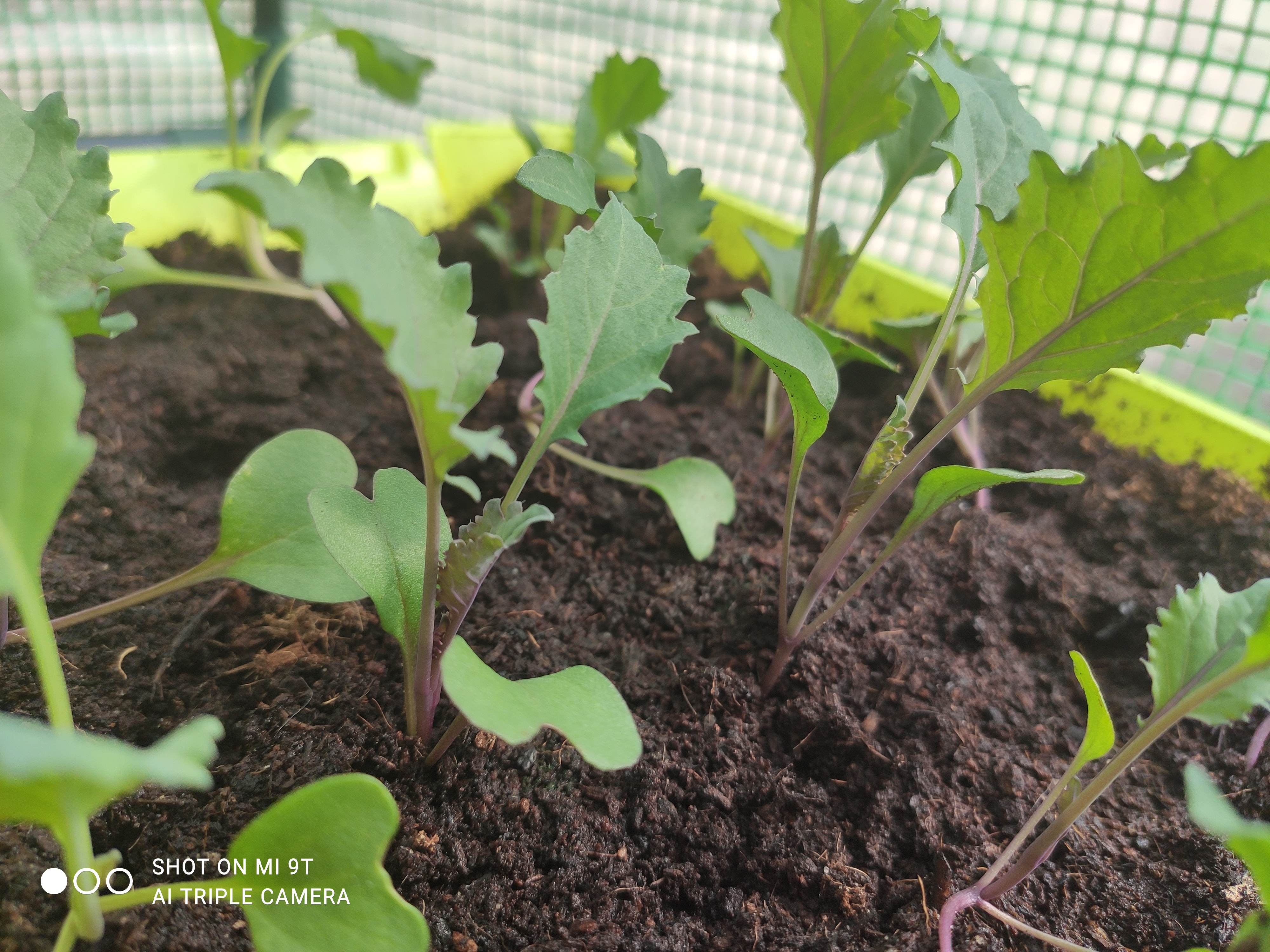

I began early in April sowing kale and calendula, they sprung up fast. The dinosaur kale surprising me. They had been harvested from a plant from a friend in August 2019, I had sowed them in seed trays in 2020, with no germination, but here they all sprung up.
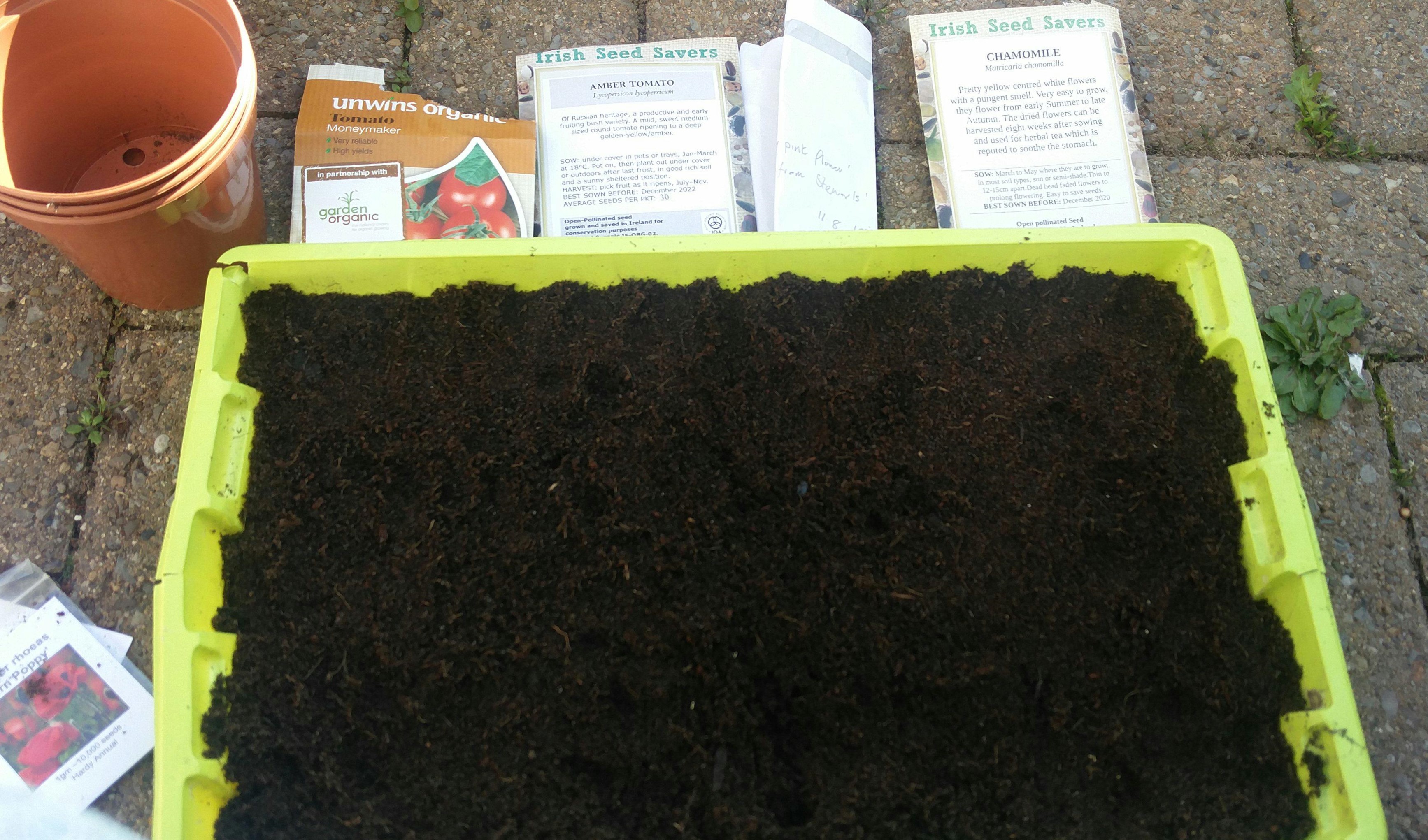
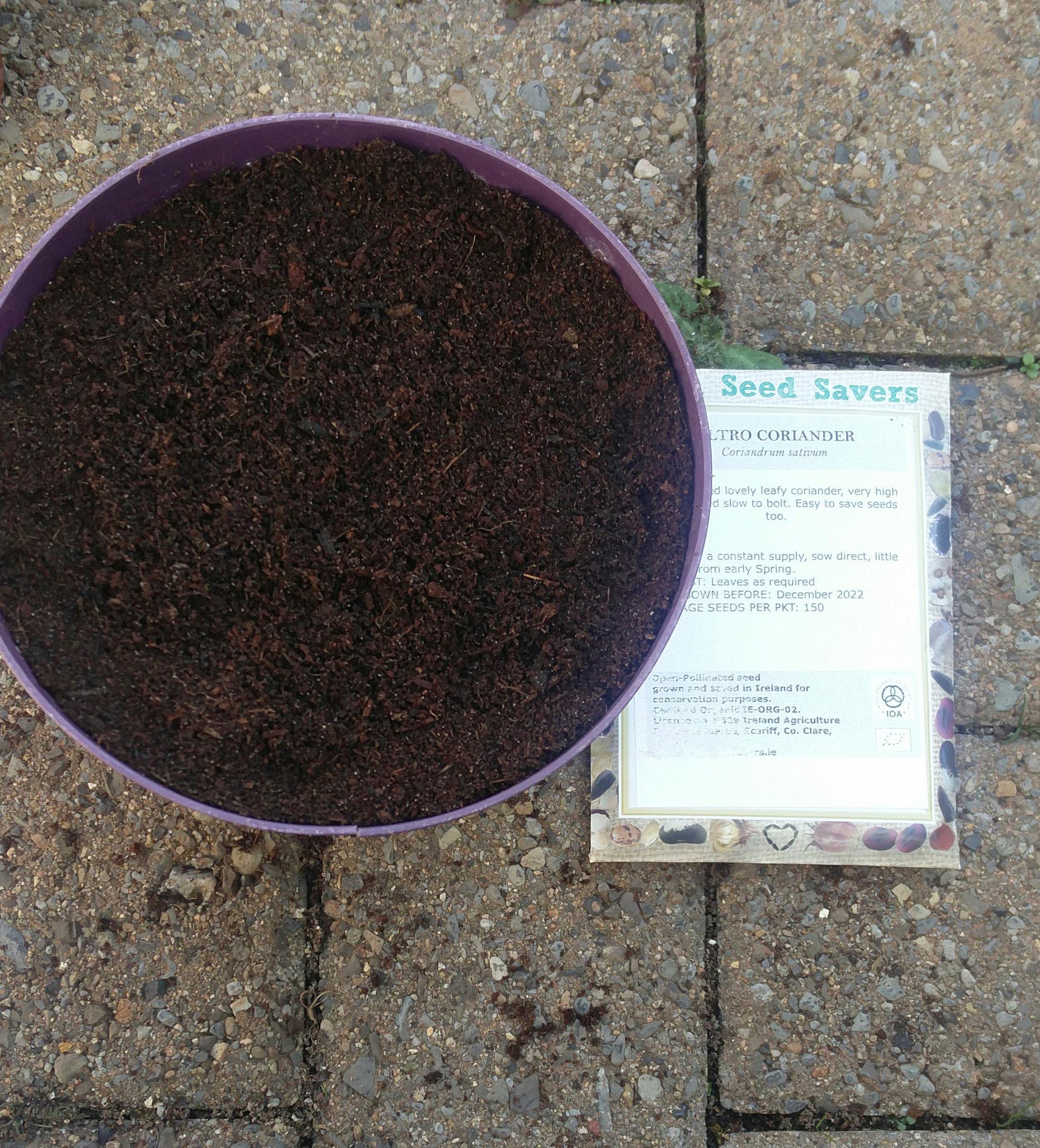
Later in the month I sowed Moneymaker tomatoes, Amber tomatoes, chamomile, ‘pink flower’ (seeds in a furry pod I got from a friend who couldn’t remember what they were) in one seed tray, cuatros morros peppers; and coriander, sunflowers, poppies, calendula, leucanthemum in pots.
MAY
In the vegetable beds
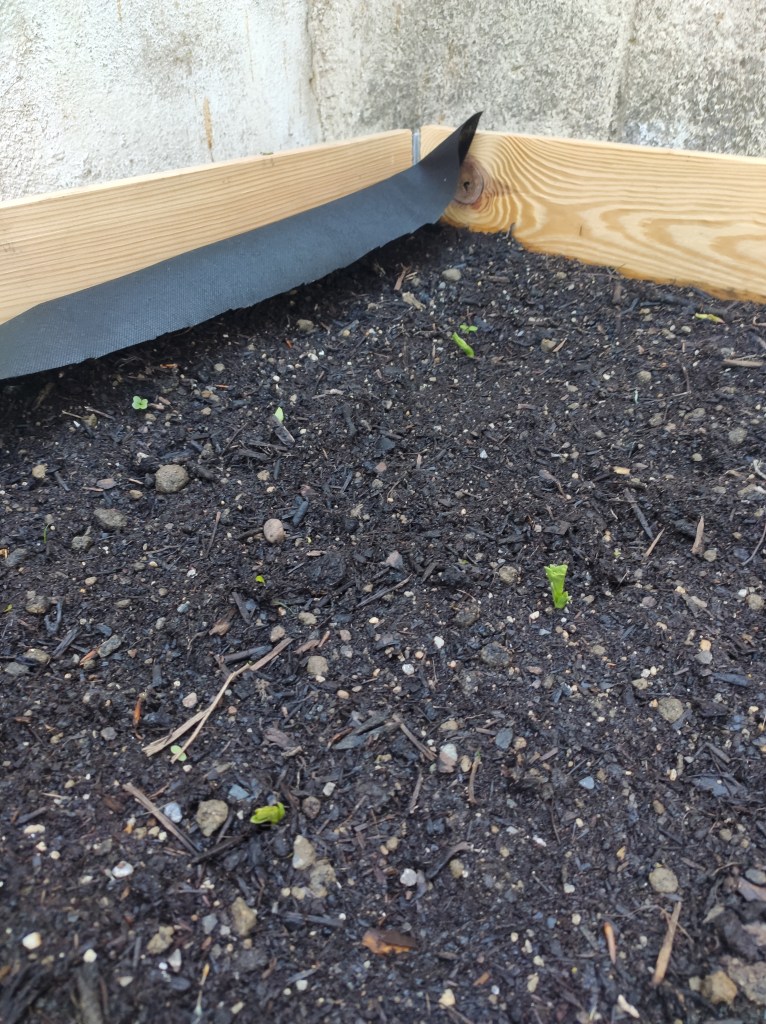
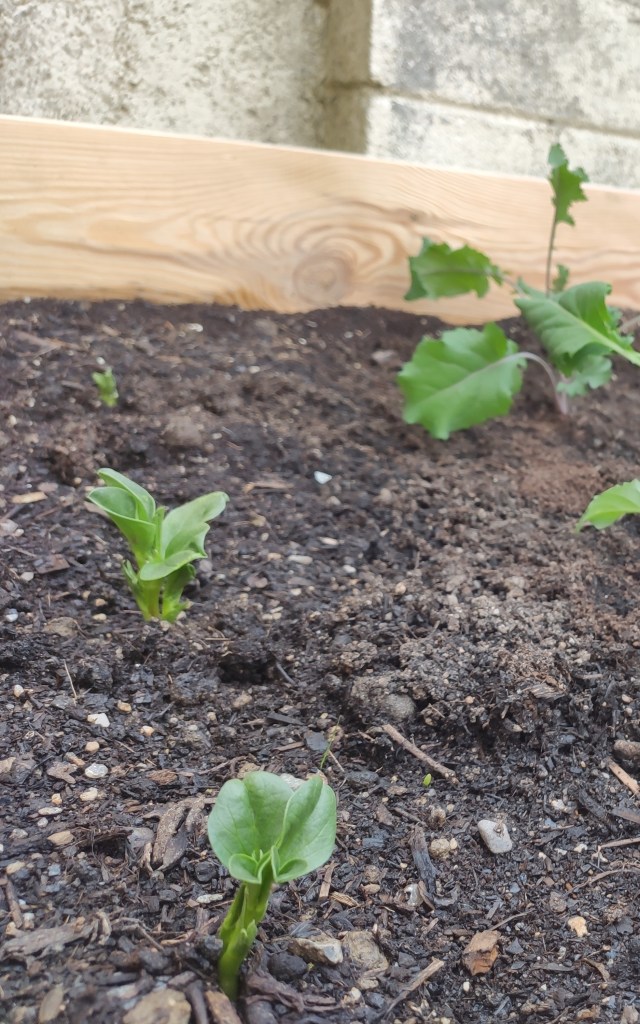
Broad beans from Irish Seed Savers were sown direct to the vegetable bed, alongside 6 transplanted kale seedlings. The broad beans are pretty fast and sturdy growers, above you can see the strong growth in just 10 days (from being sown), already with their characteristic foliage on the 13th.

The kale got a bit leggy, it really surprised me how fast it grew, to try and counteract that, I planted the seedlings to just below the first true leaves.
In the greenhouse
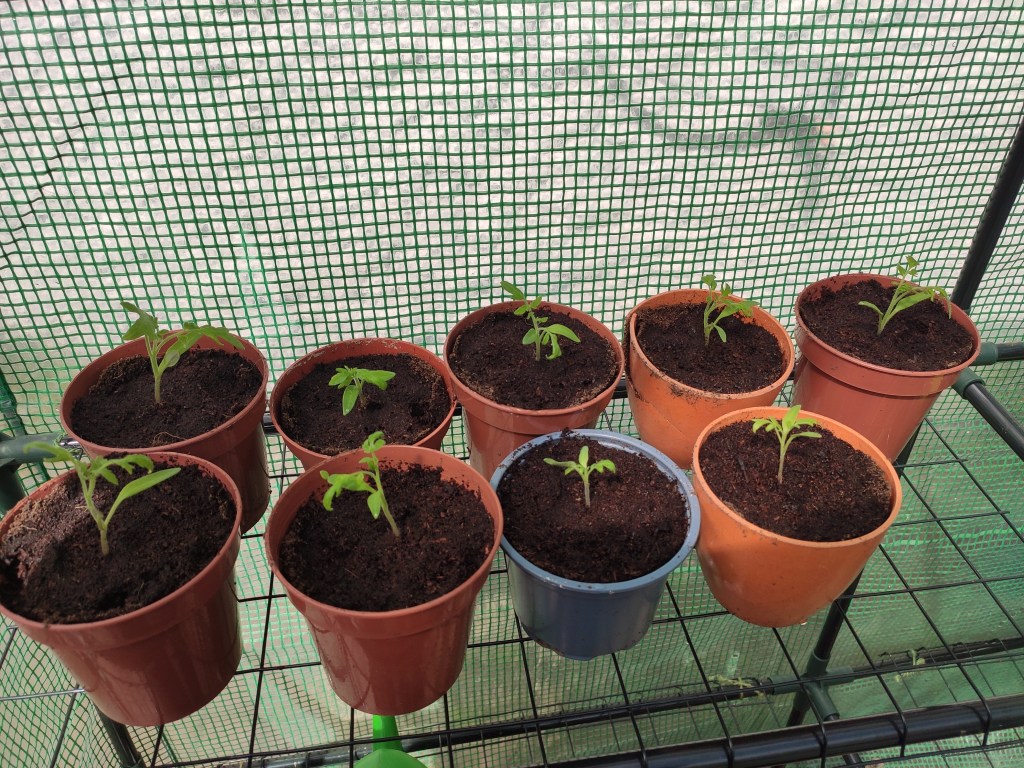
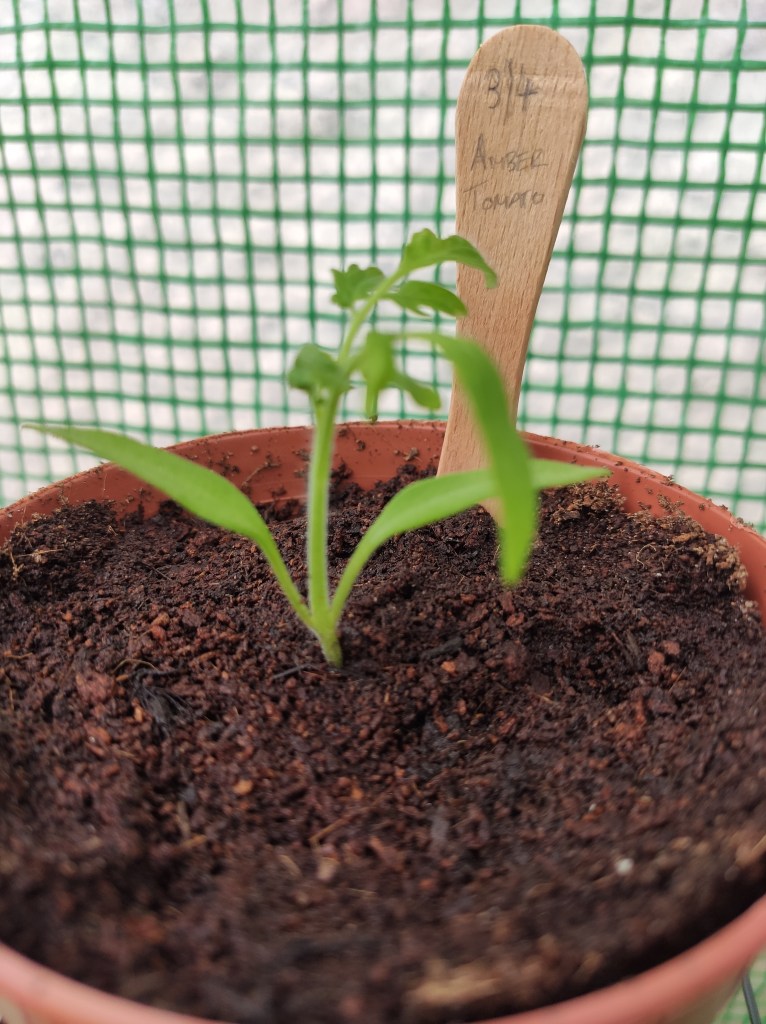
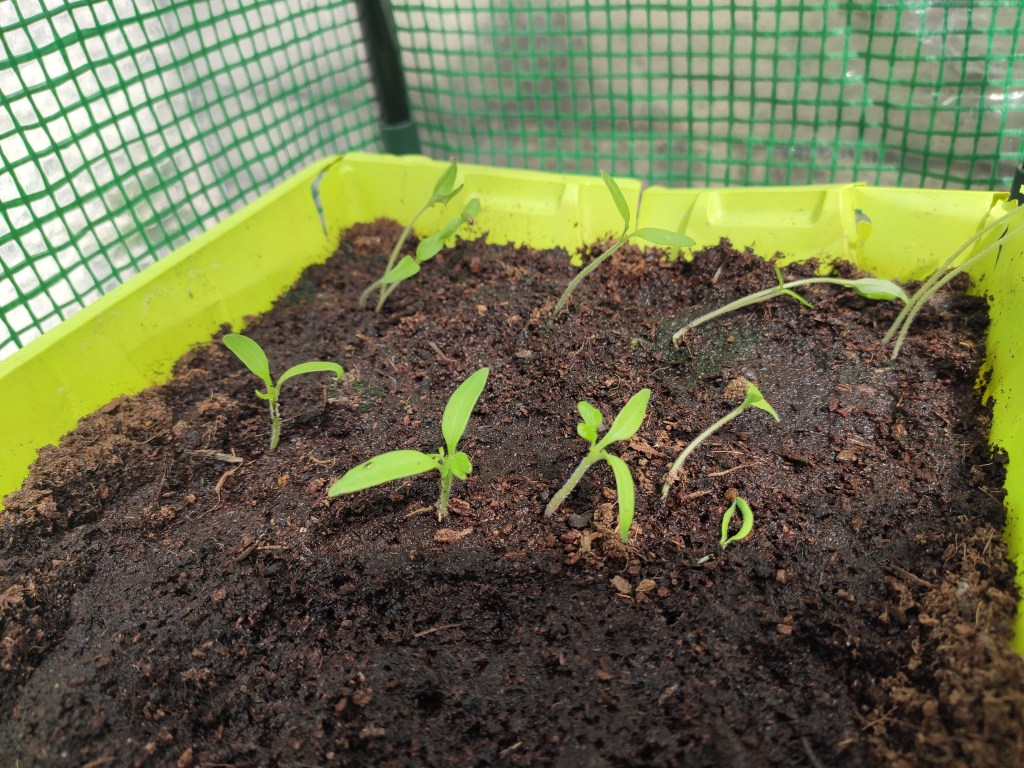
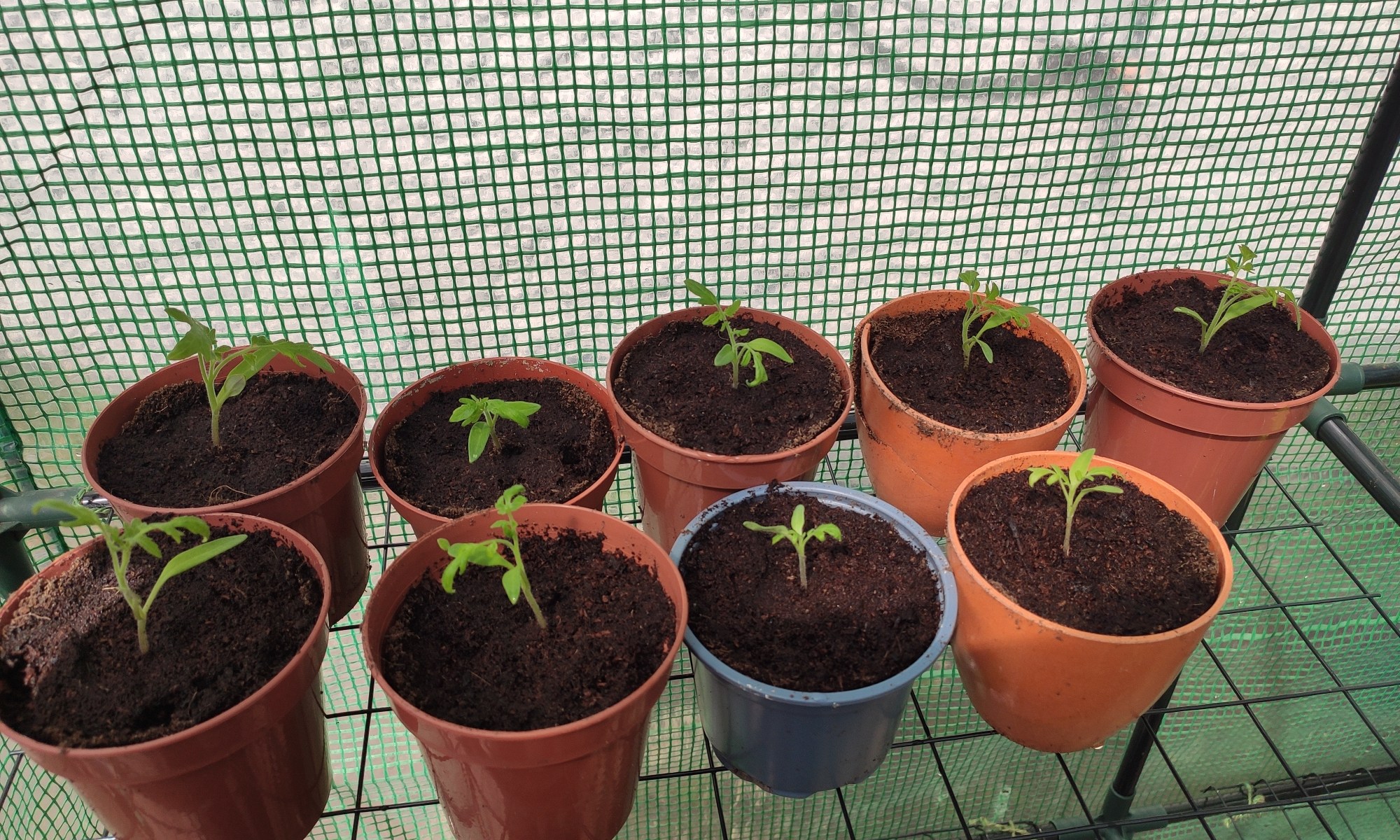
The tomato seedlings did very well, almost all of the seeds germinated. I had sowed more than twice what I had space for as I wasn’t sure of the germination rate. I ended up giving alot away via a Freecycle Facebook group. Which is a nice feeling, but a bit of a waste of energy on my part. This year (2022) I have decided to give extra seeds away instead, still the same element of generosity but much more efficient!
Flowers
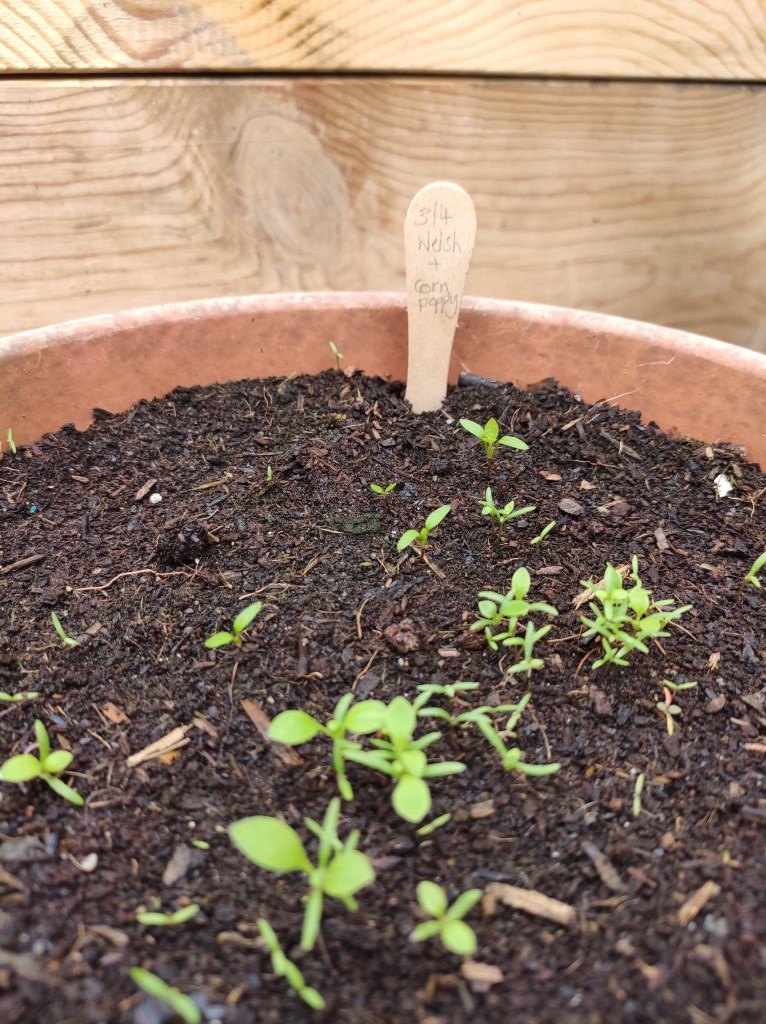

I love poppies and they are particulrly good for bees, I had been struck by a Welsh (yellow) poppy that I’d seen at my parents’ garden so I sowed both together in a pot. They germinated quite slowly, getting to this size, after a month and a half. Foxgloves were my favourite wildflower as a child, I can’t remember when I saw them, but it must have been on numerous woodland walks, again, these are good for bees, and can get quite large, so best to keep them in a large pot if you don’t want them to spread. I sowed this from seed in January so it took 5 months to grow this big – about 2 feet.
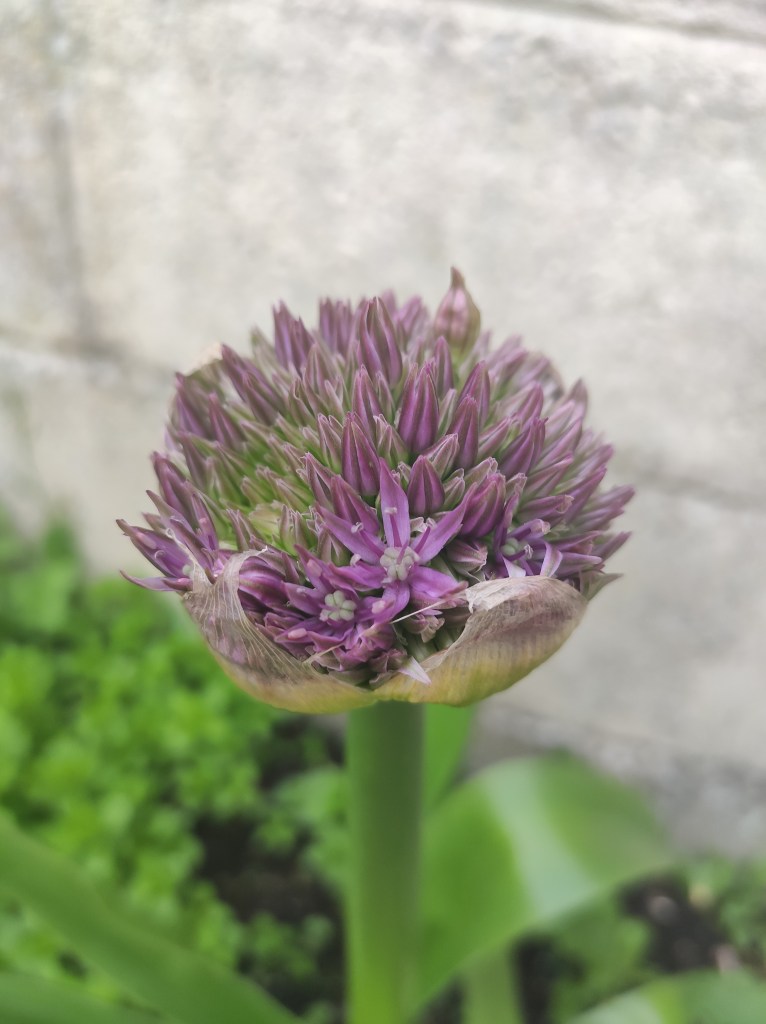
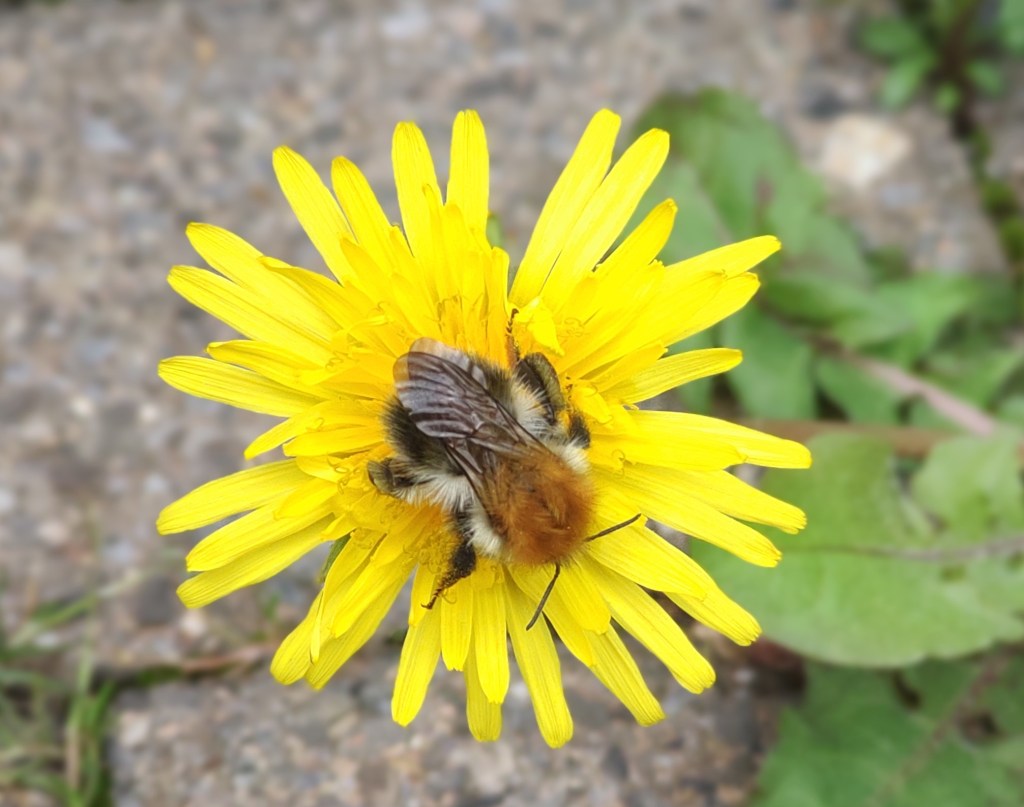
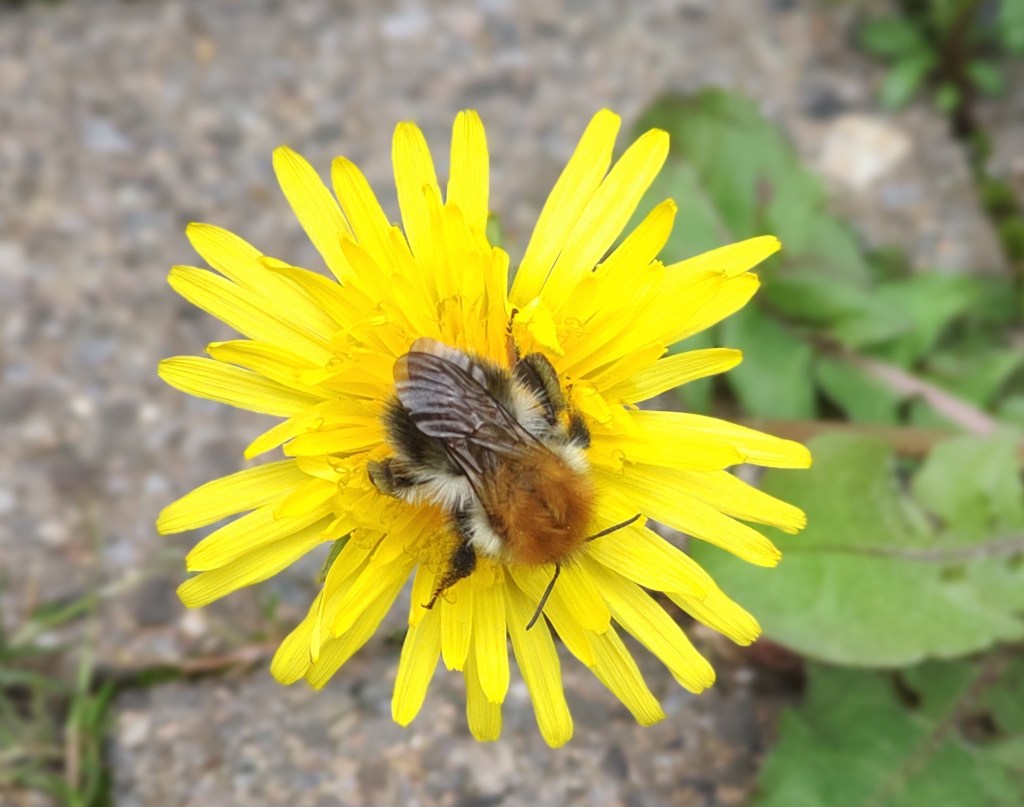
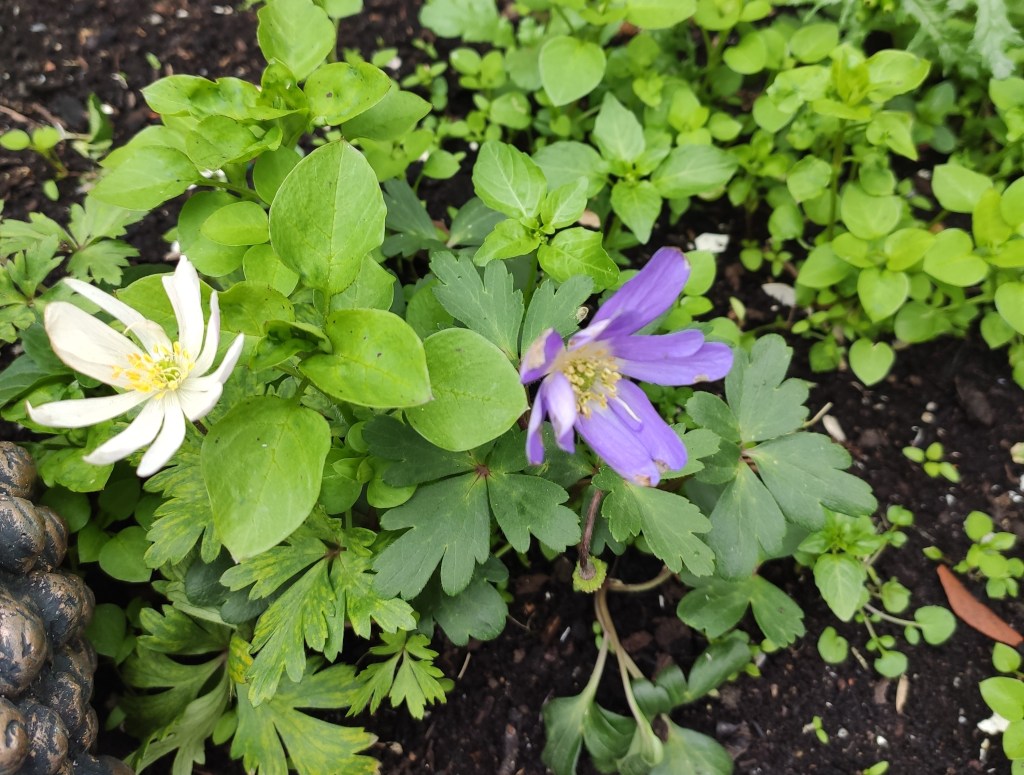
Oliver’s lovely cousin bought us a bee friendly bulb selection for Christmas 2020, which I planted in early January not knowing what anything was, a fun mystery! One turned out to be what I think is an Allium called ‘Purple King’, which grew giant long leaves and a globe appeared on a thick stem. Mid way through the month, the outer petals started coming away, starting to reveal its incredible interior. There were also native bluebells that flowered and beautiful anemones appeared in the flower bed too. In between the paving, there are alot of weeds coming through, I had deliberately left some, although it looks ‘messy’, I was delighted to see a bee enjoying one of the dandelions.
 The Greedy Herbivore