

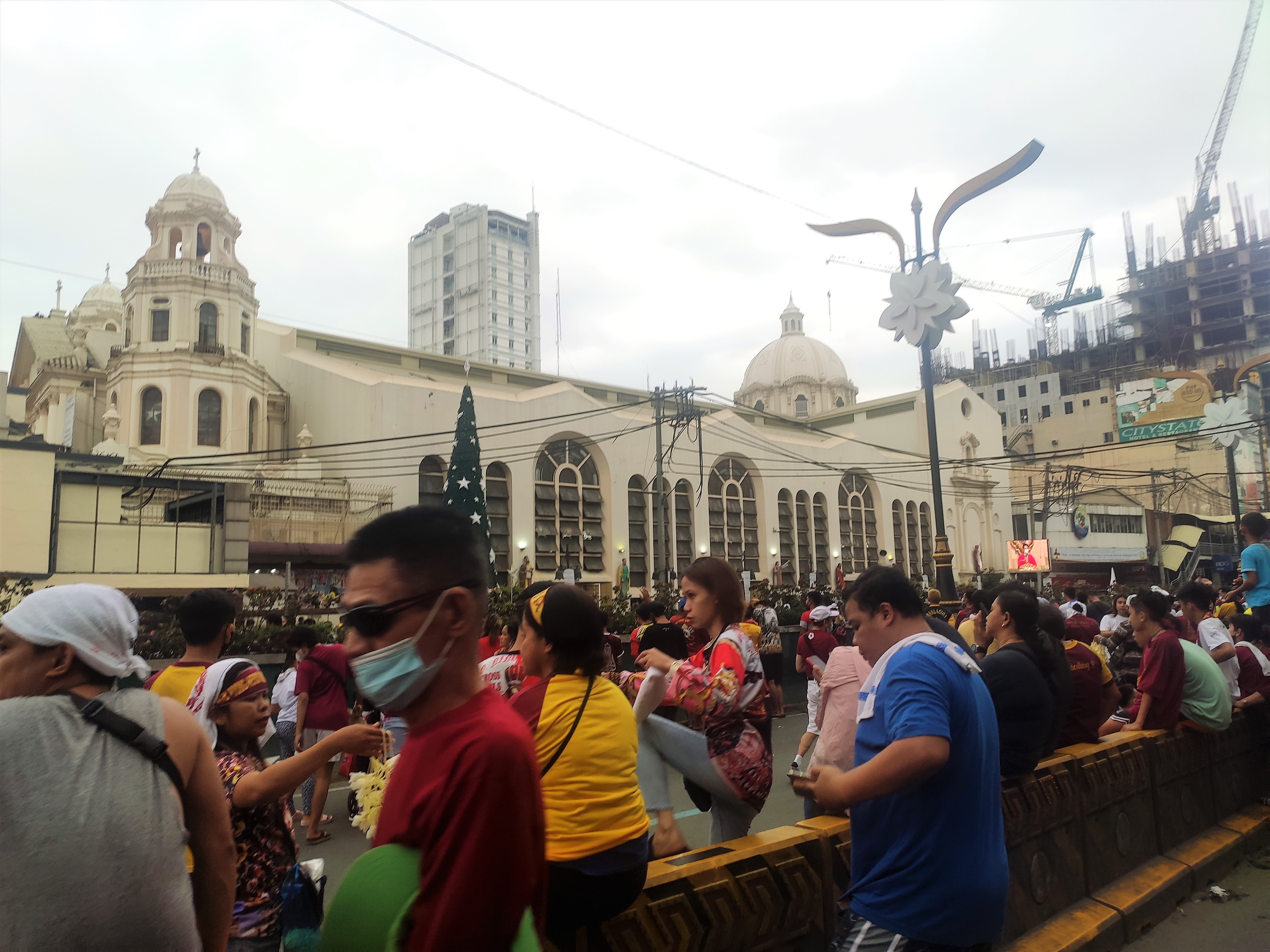
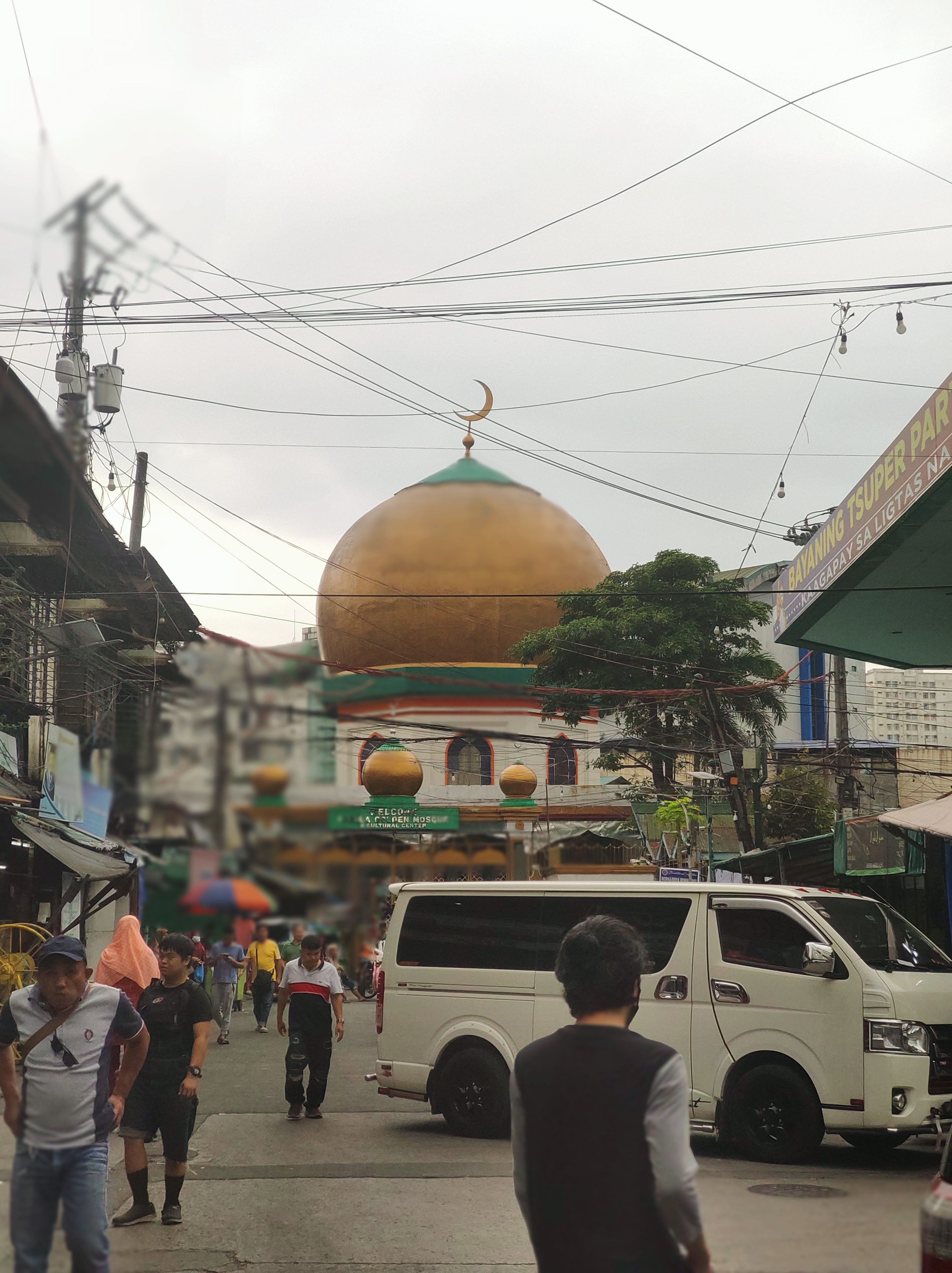
Quiapo, Divisoria and Tondo are areas north of Intramuros bordering on to each other, with a diverse and rich history. Here you’ll find markets & malls, a Chinatown area, food, shops, churches, a mosque and diverse communities that have lived side by side for centuries.
How to get there
The area is easy to get to on the tram via LRT Line 1 or 2. From Mandaluyong we travelled on the MRT Line 3 from Shaw Boulevard and changed at Araneta Center – Cubao station, navigating through Gateway Mall to get from one line to the other and getting off at Recto Station, a 10-minute walk from Minor Basilica of the Black Nazarene.
Minor Basilica of the Black Nazarene / Quiapo Church
Plaza Miranda, Quiapo, Manila, 1001 Metro Manila, Philippines
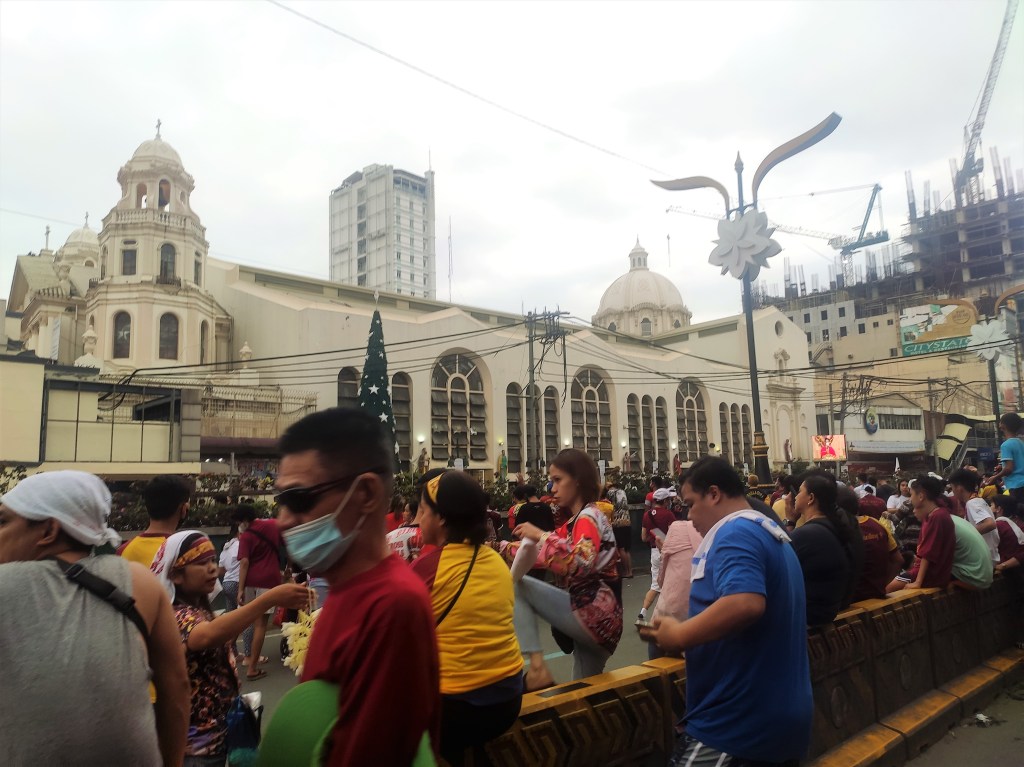
This Basilica houses the famous so called ‘Black Nazarene’, a life size statue of Jesus carrying a cross and genuflecting. The statue is said to have arrived in the Philippines in 1606 and carved by a Mexican artist in the 16th Century. The icon is termed the ‘Black Nazarene’, due to the darkness of the complexion, which reflects its Mexican origins.
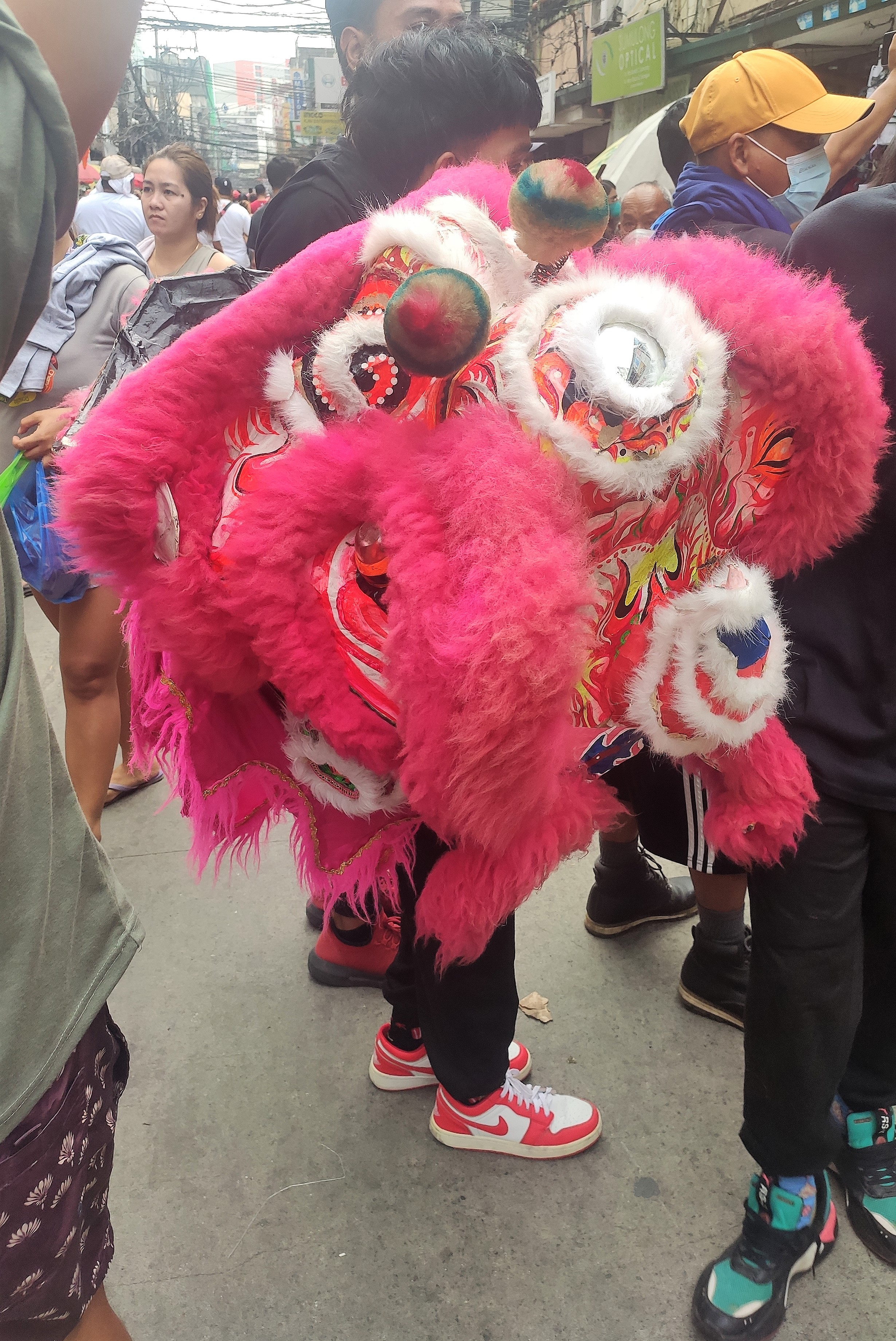
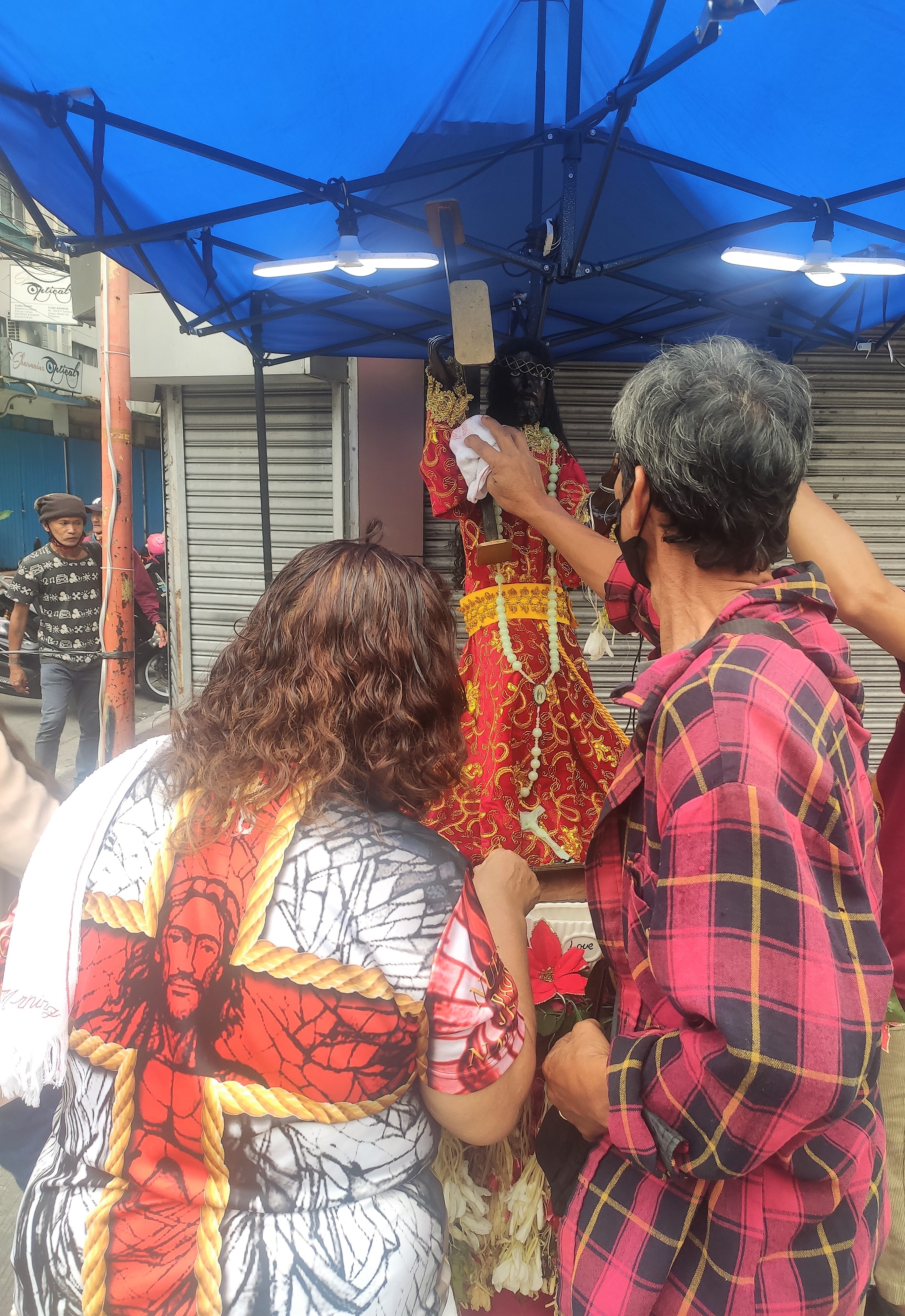
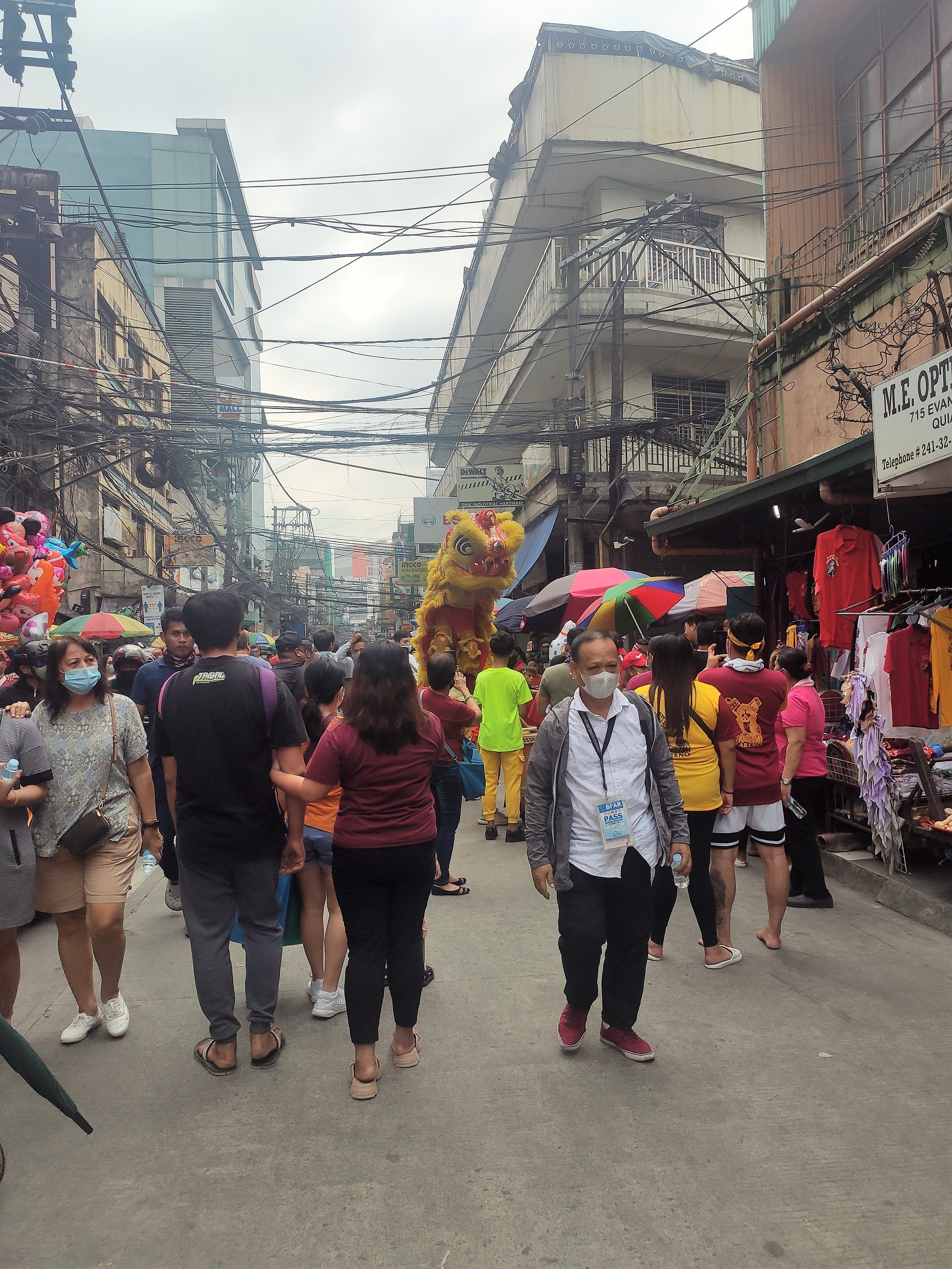
Chinese lion costumes, devotees ceremoniously wiping a Black Nazarene replica and packed streets
As soon as we got off at the station at Recto, there was a fiesta atmosphere. The streets were packed with people, drum beats in the distance, young people carrying parts of Chinese lion costumes and groups of people wearing matching t-shirts, often with a maroon and yellow colour theme. As we walked in the direction of the church, we met with vendors selling flowers and noticed several large replicas of the Black Nazarene statue being carried around, pausing for a few moments whilst people wiped Jesus’ face with cloths, before the statues were picked up again and carried on along its way. We started to get the feeling something was going on. We discovered we had come here on the official feast day of the Black Nazarene, which is celebrated on the 9th of January each year!
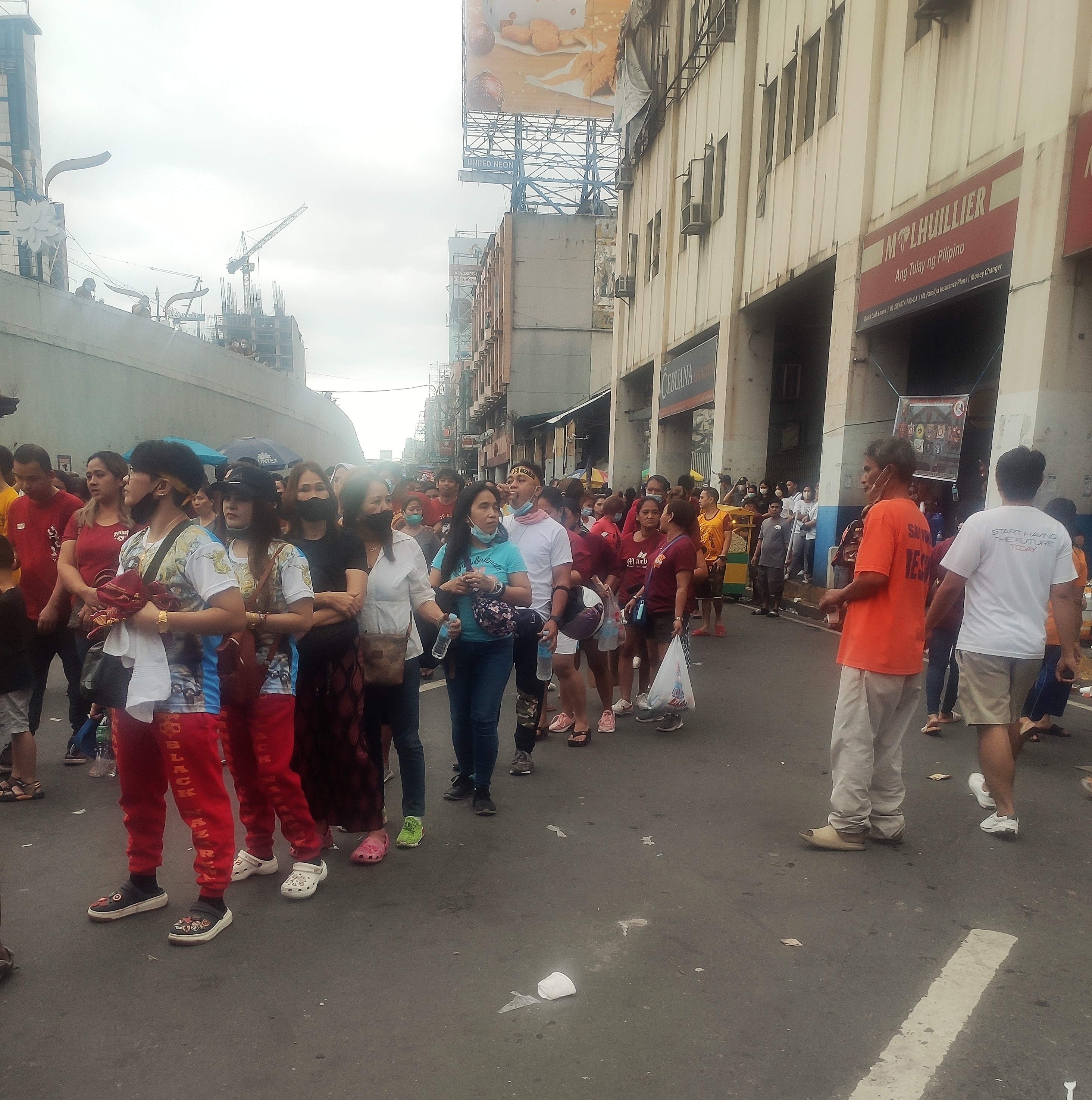
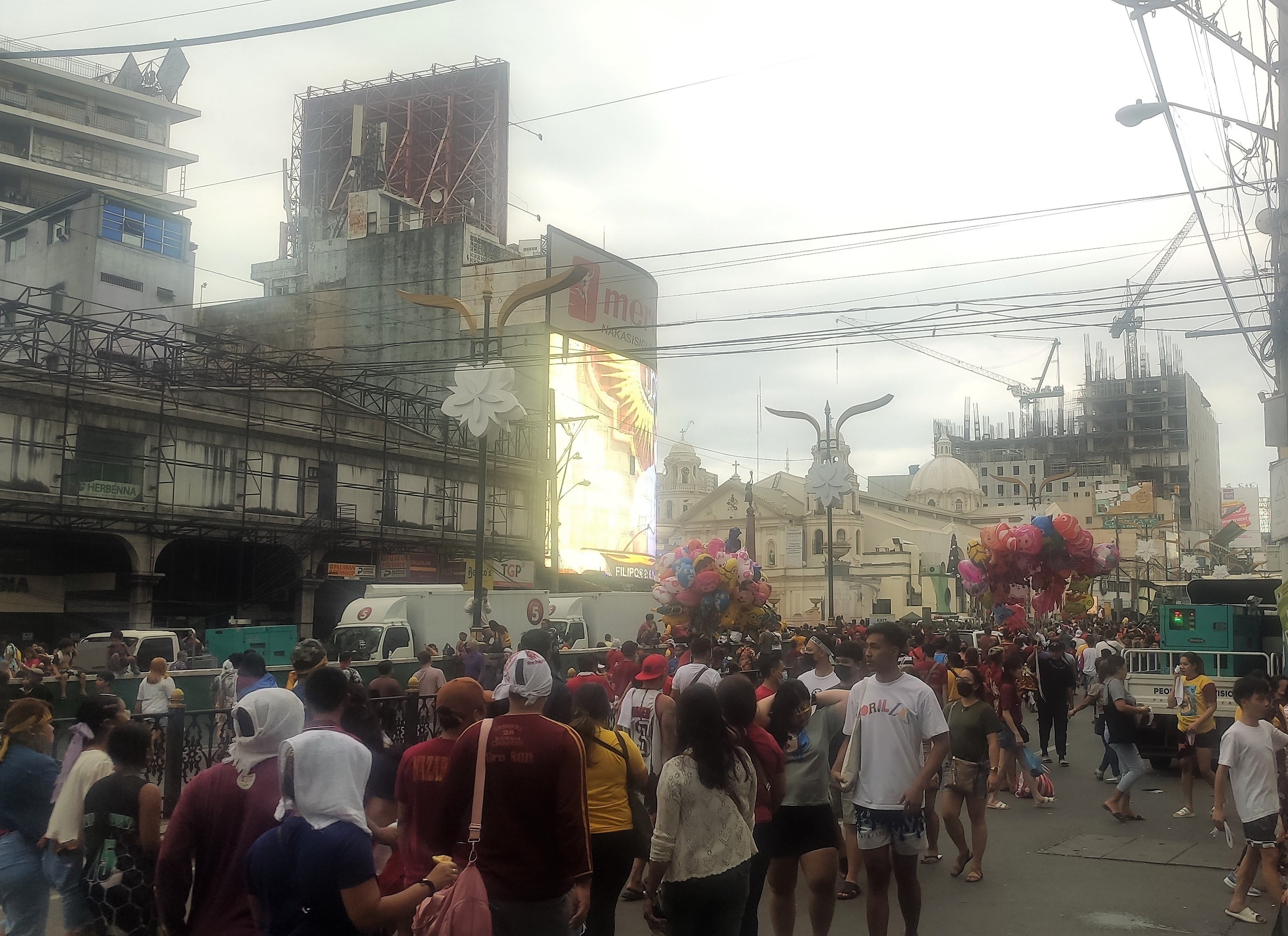
A small section of the thousands long queue to get to Quiapo Church a few blocks away, and the crowd watching the mass from the square outside the church
This day commemorates the transfer of the Black Nazarene from the Recollectos congregation in the Intramuros area to the parish of St John the Baptist in Quiapo in 1767 – an interesting timeline of the history can be found here. Traditionally, the day begins in the small hours with a procession of the Traslacion (the statue) being carried from Quirino Grandstand to Quiapo Church, reflecting the route the icon took for its transferral from one parish to another in 1767. This has been cancelled since 2020 due to the pandemic, but 2023 saw the first ‘Walk of Faith’, 88,000 devotees followed the route without the icon itself. This number of people are a fraction of the number of devotees who would have come pre-pandemic to take part.
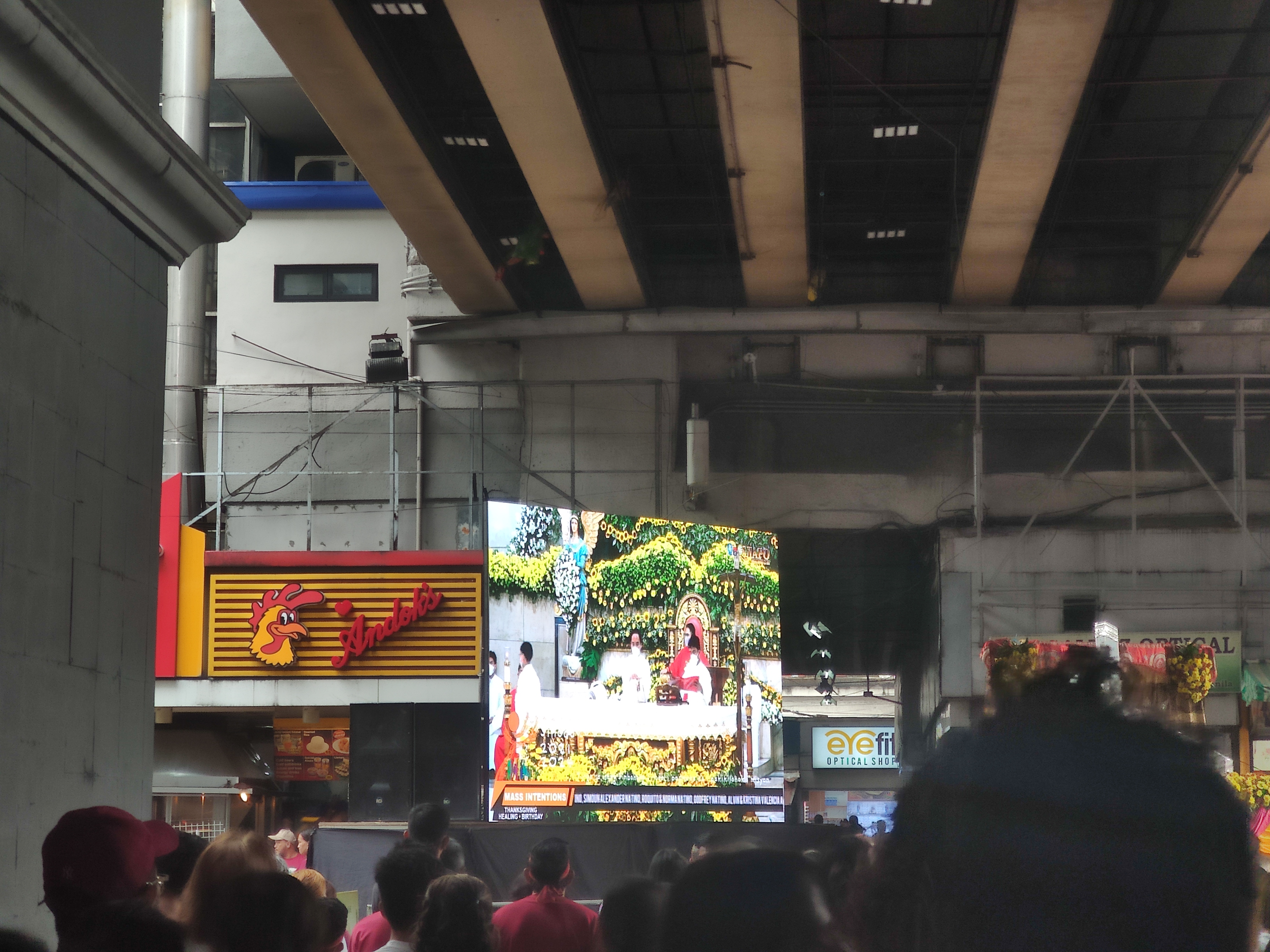
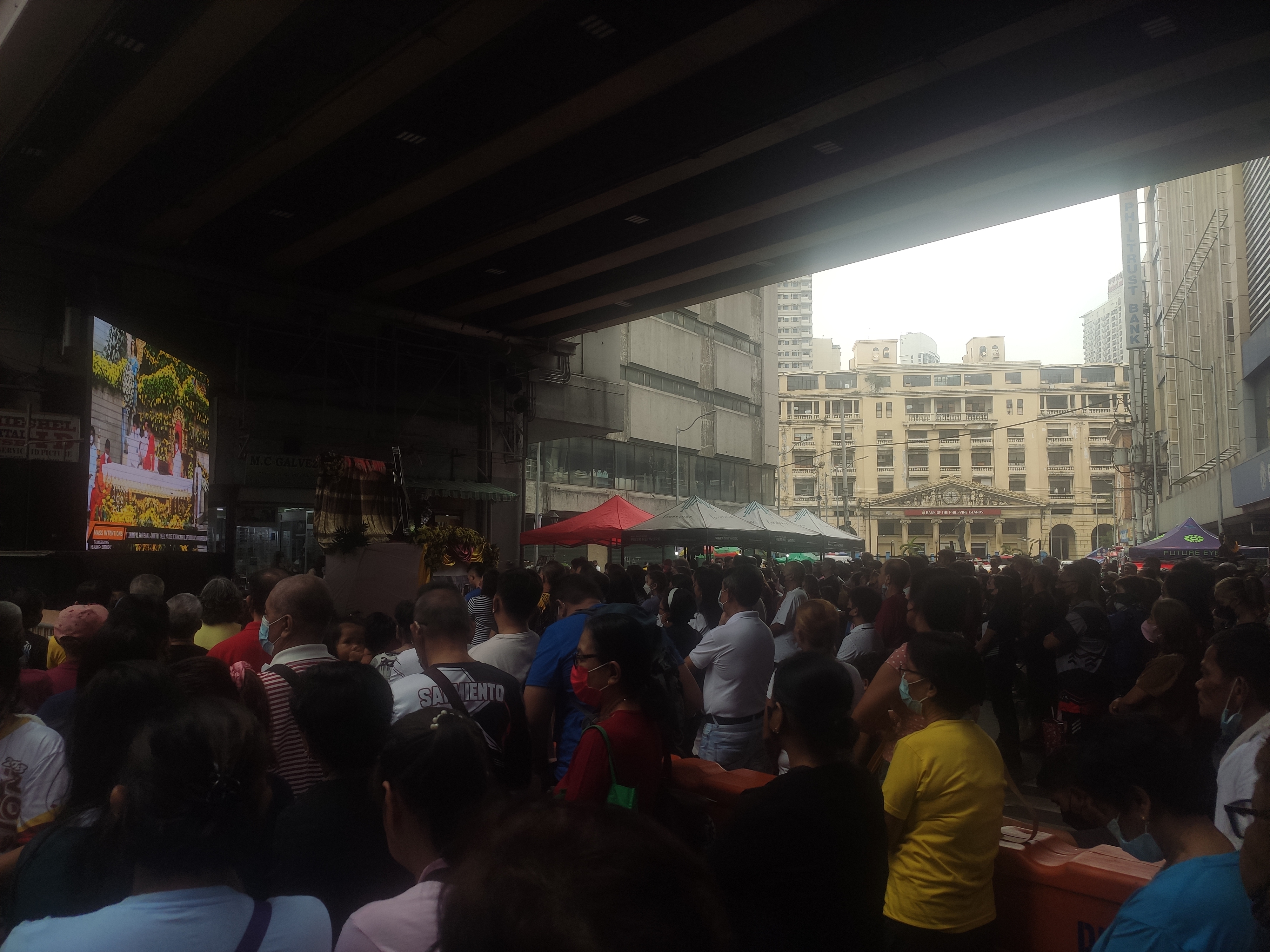
In Quiapo a good few blocks down near the Philippines, church goers watch one of the hourly masses
Masses are held hourly throughout the day in Quiapo Church, beginning at midnight and ending the following midnight, they are televised on large screens around the Quiapo streets. After the Traslacion or for this year, the ‘Walk of Faith’ as devotees queue to enter the church, some waiting the entire day to pay their devotion and respect to the Black Nazarene, ceremoniously wiping Jesus’ face with a cloth. Many pilgrims come from miles around, some barefooted. The queues snaked around the streets surrounding the church, 1000s of people strong, controlled by barriers and police. A one way pedestrian system was put into place on this day to control the crowds. According to reports there were around 246,250 devotees at Quiapo Church for the feast day.
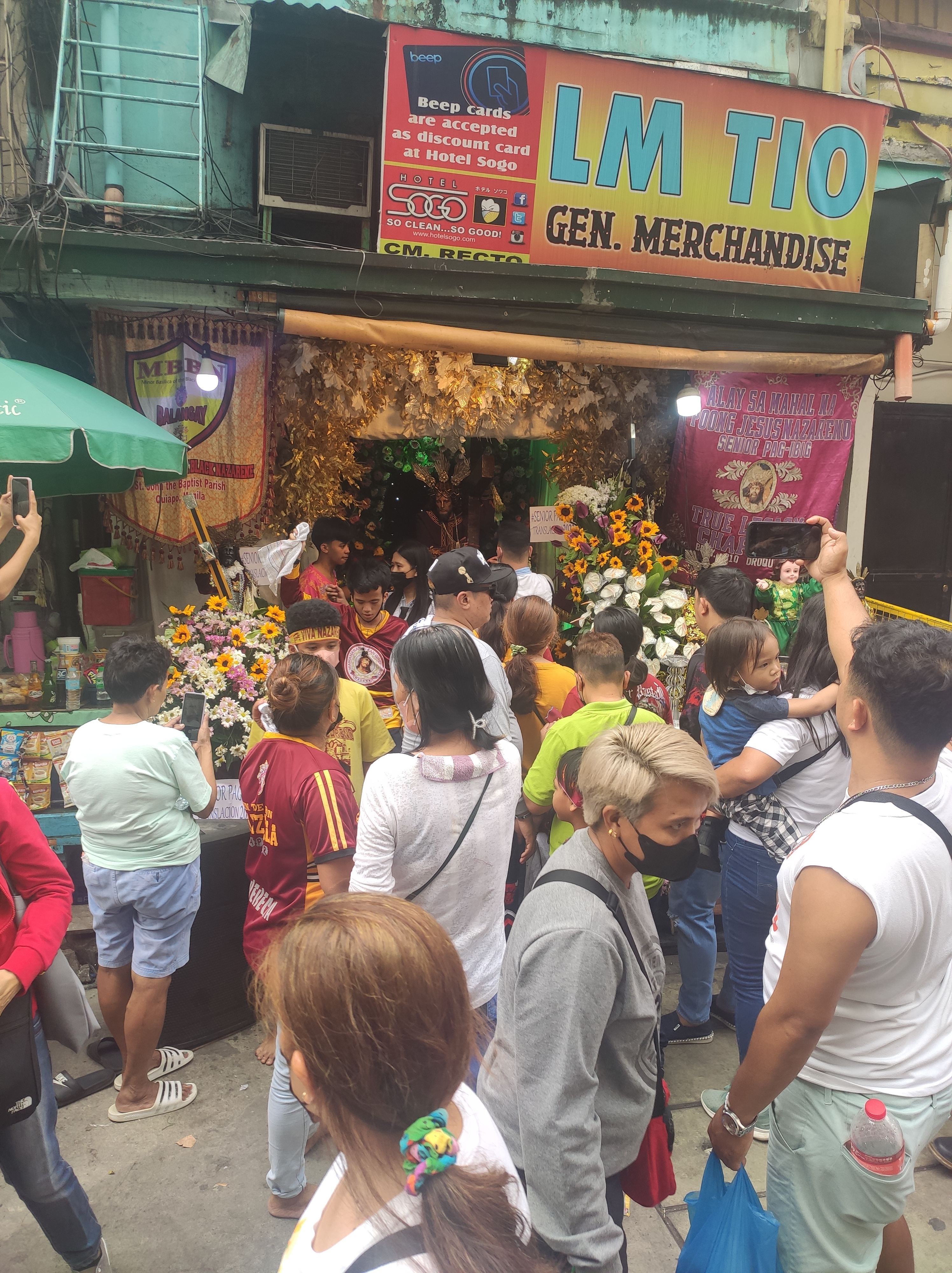
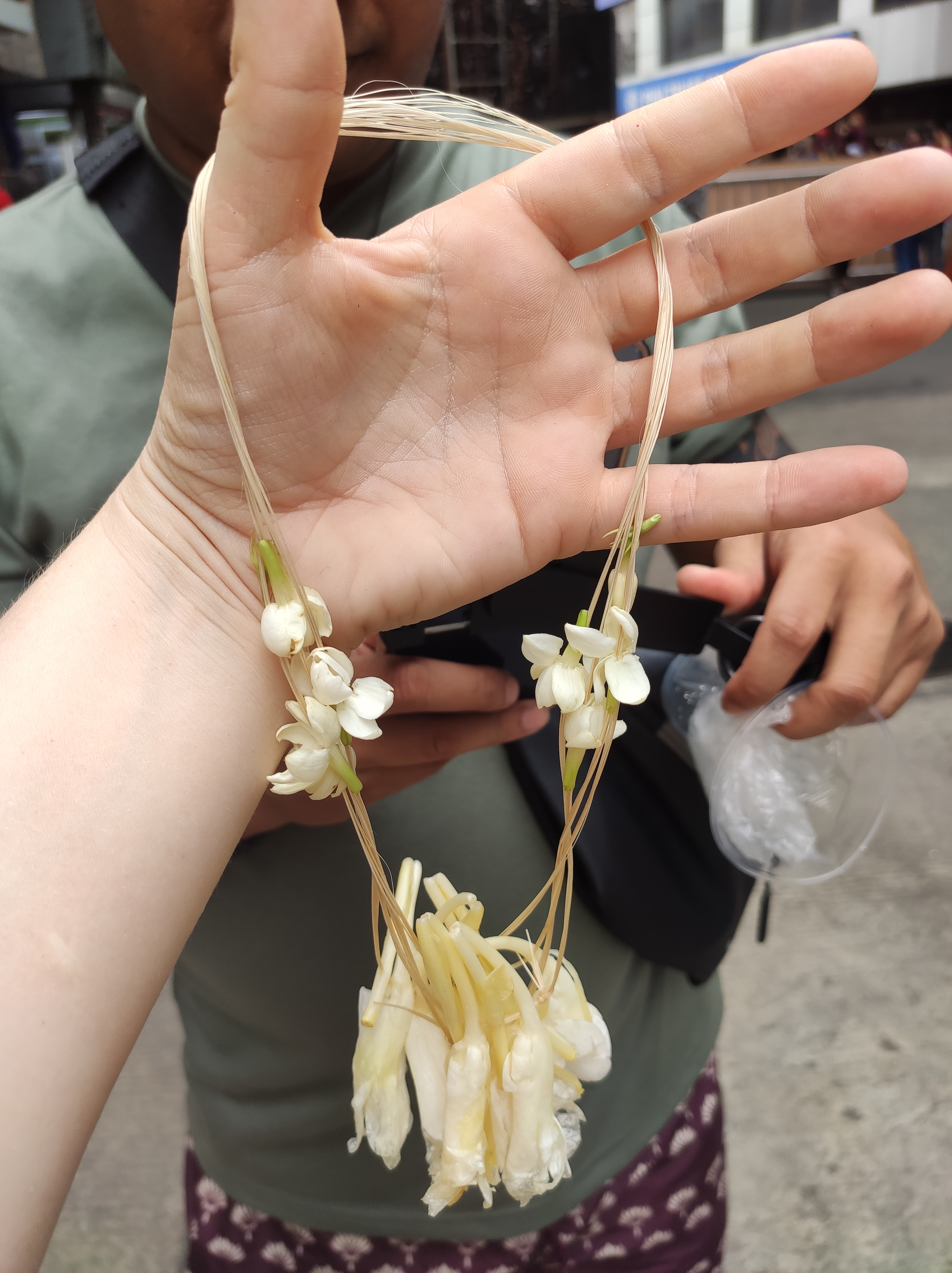

Flowers, snacks and a sampaguita necklace, sold on the busy streets of Quiapo to the crowds
In the surrounding streets, there were people selling food, hot peanuts, people giving away water and sandwiches, vendors selling miniature Black Nazarene replicas, rosaries and beautiful, traditional, sampaguita necklaces. It was a friendly but very busy atmosphere.
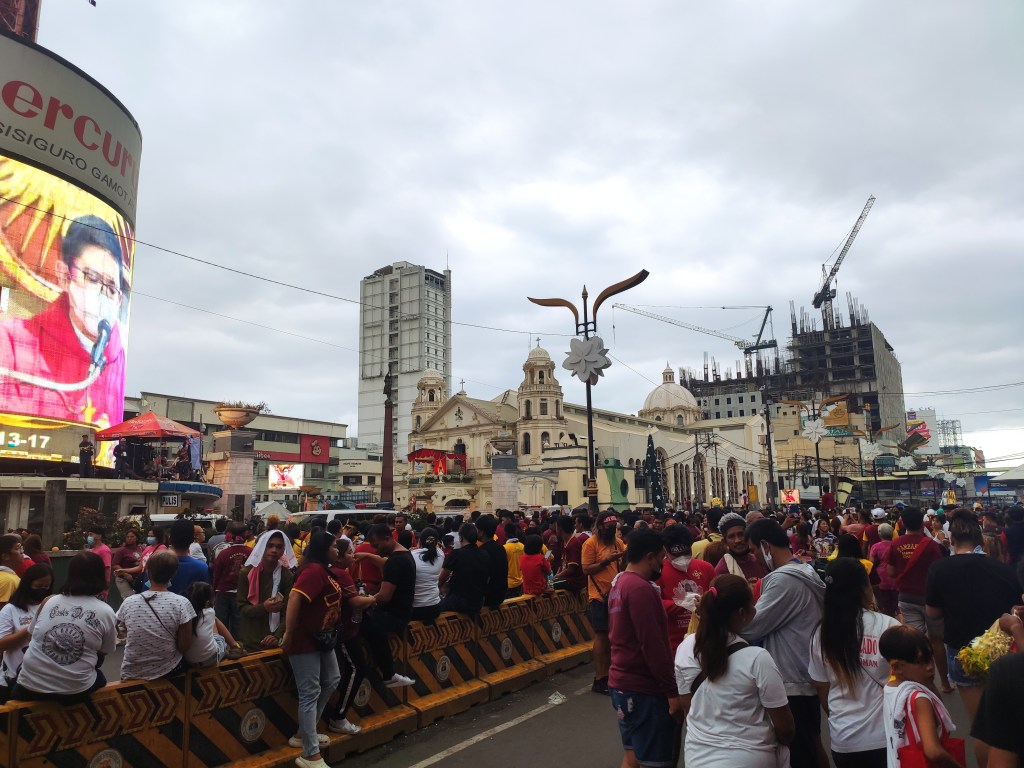
After escaping the fray for a while to visit Seng Guan Temple, we returned to see if we could get any closer to the church. We managed to see the church but there was no way we were getting in this day! If you want to see the church and visit inside, avoid the 9th January, however if you want an experience witnessing an incredible special event and the devoted people taking part, giving an insight into part of the unique celebratory culture of the Philippines, come along on the 9th January!
Seng Guan Temple
Narra St, Tondo, Manila, Metro Manila, Philippines
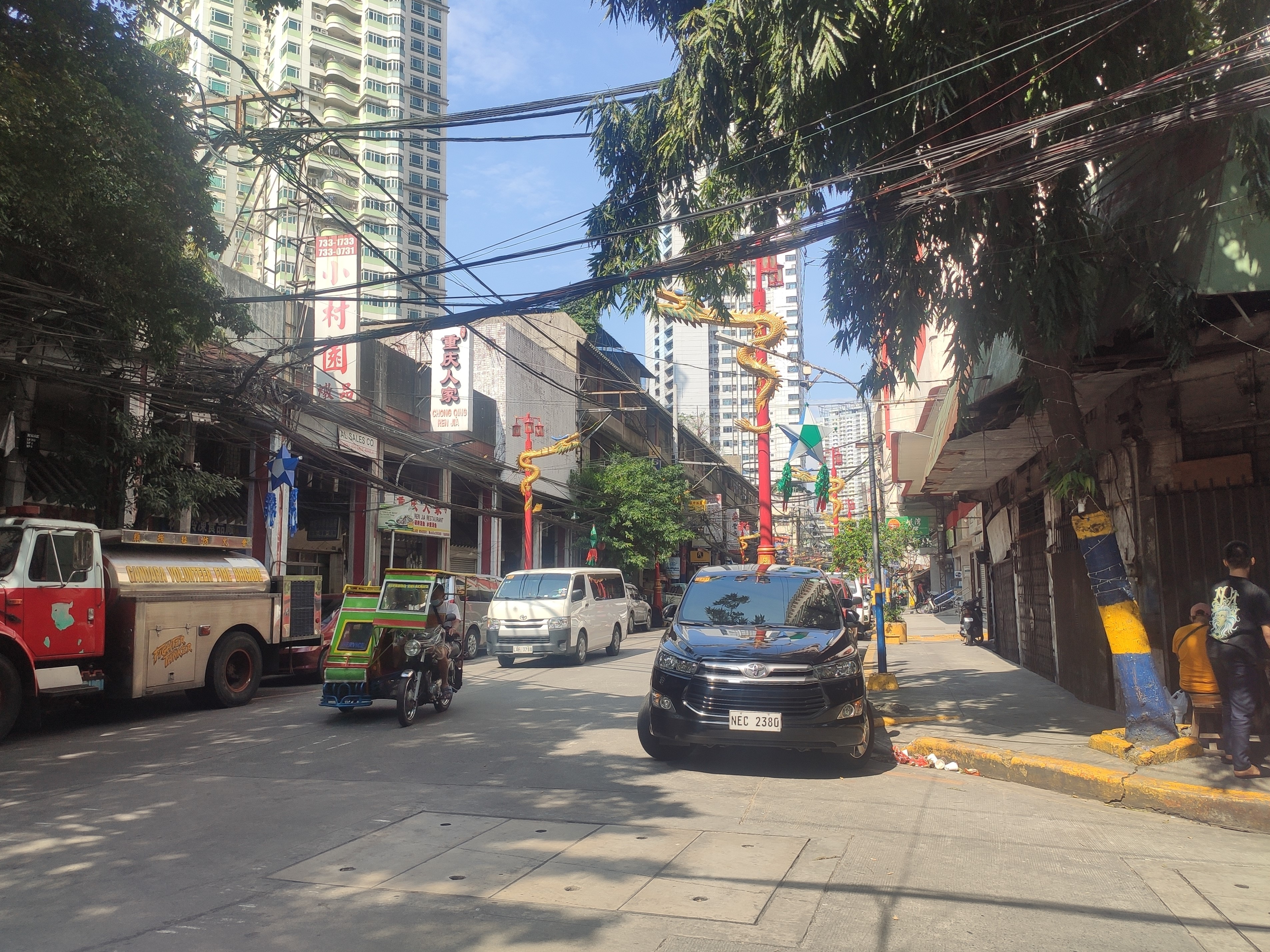
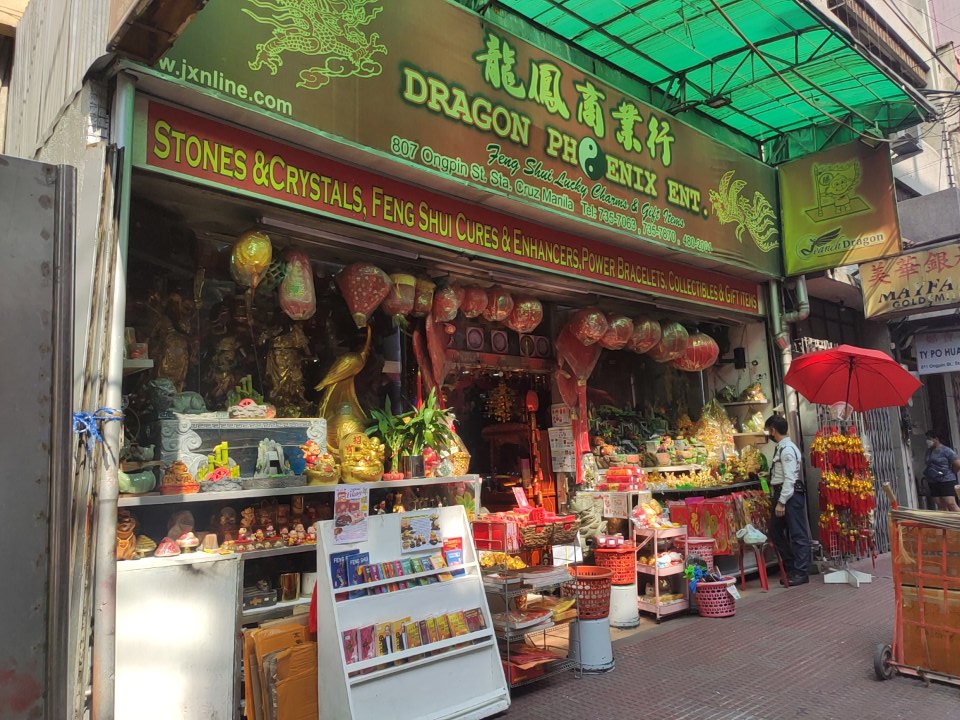
We saw a little of Chinatown as we were heading towards Seng Guan Temple. I loved the details of the dragons on the street lamps, and there were many Chinese restaurants, food shops, ephemera and other goods.
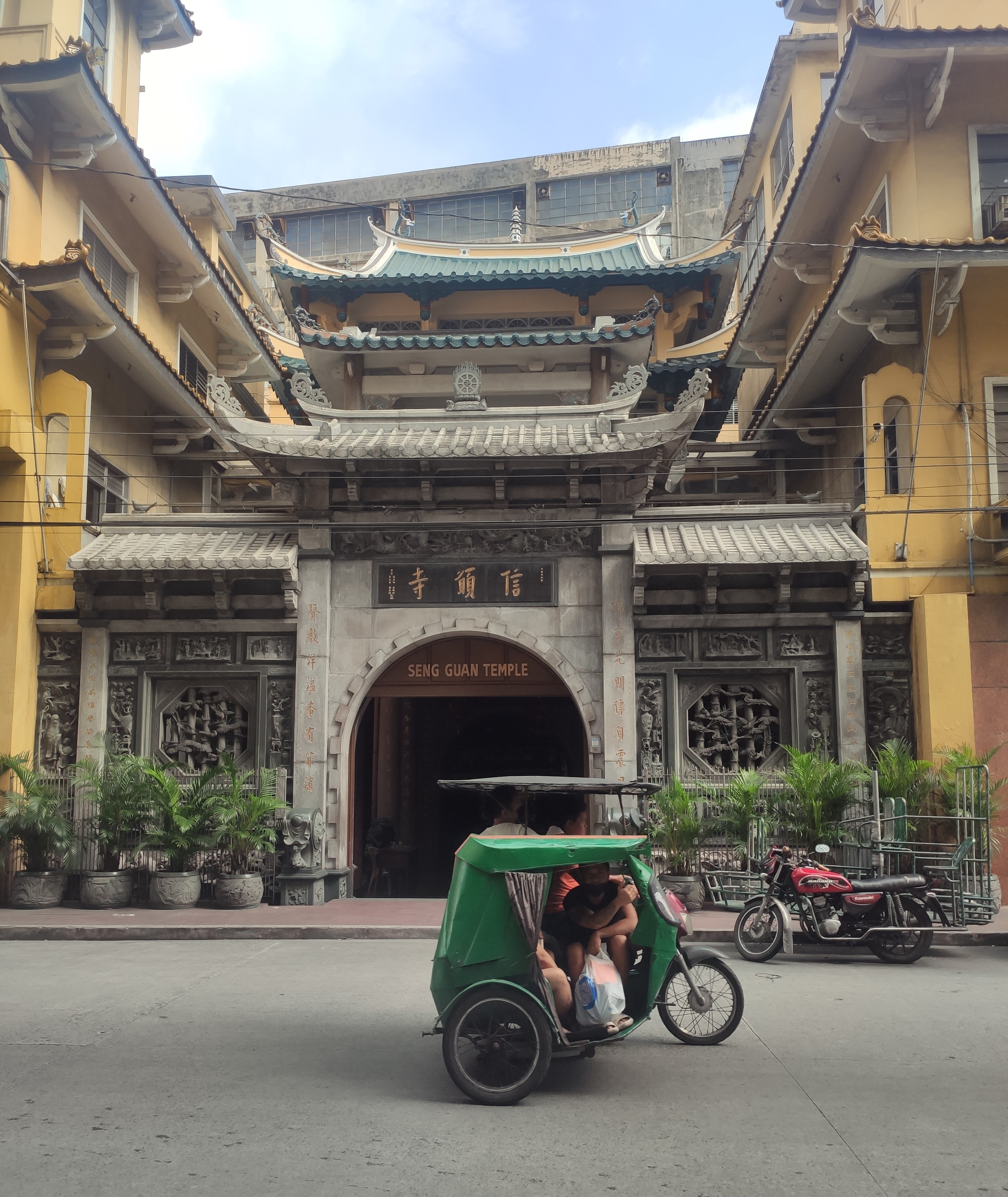

Then, down the unassuming Narra Street off Recto Avenue by Divisoria, we escaped the busy main street to visit the oldest Buddhist temple in the Philippines – Seng Guan Temple, also known as the Ten Thousand Buddha temple. Although there is evidence that Buddhism was present in the Philippines as far back as the 9th Century, Seng Guan is considered to be the oldest Buddhist temple in the Philippines due to it being thought to be the first temple in the Philippines to have a resident monastic. It was built relatively recently, in 1936.
The facade is strikingly ornate. On either side of the main door, depicted is a snapshot of a bamboo forest with birds and dragons surrounded by scenes from the Buddha’s life.
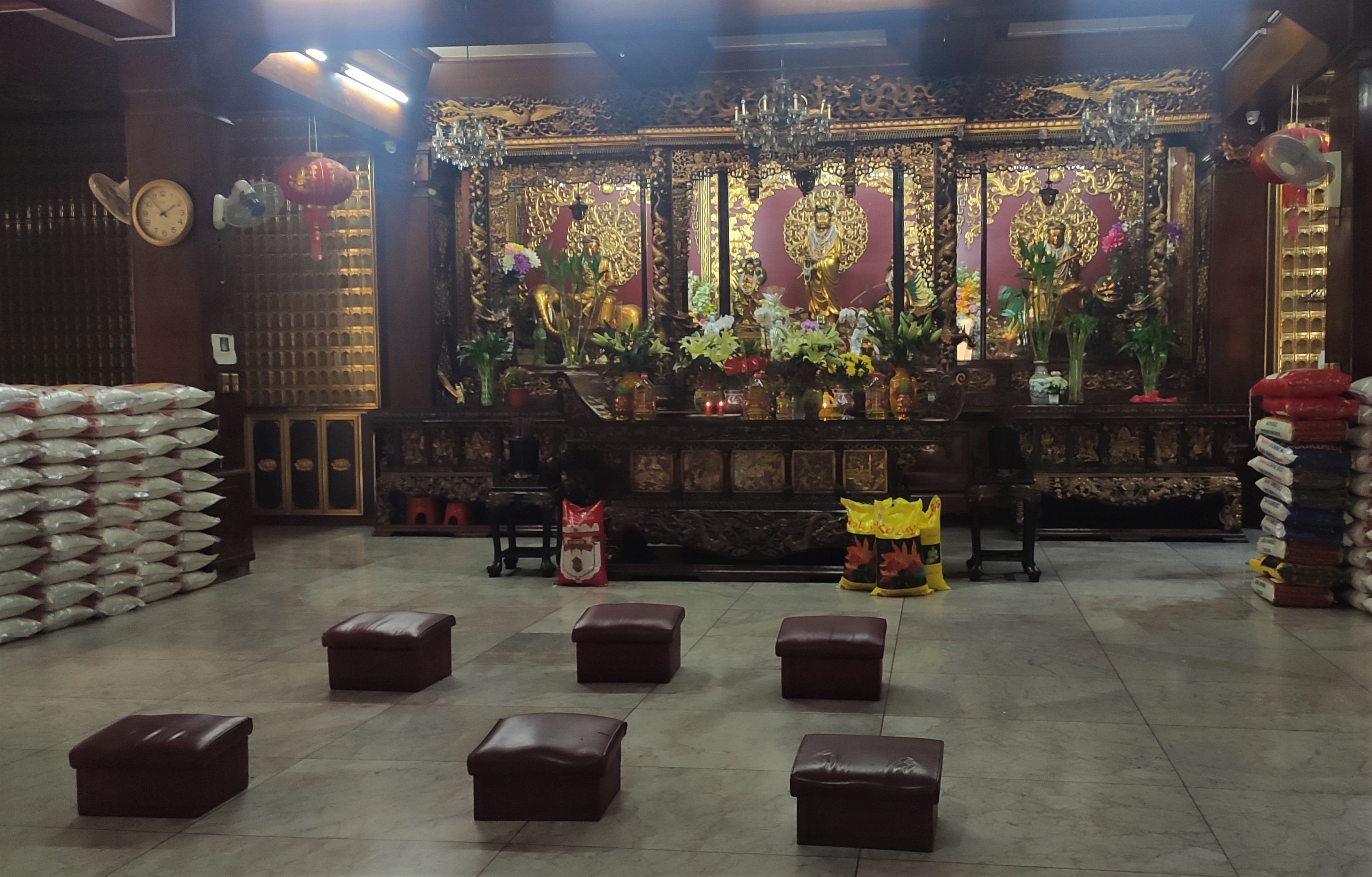
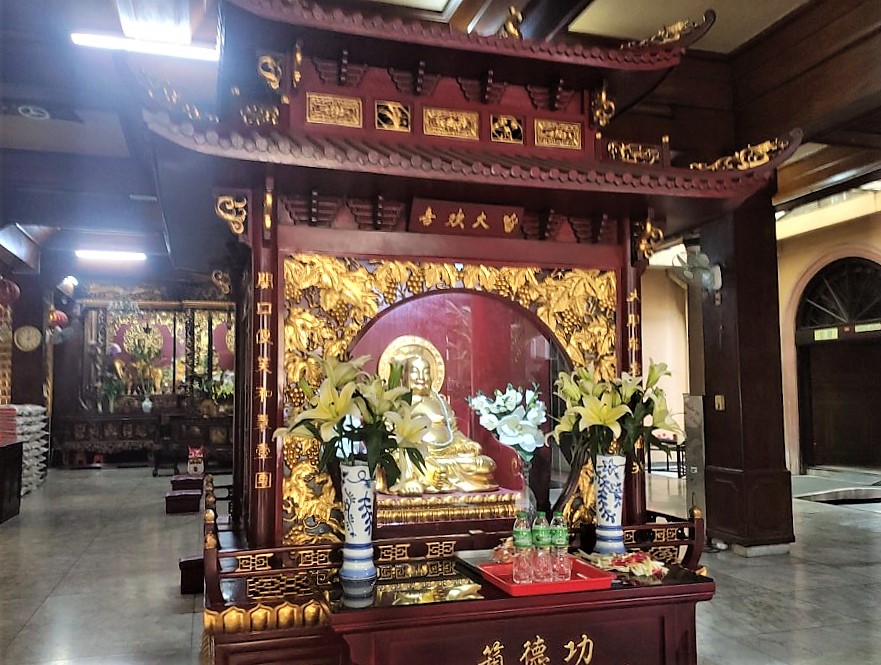
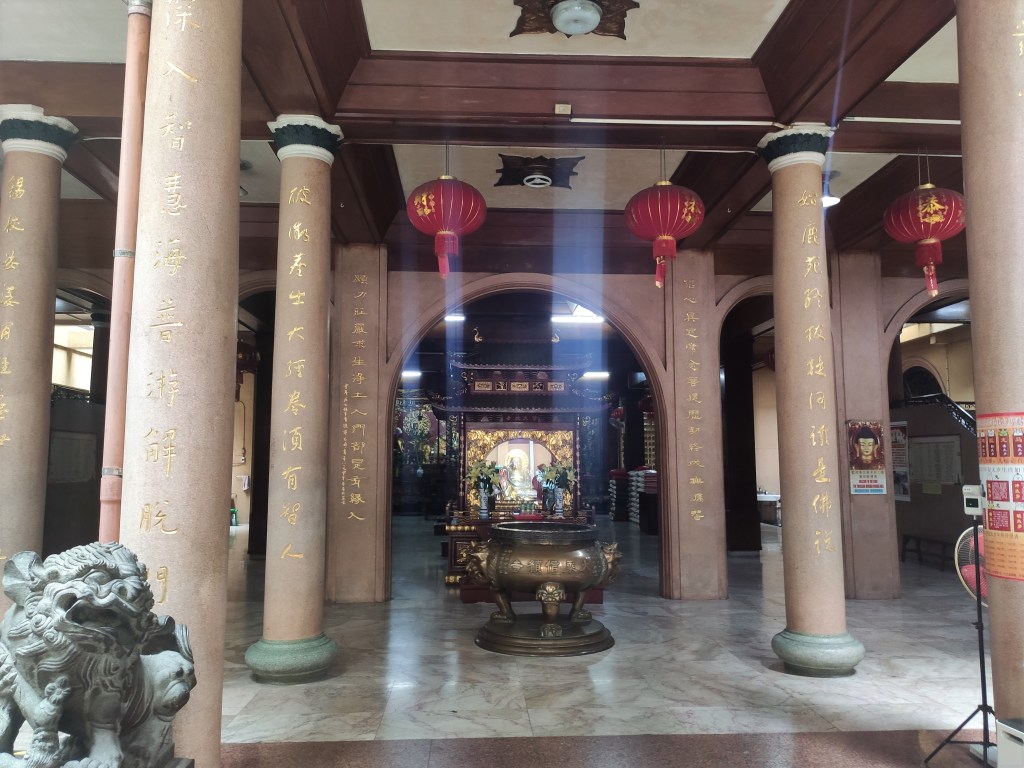
Stepping through the entrance leads immediately into the first main shrine room, a smaller shrine with Maitreya Buddha in the front and the main shrine at the back of the room.
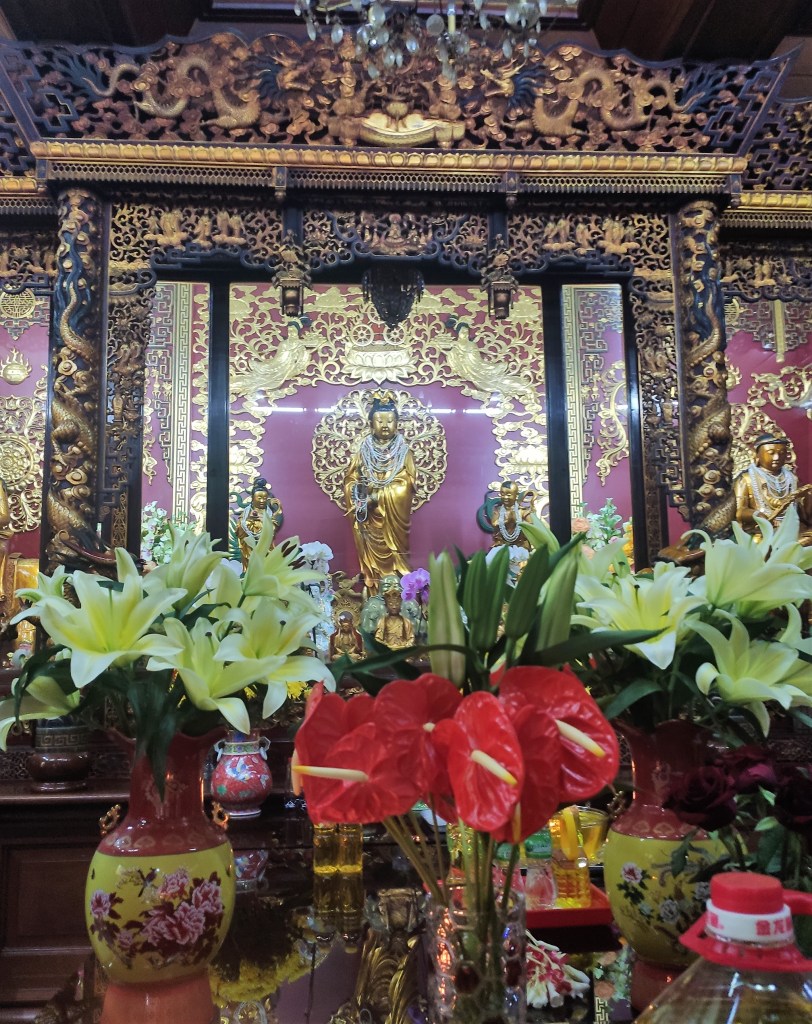
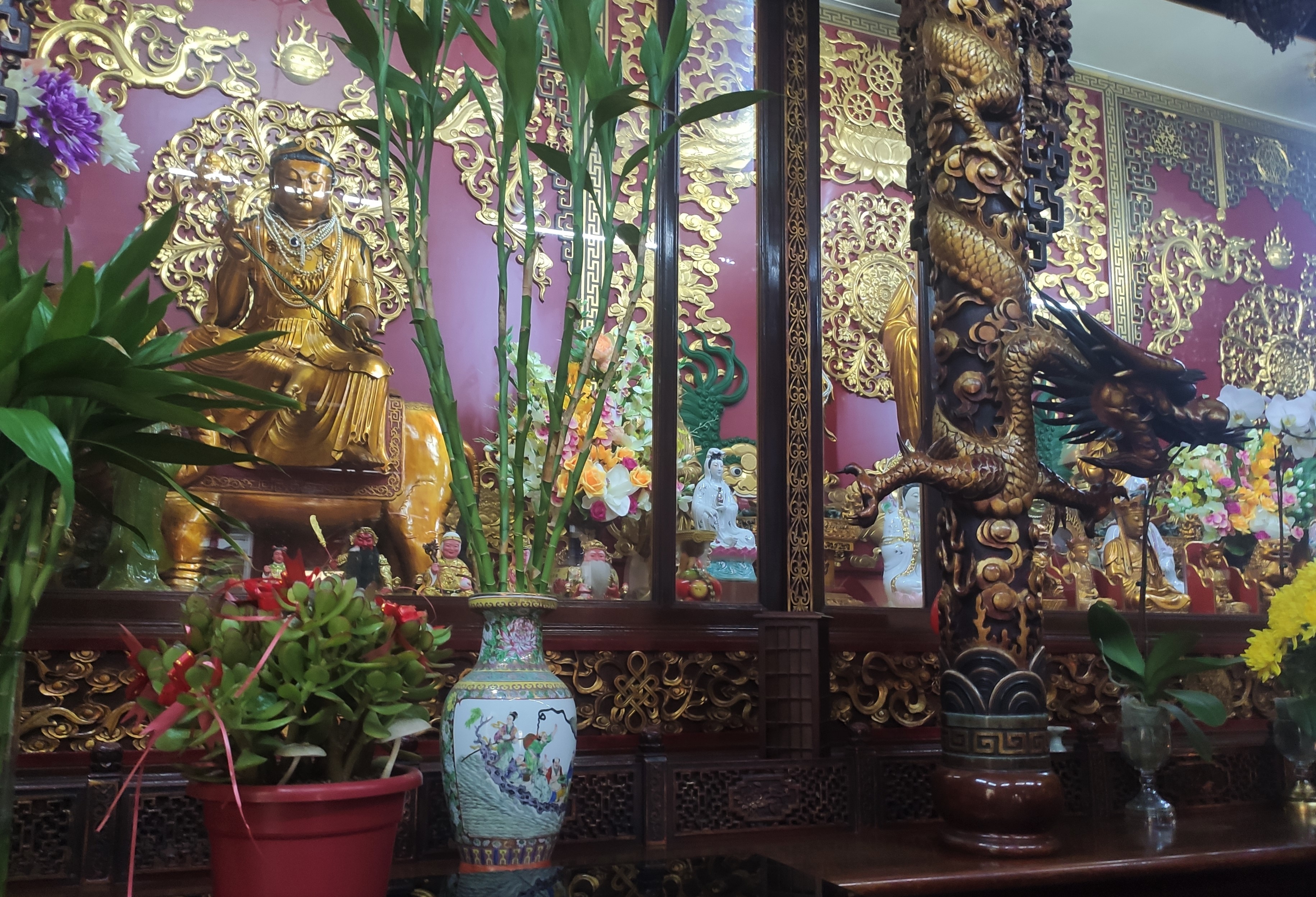
The large shrine at the back is elaborate, flanked on both sides by 100s of cases with small Buddha stupas – I’m not sure if this is why the temple is also known as the ten thousand Buddha temple? Bedecked with much golden ornamentation, the glass case fills a third of the back wall, there is a large Guanyin stupa, the bodhisattva of compassion, in the centre, surrounded by many other smaller figures. To the left a figure on an elephant, Samantabhadra, symbolising the Buddha’s infinite wisdom and to the right, a seated Manjrushi.
In front of the stupas, there are many fresh flowers, oils and other offerings, in and amongst the wooden panels are more scenes depicting the life of the Siddhartha Gautama.
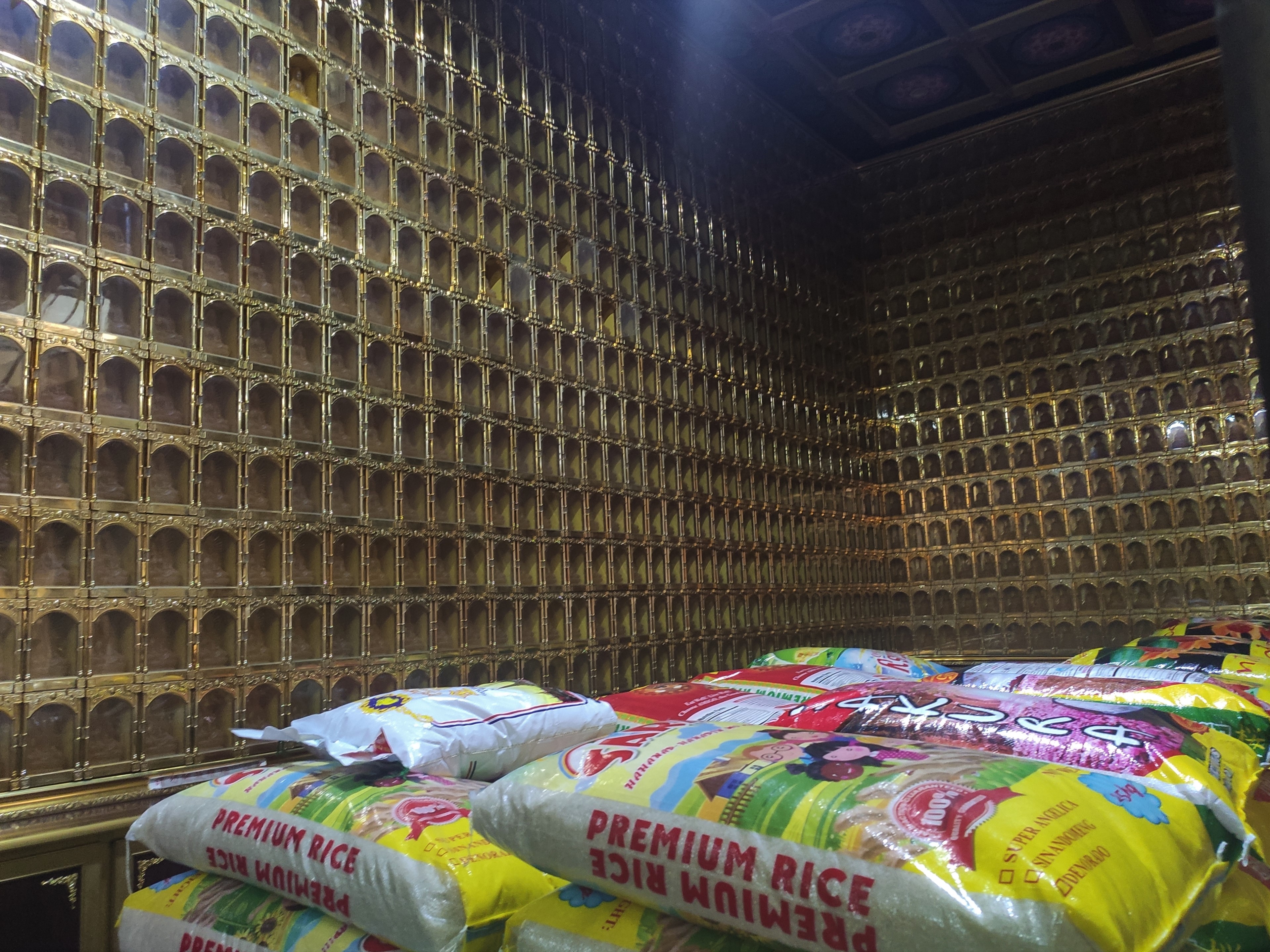
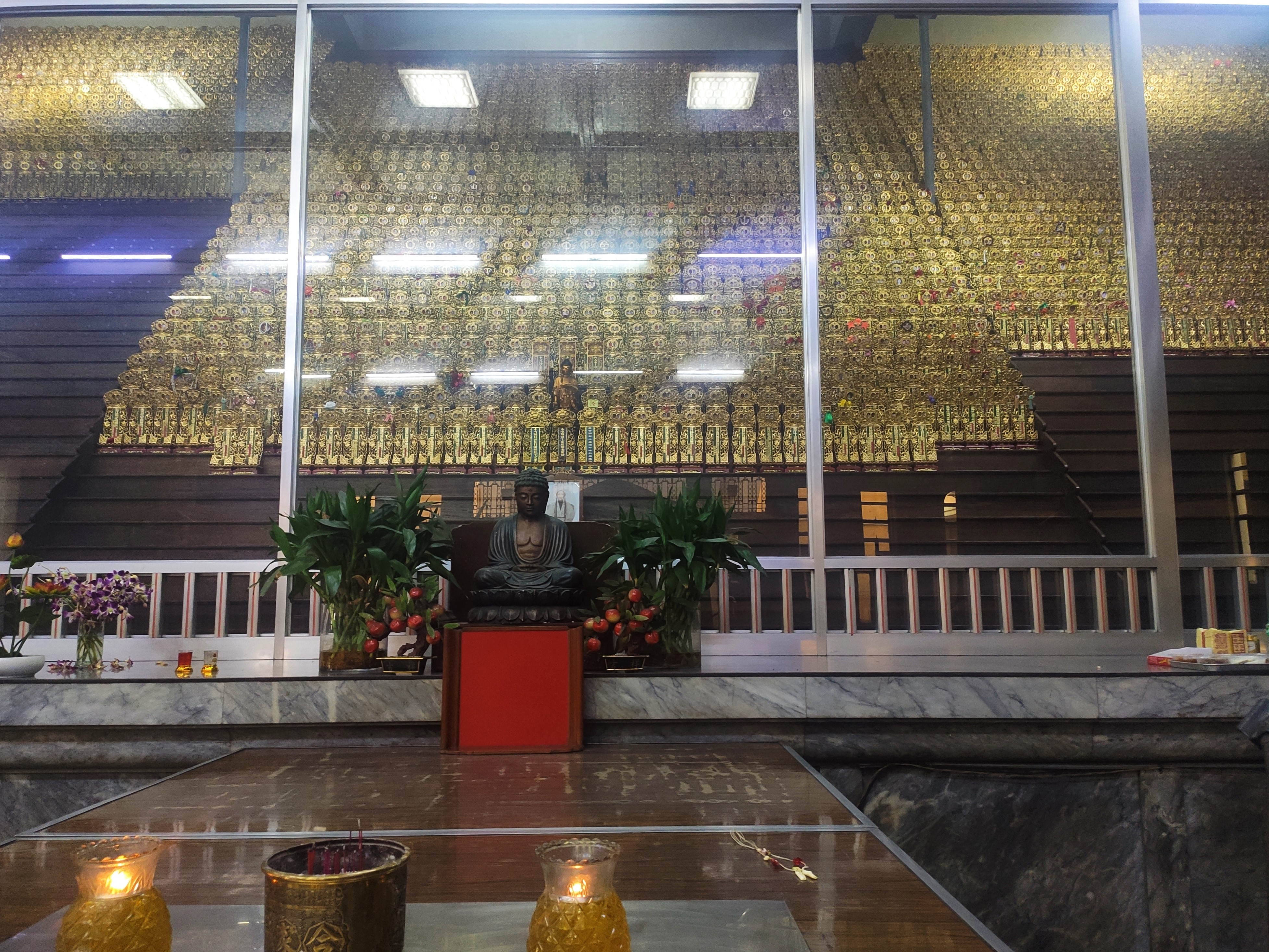
Left from the main room leads you through a little walkway and into a large room with a smaller wooden stupa of Shakyamuni Buddha. A more modest room with less ornamentation, surrounding, with 100s of little figures with commemorating ancestors of the temple’s practitioners who had passed away.
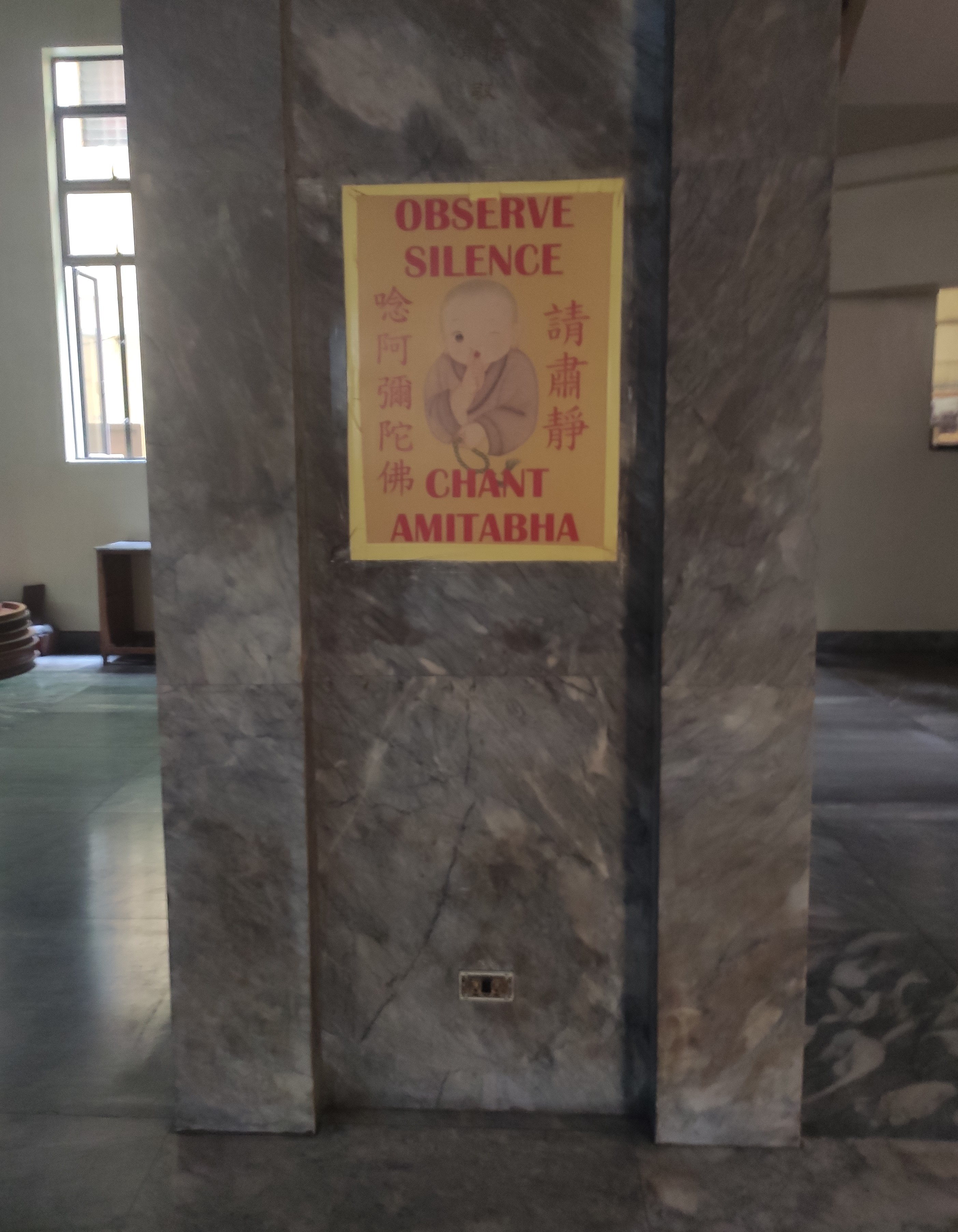
Although there were a couple of other visitors when we were there, there was a majestic peace and calm in the temple. A welcome contrast from the busy-ness of what we’d come from. We took in the unique features and details, marvelled at the ornate decor and gave a small offering after saluting the shrines. Worth coming off the beaten track.
Also, upon researching, I realised we missed the entire second floor of the temple with more shrine rooms, reliefs and carvings. Definitely on the list to revisit! More information on the history of Seng Guan can be found here.
Follow The Greedy Herbivore on Instagram and Facebook to keep up with my latest blog posts, reviews and ramblings, or follow through WordPress to receive notifications of new posts direct to your inbox.
 The Greedy Herbivore