

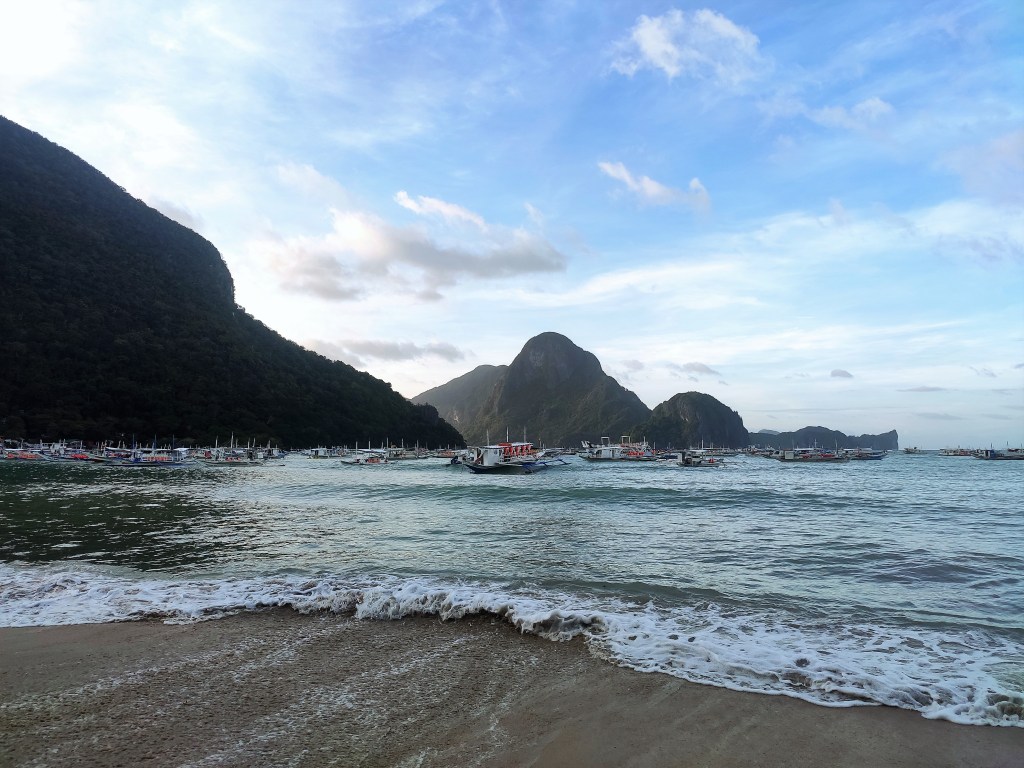
On the 13th of December 2022 we set off from Dublin to start our 4 week adventure around the Philippines. We fit in 6 destinations in those 4 weeks, saw incredible sea life whilst snorkelling, visited historical sites, hiked, saw the most mind-blowing landscapes, experienced various weather, had fun canyoneering and went to gigantic shopping malls.
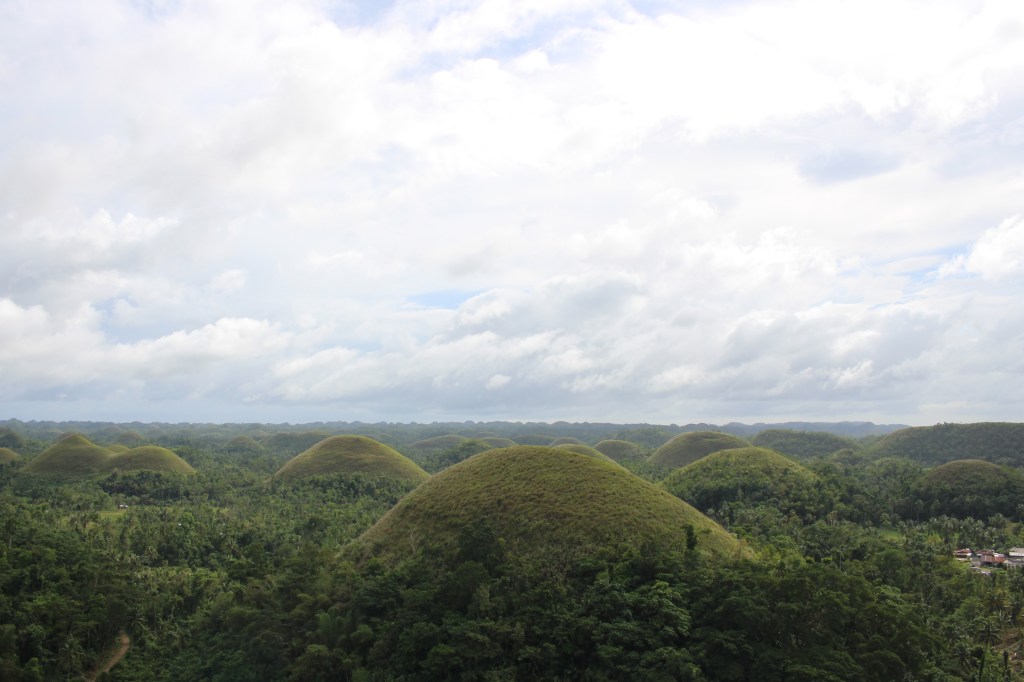
It was hard to choose our itinerary, and we spent a lot of time researching and watching YouTube videos about Kawasan Falls, Island hopping tours, Boracay, busy Manila, Chocolate Hills, El Nido and snorkelling. Eventually we settled on Puerto Princesa, El Nido, Moalboal/Ronda, Cebu City, Panglao and Manila. We flew internally a number of times, and took other modes of transport where we could, such as taking the boat from Cebu to Tagbilaran, Panglao. We hired mopeds in El Nido and Panglao and that also added an extra element of freedom and spontaneity to the trip.
Vegan in the Philippines

Some friends and family were sceptical that we’d be able to find food to eat, as on the surface, the Philippines has quite an animal based cuisine. Classic dishes and snacks include isaw (barbequed pig or chicken intenstines on a stick), Adobo (usually chicken, slow cooked and flavoured), sisig (spicy meat dish). However, traditional food such as camote cue and banana cue – friend sweet potato or banana on a stick, turon (fried banana or jackfruit spring roll), taho (tofu & sago pearl snack) and gulay lumpia (vegetable spring rolls) would be safe for vegans.

Some items may look like they could be vegan, but could have animal broths, or fish in the dish. You could try asking in English, but much better in Tagalog. As with any travel, it’s useful to learn a bit of the local language. There isn’t a word for ‘vegan’ in Tagalog, and I’m not sure how widely understood the term is, although veganism in the Philippines is a growing movement, as it is around the world. There is even an annual Vegan festival in Metro Manila and various pop up vegan markets and vegan food vendors in other markets too. The charismatic blogger and Youtuber ‘Astig Vegan’, on a mission to prove that ‘Filipino food can be vegan, healthy and delicious without losing its soul’, has now had a number of tv appearances and has written a best-selling book ‘Filipino Vegan’. I found a copy whilst over there and it’s providing me with lots of inspiration.
You could try saying ‘Vegan ba ito?’ ‘Is this vegan?’ or ‘Naglalaman ba ito ng karne o isda?’ Does this contain meat or fish?’. You can look out for allergens also on menus, this helps for looking out for dairy, eggs and fish, though they didn’t seem to be widely published as in other countries. We tended to go for dishes that were labelled with ‘gulay’, and sought out vegan and vegetarian places where we could.
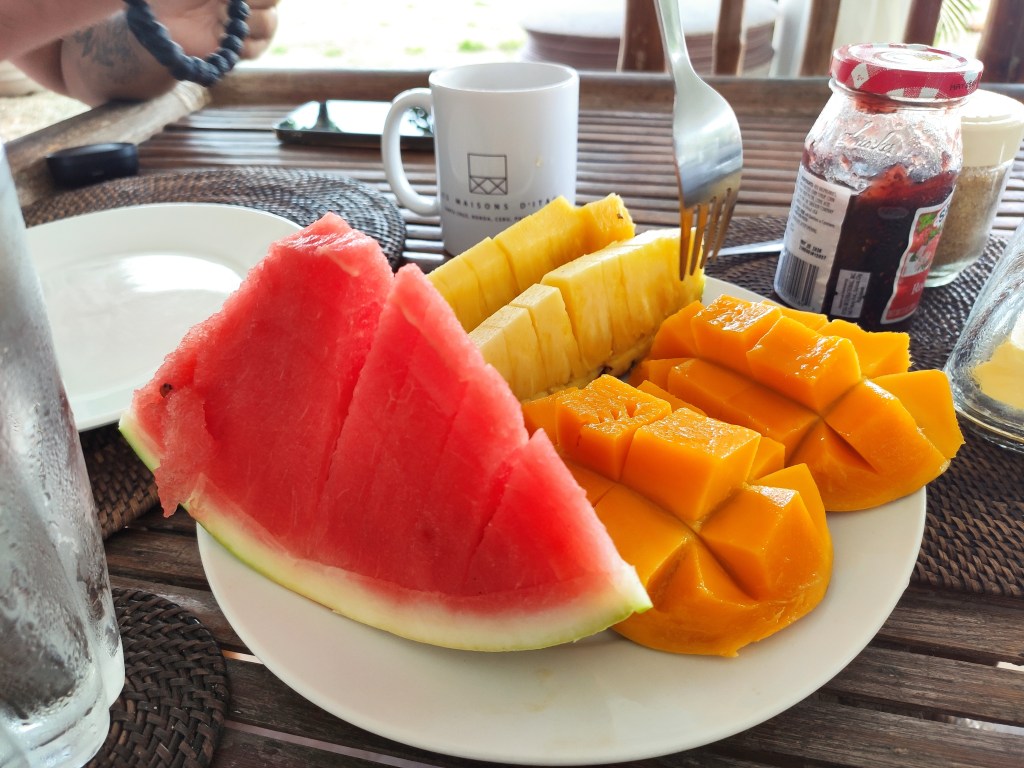
We didn’t cook for ourselves much but did notice that in each supermarket we went into there was at least a few vegan milks, sometimes vegan cheese, and aside from that, many fresh, local vegetables. Bread products seem to often contain milk or butter, but it would be easy to cook up vegan meals from ingredients bought at any supermarket.
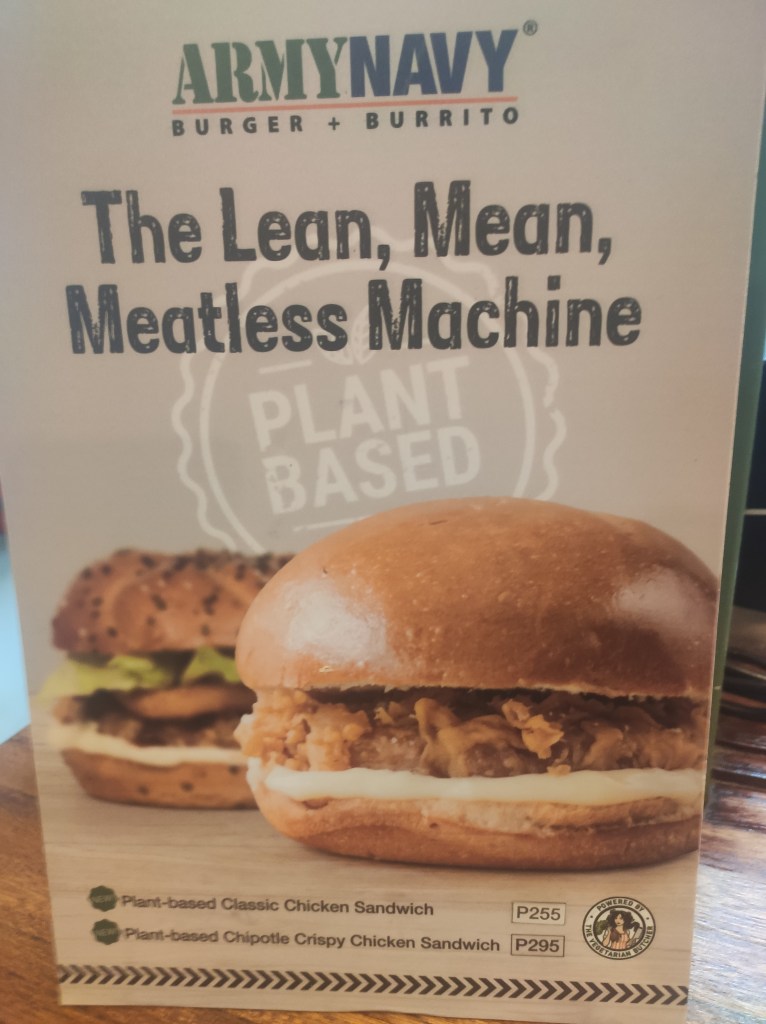
Our main error, was thinking that ‘plant based’ means vegan! We did a couple of times before we realised our mistake. We were very excited about the UnMeat & 7/11 burgers, and whilst UnMeat do an incredible range of vegan products that you can buy in supermarkets and the burger patties in the burgers are vegan, the other items in the burgers – bread, cheese, mayo are not! In the ArmyNavy chain restaurants (we visited the one in Greenhill Shopping Centre, Manila), there is a ‘plant based’ menu, but we discovered as I bit into my breakfast burrito that there was egg in it!
We may have made a few errors, and being with a native Tagalog speaker helped a lot, we ate fabulously. We found a number of vegan and vegetarian eateries, enjoyed some unexpected delights, such as the vegan menu in our accommodation in Panglao, got to try a whole range of incredible veganised Filipino dishes in a vegan restaurant in Manila.
Language
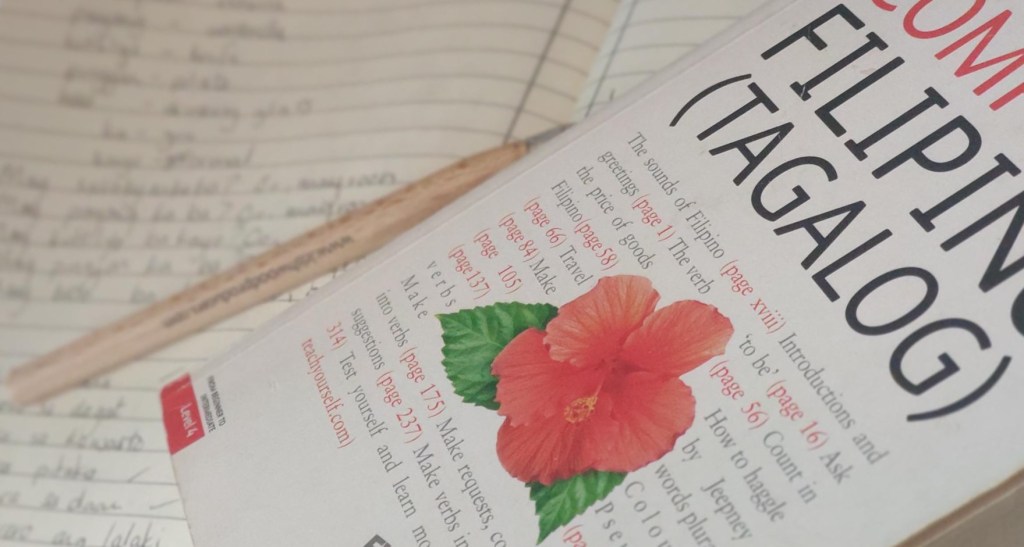
Tagalog in its standardised form is the Philippines’ national language and is spoken by approximately a quarter of the population in the Philippines, according to Wikipedia. English is also an official language of the Philippines, and many people we came across did speak English fluently. However, it’s always good to try and speak at least a few words and phrases as a visitor. It adds an extra dimension to connecting with people, helps you understand nuances, shows you’re making at least a small effort and it’s fun.
To help me learn a little of the language before I went, I used the Complete Filipino (Tagalog) book and audio (Teach Yourself series of publications), Memrise (Crash Course Tagalog – user created course). Unfortunately, there is no Tagalog course on Duolingo, as of time of writing. These also helped also that I live with a native Tagalog speaker and had fun trying to test out my phrases with the help of his patient and understanding family, who are also all native Tagalog speakers. This especially helped as some of the phrases in the books and courses are not quite colloquial or maybe a bit antiquated or literal, so it was handy to check things. I also recommend checking out Filipino films on whatever TV/film streaming platform your subscribe to. Manila Luzon’s Drag Den (, emotional, culturally insightful, funny and political – episode 6 is particularly politically poignant with Shewarma highlighting the killers of farmers mentioned below), The Girl Allergic to Wi-Fi (cheesy, sweet, teeny bopper film), Seven Sundays (family friendly uplifting film) and Hotel Acacia (horror film) were just a few I watched.
Some handy words/phrases in Tagalog (‘po’ at the end of a phrase is a way of being polite and respectful):
Hello/How are you?: Kumusta po kayo?
Fine/good: Mabuti
Goodbye: Paalam po
Yes: Opo (Oo + po)
No: Hindi po
Pa bili po?: Can I buy?
Thank you/Thanks very much: Salamat po / Maraming salamat po
Good morning: Magandang umaga po
Good noon: Magandang hapon po
Good evening/Good night: Magandang gabi po
Do you have vegan ____ ?: Mayroon vegan ___ po? I.e. Mayroon vegan kaldereta po? Do you have vegan kaldereta?
Vegetable: Gulay
Meat: Karne
Fish: Isda
Milk: Gatas
Egg: Itlog
Delicious: Masarap
Politics, Environmentalism and Controversies
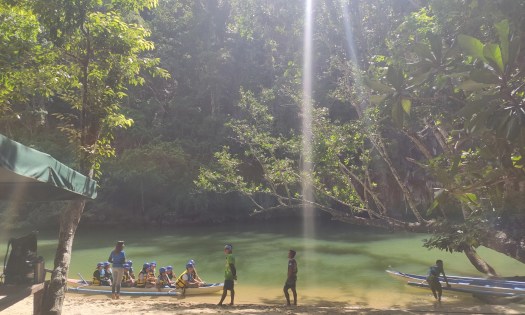
There is so much beauty and culture in the Philippines, the unique landscapes and geological formations form the attraction for many visitors. The conservation of the environment in the Philippines is a complex story.
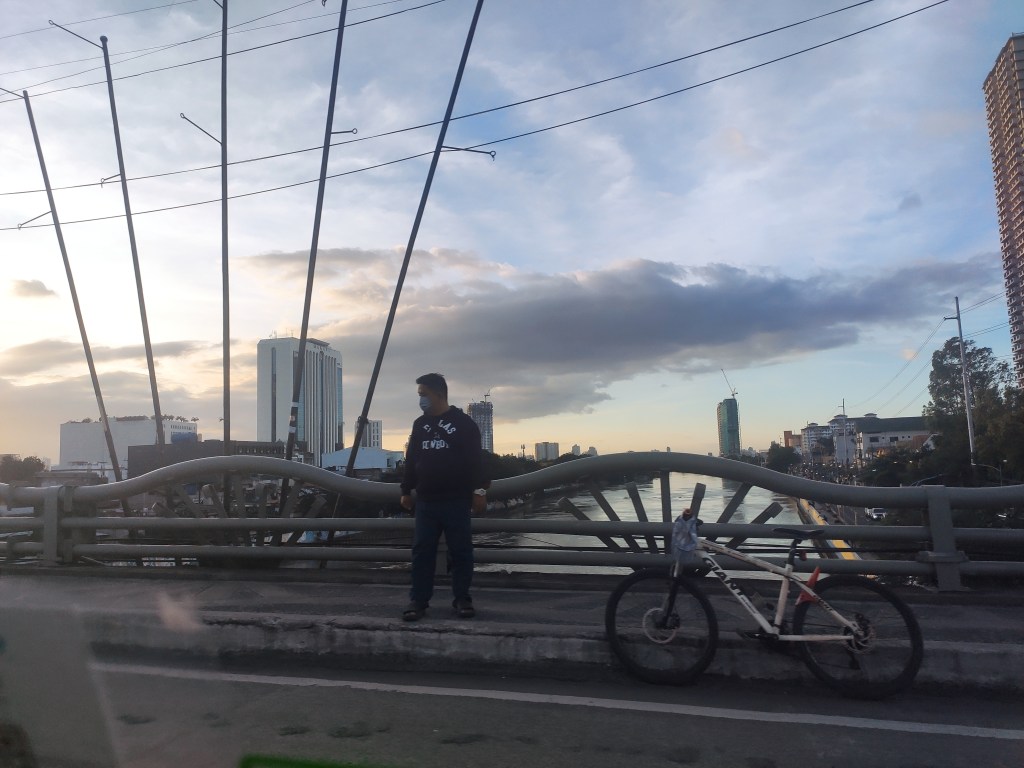
One of those stories centres around the Pasig River that passes through Metro Manila. After World Ware II, people settled and built dwellings on the sides of the river, with no infrastructure for waste from the settlers and from nearby factories, all kinds of waste was dumped into the river. In the 1970s the river was known to smell offensively, fishing was prohibited in the 1980s. 1990 was the year the Pasig River was declared ‘biologically dead’ by scientists. In the following decades, with the assistance of Danish authorities, a huge clean up operation went underway. The project is still underway in 2023, having passed through various hands, some recent news declares that it could be complete by August of this year look out for ways to support those living under an extremely oppressive regime, that doesn’t necessarily get the time or spotlight in the Western media, in the way that other countries atrocities do ¹. The story of the regeneration of this river, is an ongoing story, with fish discovered in the river in 2019 shown to contain high concentrations of lead and mercury².
Boracay is another well known instance that had environmental issues from overcrowding of tourists, there are now restrictions in place to prevent problems recurring. Tourists must stay in an approved hotel and must have a reservation before entering the island, approved hotels are audited to check they are compliant with environmental laws. In Palawan reforestation schemes are aiming to increase the 70% forest cover, although our tour guide described the current state as not being good enough after rapid deforestation due to logging and mining³. This struck a chord with me, since my birth country of the UK has an abysmal 13% cover (reports in 2021)4 and Ireland, currently is 11%5. Notably, also, on our tour in the subterranean river in Puerto Princesa, an UNESCO World Heritage site, the tour was done with sensitivity to biodiversity, there are restrictions, the torches are turned off at a certain point in the tour so as to not disturb the bats that call the river their home, and only a small portion of the long river is made accessible to tourists, and only via the specific boats.

The Tarsier Foundation6 that runs the Tarsier Sanctuary in Bohol promotes reforestation and conservation of the habitats of the endemic Philippine Tarsiers. Though we were able to go into a small portion of the sanctuary, the groups taken around are very limited, quiet and sensitive to the surroundings and the nocturnal tarsiers.
A complicated landscape has also arisen from the complexity of governmental approaches since the Philippines was colonised. Farmers are victimised by a system whereby not owning the land they look after keeps them in a cycle of poverty and vulnerable to landowners and law-enforcers. They are facing land grabbing from landlords, agro-corporations and plantations. A timeline of violent incidents of law-enforcers against farmers was been put together by website Rappler in 2018. Abuses and killings of farmers continue, and activists organise against them to speak up against the oppressive regime. A recent incident involved the killing of 14 farmers by the military and police on 30th March 2023 – you can read about this here. One of the organisations opposing this tyranny and violence is the Kilusang Magbubukid ng Pilipinas, or Peasant Movement of the Philippines. Another organisation is The Sabokahan Unity of Lumad Women, activists fighting for their rights and spreading awareness of these atrocities and repression against indigenous people. They are present on social media with links for donations to support their campaigns. They are phenomenally inspiring.
As a tourist, one could visit the Philippines, see the beautiful landscapes, play in Kawasan Falls, and visit the beautiful beaches in Panglao and Moalboal and though one can easily catch glimpses of poverty, especially the contrast and disparity of wealth on display in Manila, it would be easy to never see or come across media reporting these contemporary atrocities. As a tourist, I feel its important to acknowledge the difficulties facing ordinary people in a country that one is visiting. It’s difficult to know what to do, as an individual to help. On a small level, trying to go for locally organised tours, spending money in local shops on handmade crafts and local foods instead of mass produced goods can go a small way to supporting local communities rather than larger corporations who may be involved in land grabbing etc. I also try to follow activists on social media and share their stories, to shed more light on this horrendous and brutal system. For more on Philippines history to very recent times, for a context of the country and its people’s challenges, I highly recommend the book ‘A History of the Philippines: From Indios Bravos to Filipinos’ by Luis H Francia.
Please look out for ways to support those living under this extremely oppressive regime, these issues don’t get the time or spotlight in the Western media, in the way that other countries’ do and if there any groups/organisations that would be good to support, please let me know in a comment.
Final thoughts on our trip
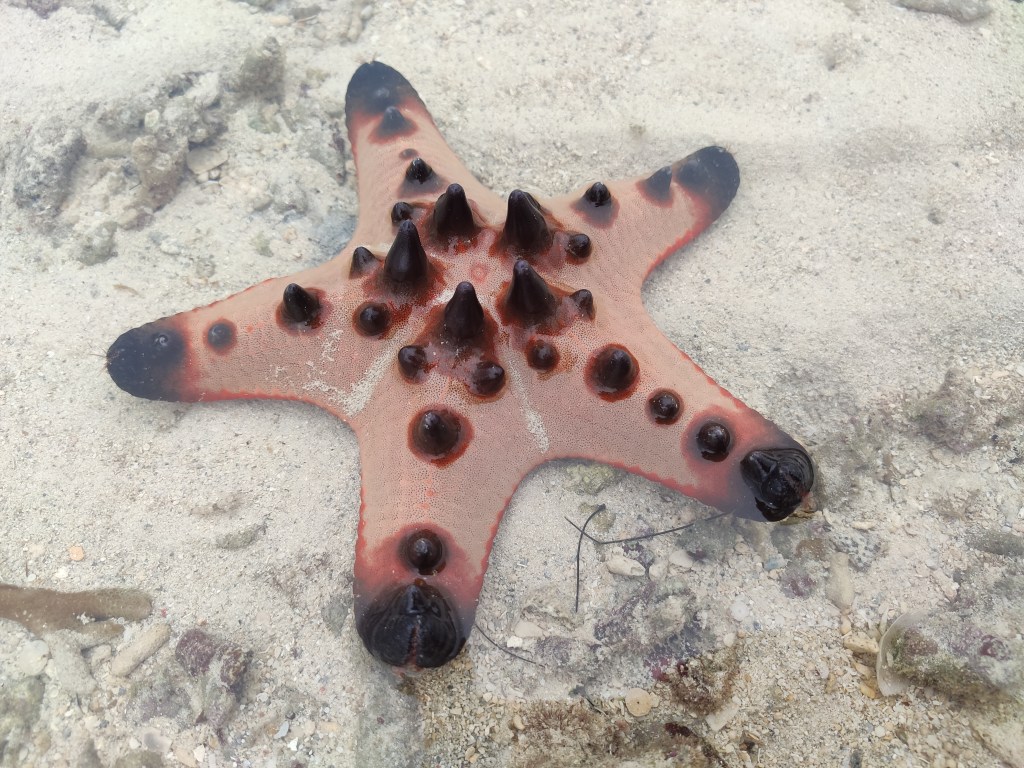
Despite the above, the Philippines is an extremely vibrant, welcoming and beautiful country. Its complex history adds diversity to its architecture, food, art and culture. We found immense enjoyment in the places we visited, friendly faces and lots to do. Beautiful scenery and precious unique ecosystems and nature abound. In the four weeks we were there, we saw but a fraction of what this incredible country has. We ate incredibly well, from vegan and none-vegan places, saw soft corals, tarsiers, unique fungi and travelled over land and sea. We have an incredible suite of memories that will last a lifetime. Friends have asked me which was your favourite place – Puerto Princesa, El Nido, Moalboal, Cebu City, Panglao, Bohol, Manila, it’s impossible to choose, as they are all so different. I look forward to revisiting some time in the future, seeing the things we missed, and revisiting our favourite eateries and beaches. If you’re looking for somewhere a little different (though still popular with tourists), I highly recommend visiting the Philippines.
Links and more information:
- https://mb.com.ph/2023/7/7/smc-removes-over-1-3-m-tons-of-waste-from-pasig-river-eyes-completion-of-p2-b-cleanup-by-next-month
- https://gulfnews.com/world/asia/philippines/pasig-river-slowly-being-nursed-to-rehabilitation-as-fishes-thrive-1.65894333
- https://www.esquiremag.ph/politics/news/palawan-leads-deforestation-a00293-20210826-lfrm
- https://www.woodlandtrust.org.uk/state-of-uk-woods-and-trees/
- https://www.gov.ie/en/publication/57d2a-forestry-facts-and-news/
- http://www.tarsierfoundation.com/news/the-tarsier-sanctuary
https://www.oneearth.org/ecoregions/palawan-rainforests/
https://climate-diplomacy.org/case-studies/land-grabbing-philippines
https://www.oxfam.org/en/land-grabs-philippines-its-they-have-killed-us-already
Follow The Greedy Herbivore on Instagram and Facebook to keep up with my latest blog posts, reviews and ramblings, or follow through WordPress to receive notifications of new posts direct to your inbox.
 The Greedy Herbivore