
16th – 17th March 2023
Kasuga Ryokan
Naka-ku Ote-machi 3-6-23, Hiroshima, 730-0051, Japan
中区大手町3-6-23, 広島市
€42 per night for double room with futons
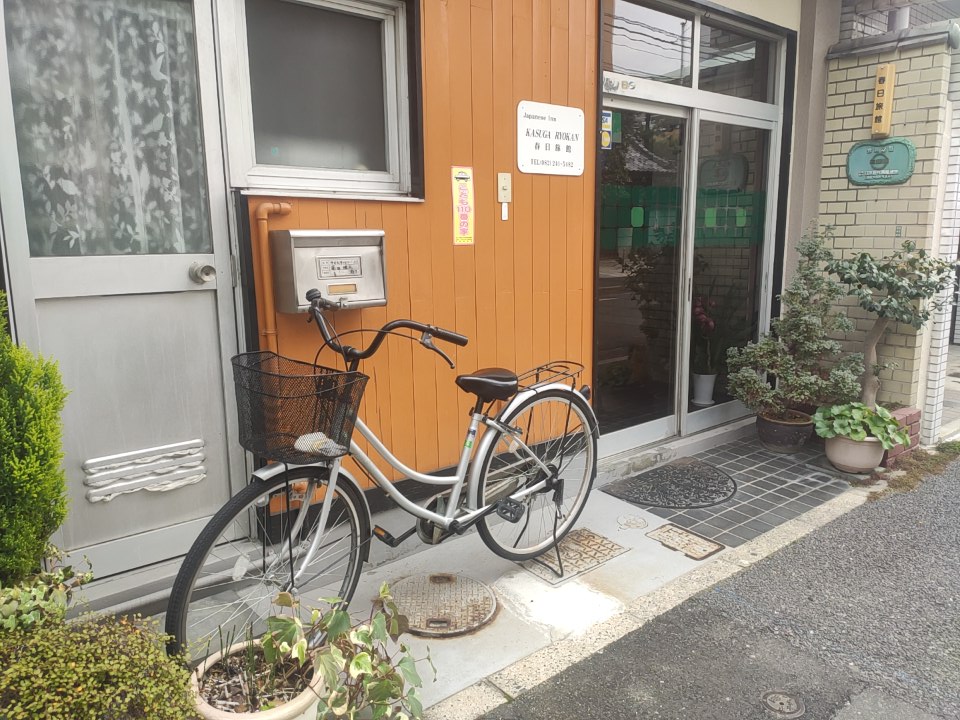
We stayed in a humble traditional Ryokan, complete with tatami mats, futons and tea. It was comfortable and in a good location, a 10 minute walk to the Atomic Bomb Dome and a 6 minute walk to the Hiroshima Peace Memorial Museum.
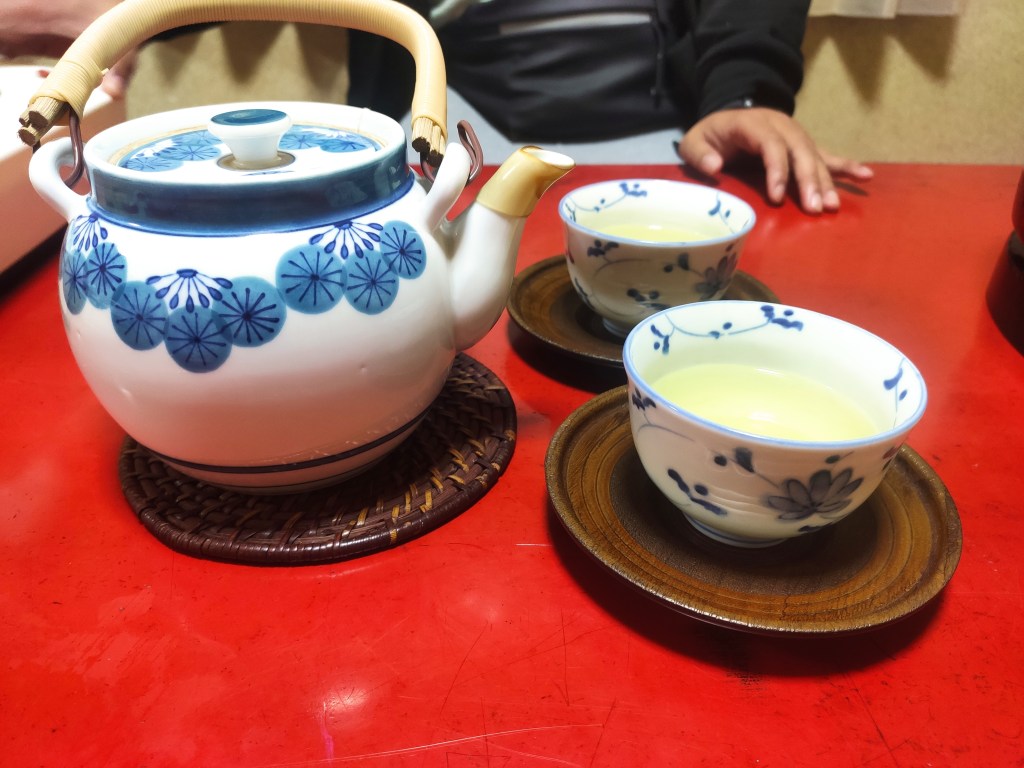
Staff were friendly, and the room was large and comfortable there was a fridge and a kettle. Bathroom and toilet were shared. We enjoyed the green tea provided, it added to the experience too. It was simple, yet comfortable for the night and in a great location. We’d definitely stay here again.
Memorial Tower to the Mobilized Students
1 Chome-3-10 Otemachi, Naka Ward, Hiroshima, 730-0051, Japan
In my early adulthood I read a lot about Hiroshima and Nagasaki, about atomic bombs and the unimaginable terror that rains down upon their victims. Partially inspired by my friend who fell in love with Japan way back in 2008 and sent me a photograph and moving letter from a trip to Nagasaki. I knew I wanted to visit at least one of these cities whilst I was here. It’s a very precious experience to come to Hiroshima and be faced with the remnants of the devastation and of the beauty of the city after its rebuilding. It is moving, it is awful and it is important, to consider what war does, and especially important whilst nuclear weapons still exist in the world, signalling that this indiscriminate brutality is not necessarily a thing of the past.

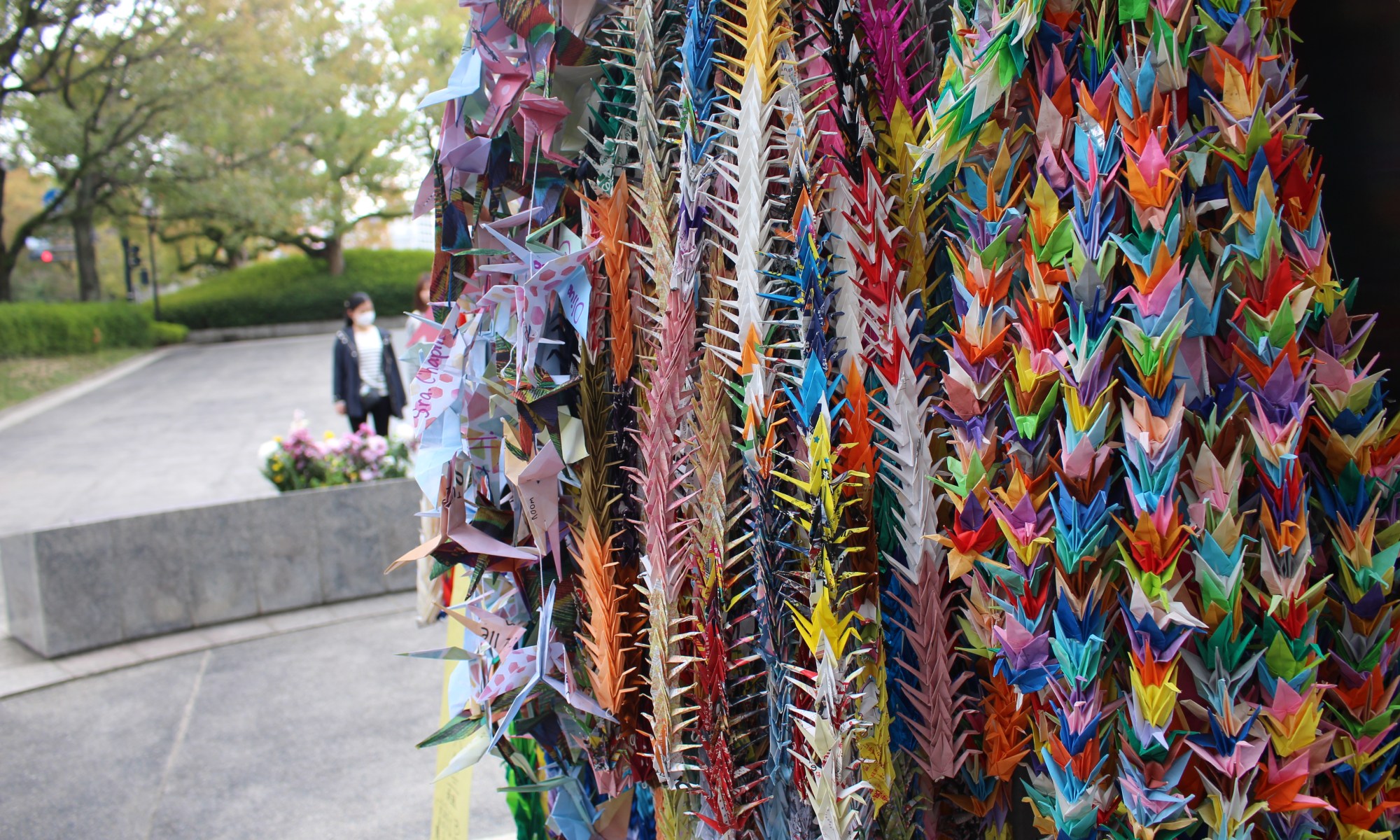
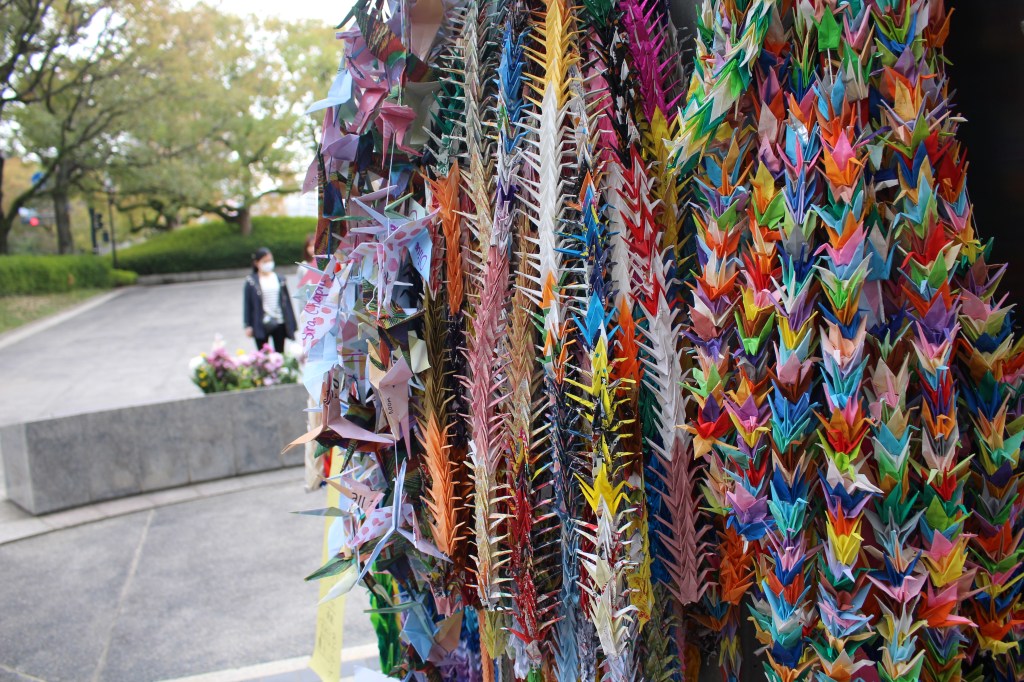
Walking along the Motoyasu River towards the Peace Memorial, we came upon the ‘Memorial Tower to the Mobilized Students’. The memorial was erected by the Hiroshima Prefecture Mobilized Students Victims Association and was completed in 1967. More than 3 million students, 13 years and upwards were mobilised for labour during World War 2, more than 10,000 were killed. 7000 of these were killed by the atomic bomb. The tower is made of five tiers of Arita-yaki ceramic tiles and stands 12 metres tall with 5 tiers. The Goddess of Peace stands winged, with flowers in her hands, whilst 8 doves are standing on various tiers. She is flanked on either side by thousands of origami cranes, a symbol of hope, love and peace.
Hiroshima Peace Memorial, Genbaku Dome
1-10 Otemachi, Naka Ward, Hiroshima, 730-0051, Japan

On 6th August 1945, an atomic bomb was detonated by the United States, 600 metres above the Shima Hospital, 150 metres from the Hiroshima Prefectural Industrial Promotion Hall. The remains of this Hall has been preserved and is now know as the Hiroshima Peace Memorial, Genbaku Dome or A-Bomb Dome. All people in the building were killed instantly, but due to its steel inner structure and due to the bomb being almost above, the building retained a lot of its shape.
The dome was originally scheduled to be demolished during the rebuilding of Hiroshima, and local citizens were divided as some wanted to preserve the dome as a memorial and others wanted it torn down. It was finally decided in 1966 by the City Council to preserve the dome and it now a UNESCO World Heritage Site as a ‘survival from a destructive force’, ‘the first use of nuclear weapons on a human population’ and as a ‘symbol of peace’.
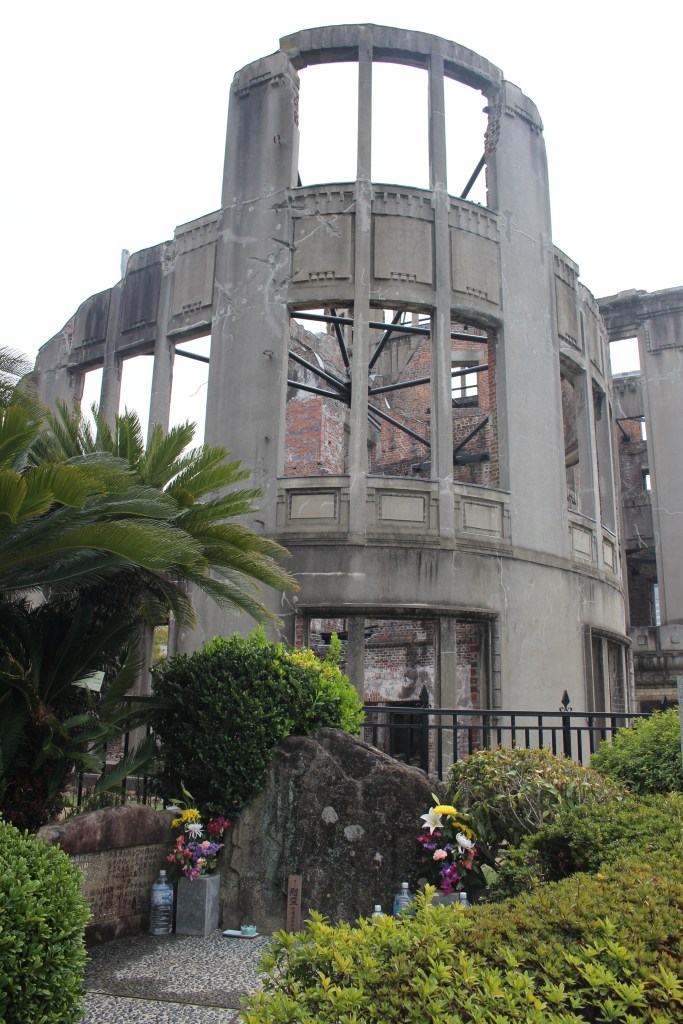
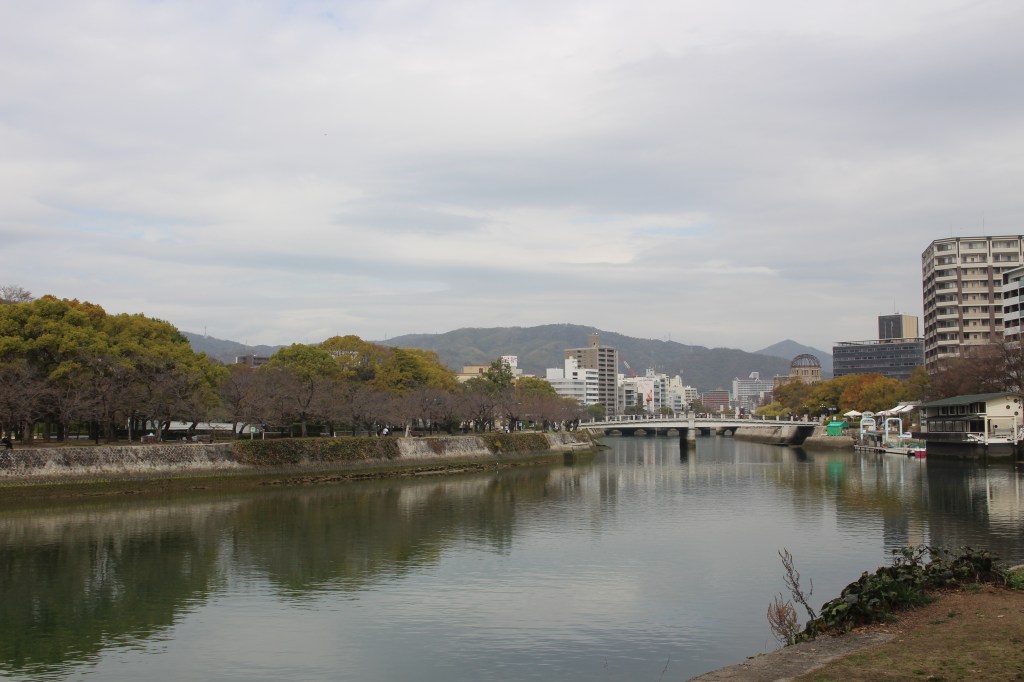
The Dome can be spotted from far away as an integral part of the cityscape. On approach to the dome there were anti-nuclear weapons groups giving out information, reminding us that though this is part of the past, the issue remains. Plaques and information boards around the Dome help to paint a picture of the context and evoke the situation. It is a very moving sight, and we solemnly circumambulated the dome, trying to be mindful of its history, contemplating the rubble and shell of this 1915 building, what it stands for before moving on to the Hiroshima Peace Memorial Museum and Park across the River.
Peace Memorial Park (Hiroshima Heiwa Kinen Kōen)& Museum
Japan, 〒730-0811 Hiroshima, Naka Ward, Nakajimacho, 1丁目1−10

The Park is dedicated to all the direct and indirect victims of the nuclear attack on Hiroshima. Many monuments around the park allow reflection on particular groups of victims. The Children’s Peace Monument was built to commemorate the thousands of child victims of the bomb, and was built thanks to a fundraising campaign by Japanese school children. The memorial has a depiction of Sadako Sasaki atop, holding an origami crane. Sadako stands for the 1000s of victims. Sadako was 2 years old when the bomb was dropped on Hiroshima, she was blown out of a window, apparently with no injuries. She and her mother were caught in the ‘black rain’ (radioactive dust and ash) from the bomb, Sadako began to have signs of cancer in 1954 and she died in October 1955, aged just 12. In the aftermath of the bomb, there was a huge increase in leukaemia in children, which was found to be directly caused to the radiation exposure from the bomb.
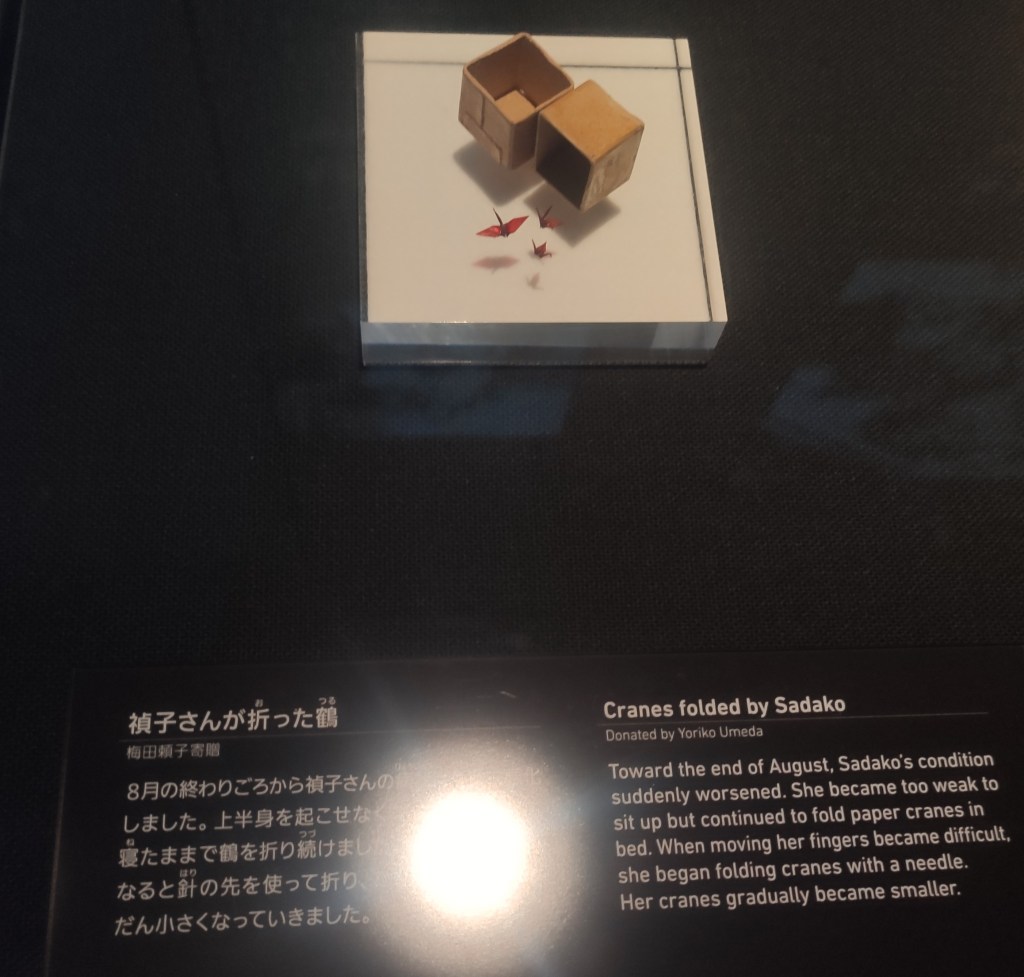
Whilst in hospital, Sadako set herself a goal of making a thousand paper cranes, which was thought to give the folder a wish, or to make a sick person well. By the time she died, she had folded more than 1000 cranes, from various paper such as from paper from medical wrapping paper, from get well gifts and from paper her friend brought for her. When she died, her classmates were moved to form a club which turned into a national movement to fund the monument to all child victims of the atomic bomb.
It is painful to stand and consider what these children went through, going through war, devastation of their city, losing family and friends instantly from the bomb, and then going on to suffer and die tragically from radiation exposure. It’s a lot of food for thought as you read the inscription ‘This is our cry, this is our prayer, Peace in the world’.
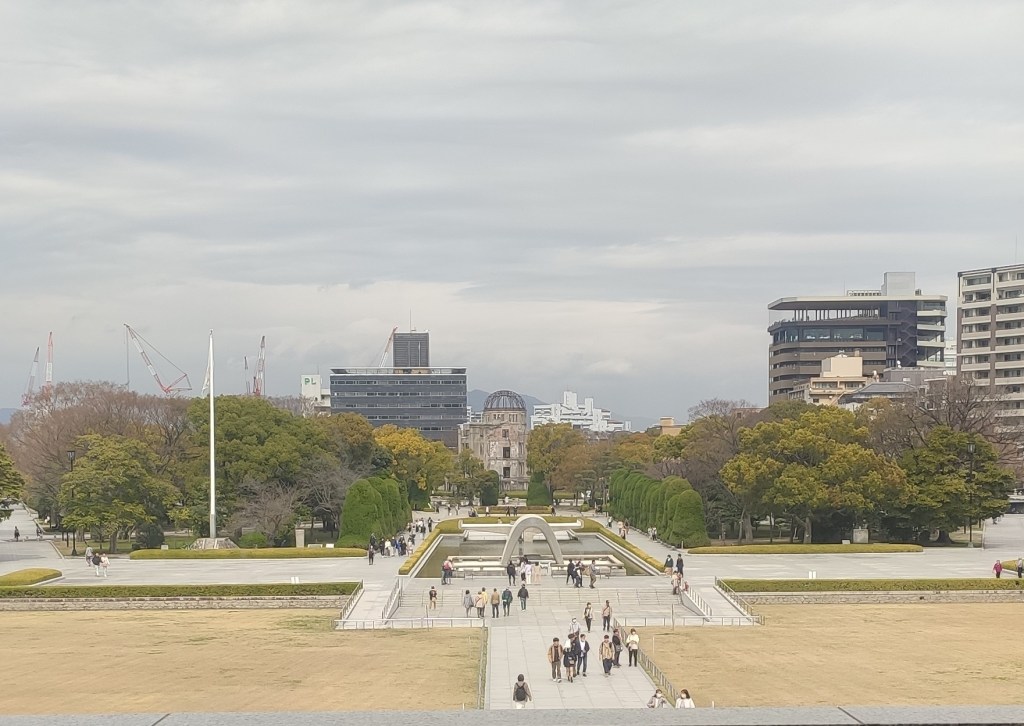
The Memorial Cenotaph in the middle of the park, holds the names of all of the people known to have been killed by the bomb. The A Bomb Dome is framed in the saddle shaped structure – representing a shelter for the souls lost – and the Peace Flame is highlighted in the middle of the view. The Peace Flame was lit in 1964 and will remain so until all nuclear bombs are destroyed.
Hiroshima Peace Memorial Museum, (Adults ¥ 200; ¥100 High School Students; Free for younger), was opened in 1955 to commemorate the tens of thousands of victims and educate younger generations. It is an extensive collection of information, personal belongings and first hand accounts of victims. There is a lot to see and contemplate in here and it would be wise to leave yourself at least 2 – 3 hours to take it in.
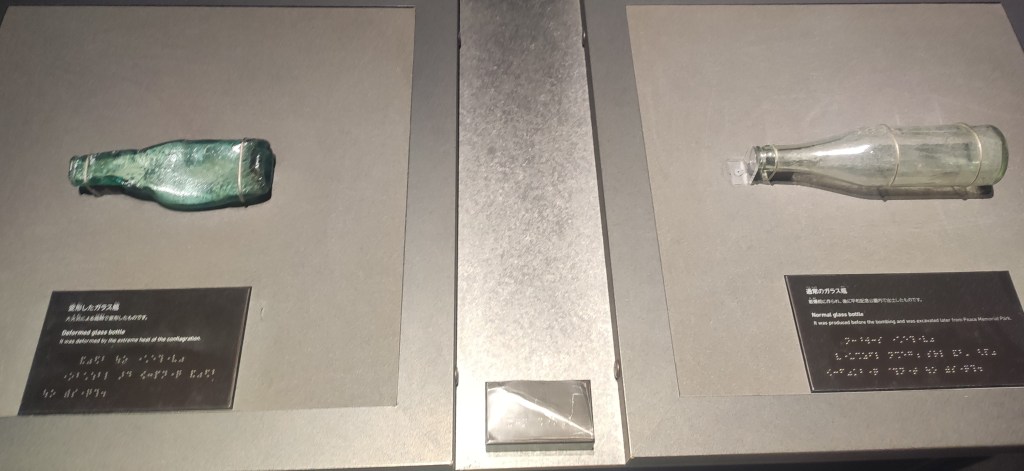
On the entrance of the building a sign reads in multiple languages ‘A single atomic bomb indiscriminately killed tens of thousands of people, profoundly disrupting and altering the lives of survivors. Through belongings left by the victims, A-bombed artifacts, testimonies of A-bomb survivors and related materials, the Hiroshima Peace Memorial Museum conveys to the world the horrors and the inhumane nature of nuclear weapons and spreads the message of ‘’No More Hiroshimas’’.
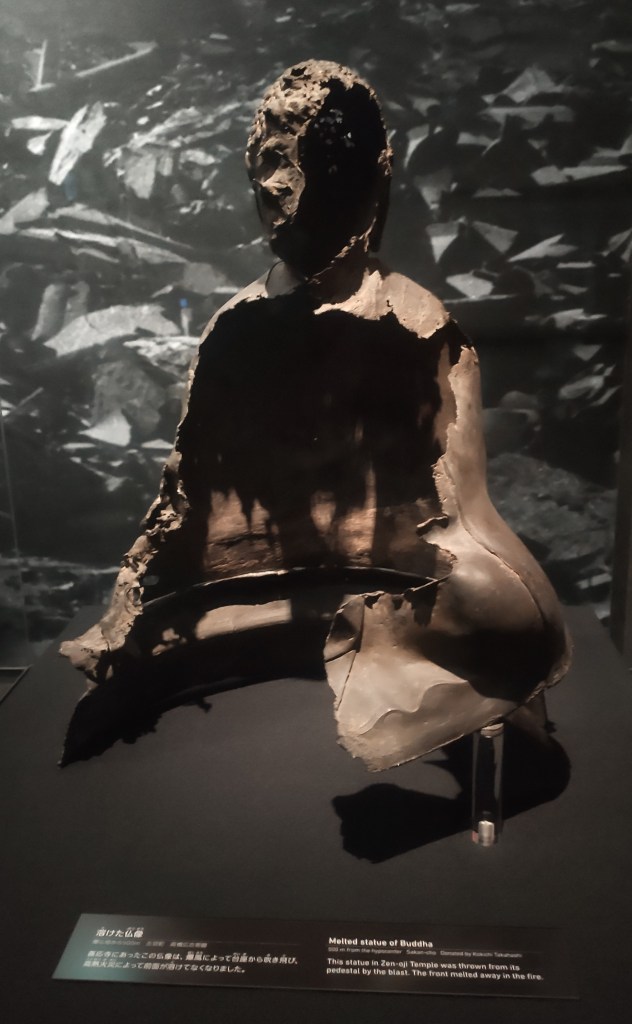
The extensive museum is laid out in an organised way, across four floors, with different sections and it is easy to follow the layout and way around. There are personal stories to read, clothing from victims from the time of the bomb, photographs showing the immediate aftermath and paintings from victims trying to make sense of what they witnessed. One room also tells the story of Sadako and has encase some of her tiniest cranes. After reading about her personality and all about her short, tragic life, it is very moving to see these tender creations. On the ground floor there is also a temporary exhibition space, which at the time of our visit showed images documenting before the bomb, the devastation of the bomb and the recovery, of two neighbourhoods that were directly beneath the hypocentre of the explosion.
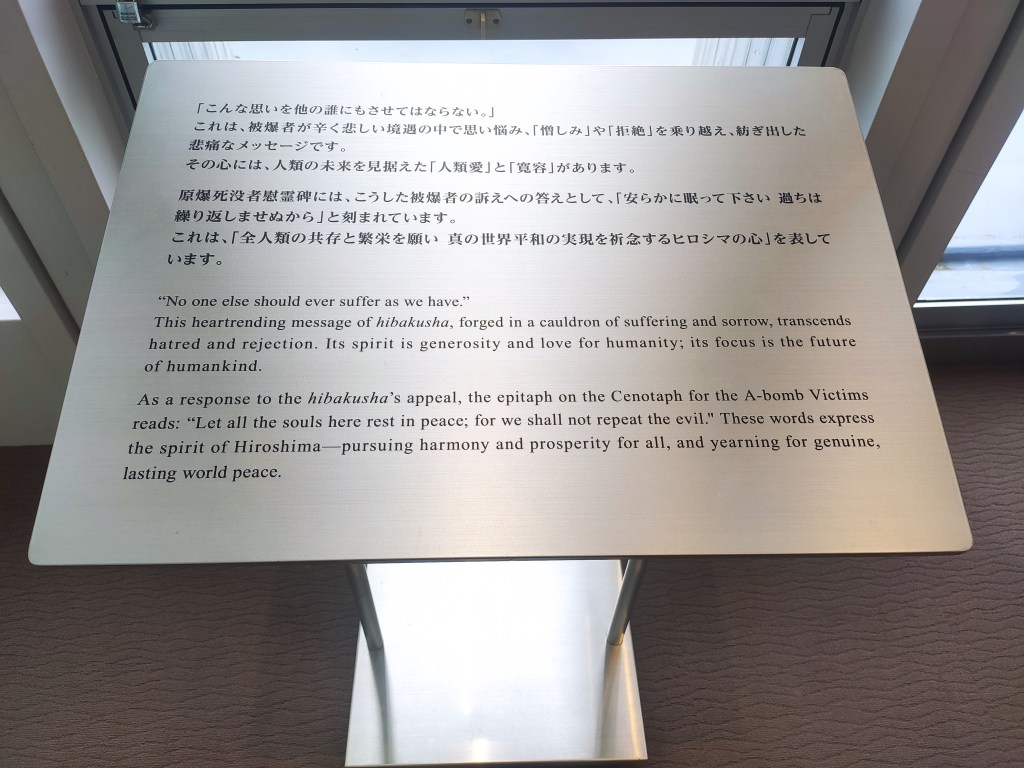
This is incredibly important global history, it is moving, humbling, and hard to take in at times. It is ultimately inspiring and a place of activism, highlighting the importance of the continuance of nuclear disarmament. I would urge everyone to visit if you find yourself anywhere near Hiroshima.
Follow The Greedy Herbivore on Instagram and Facebook to keep up with my latest blog posts, reviews and ramblings, or follow through WordPress to receive notifications of new posts direct to your inbox.
 The Greedy Herbivore