
19th – 20th March 2023
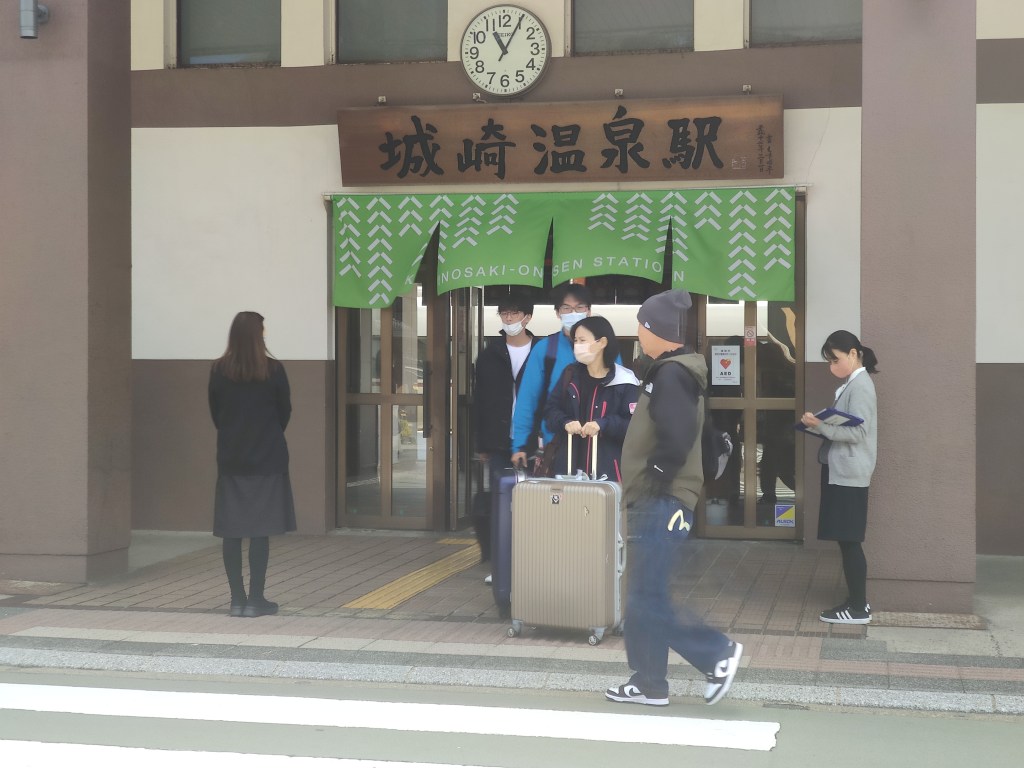
From Shin-Osaka we got the JR West Konotori limited express train north up to Kinosaki-Onsen, which was included in the JR Pass.
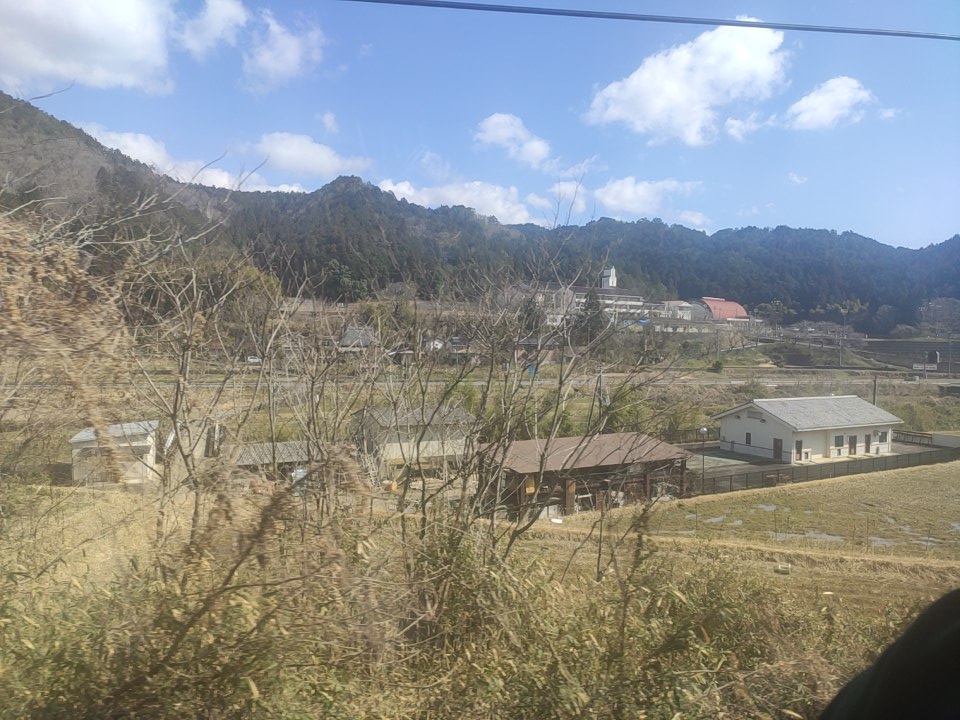
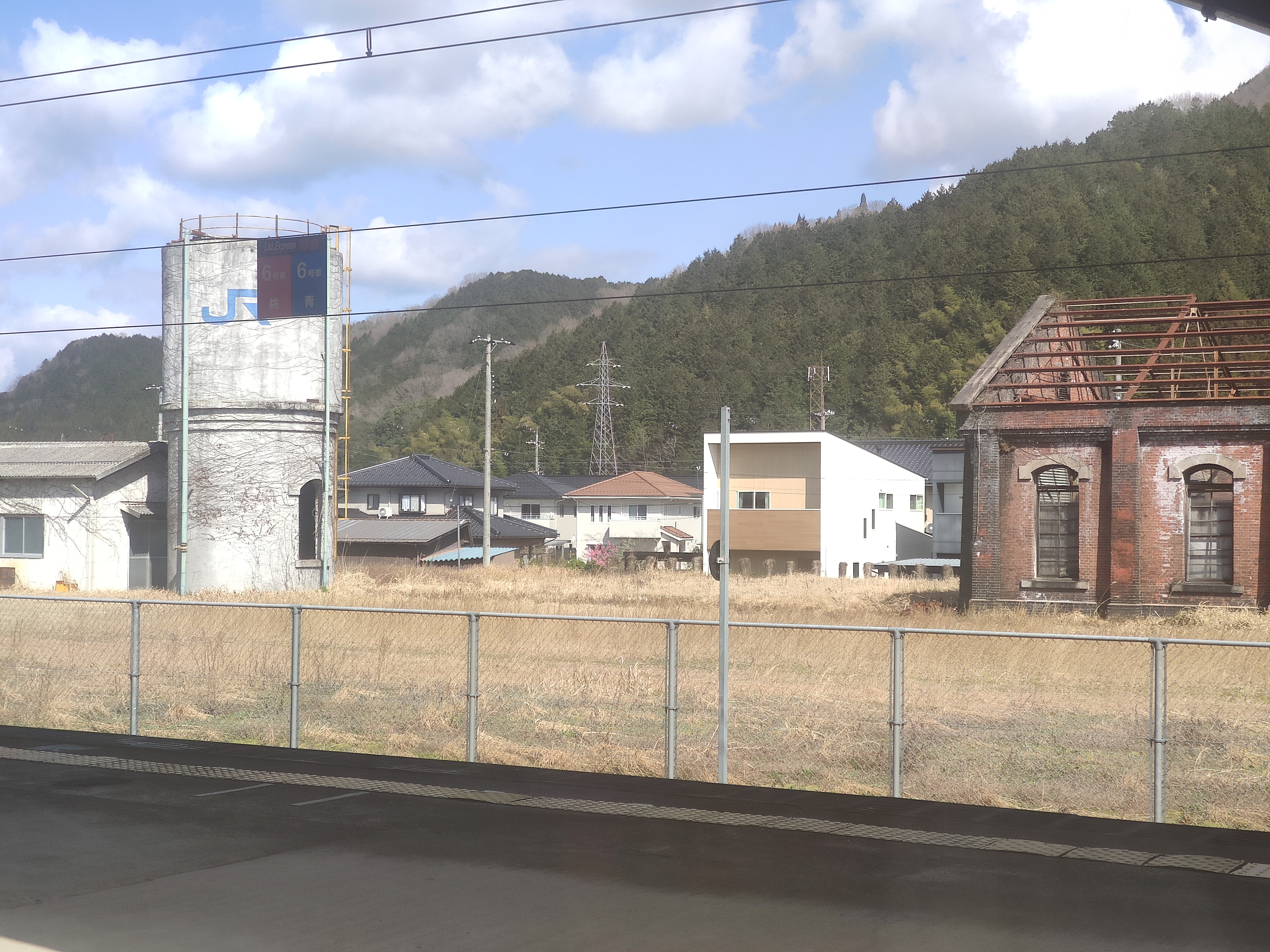
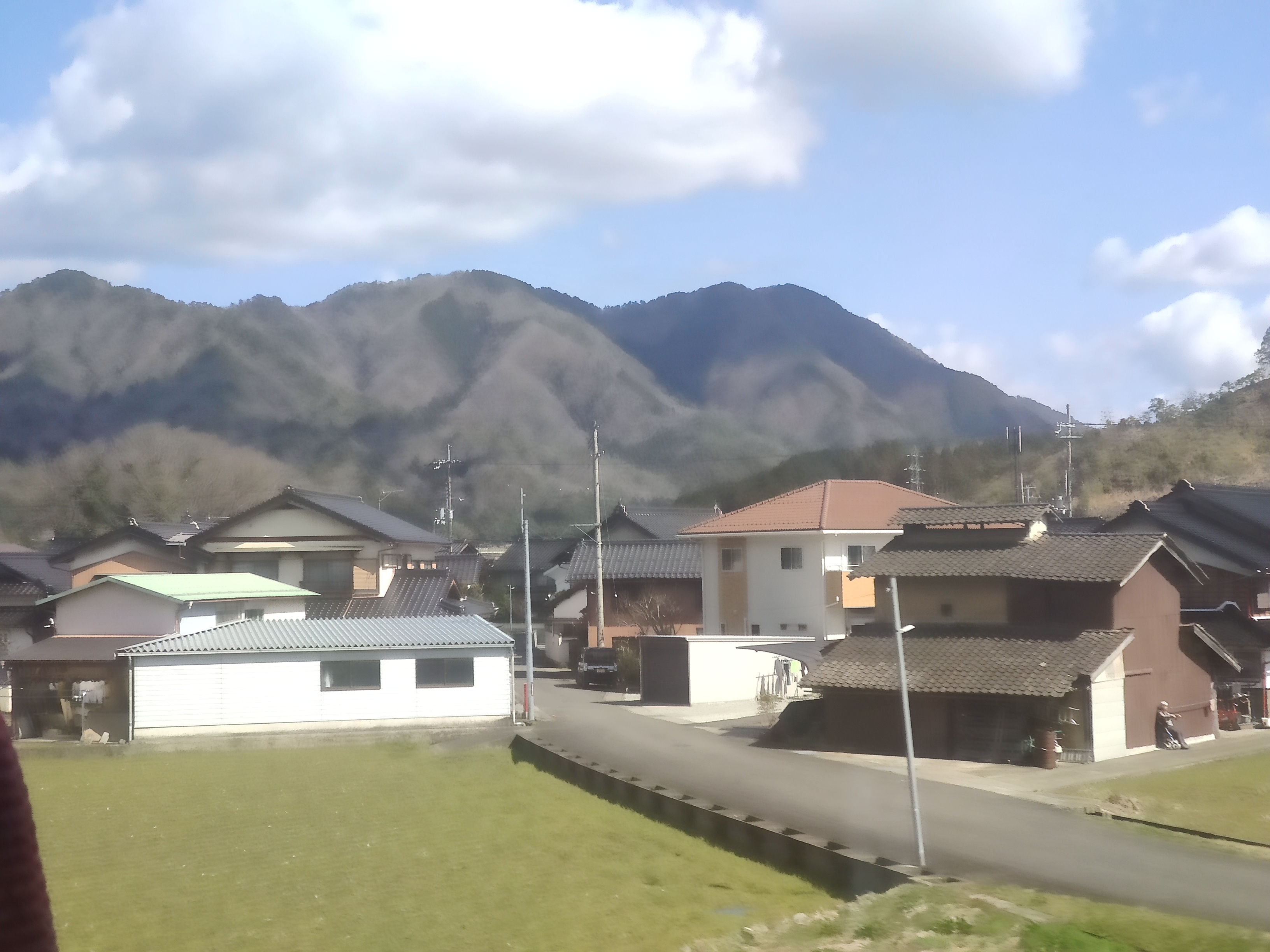
The train took just under 2 hours, departing Osaka at 08:12 and arriving in Kinosaki-Onsen at 10:58. The transition from mega busy metropolis to Osaka to slow moving, peaceful Kinosaki was wonderful.
Kinsui Annex
Kinosaki-cho Yushima 759, Toyooka, 669-6101, Japan
城崎町湯島759, 豊岡市

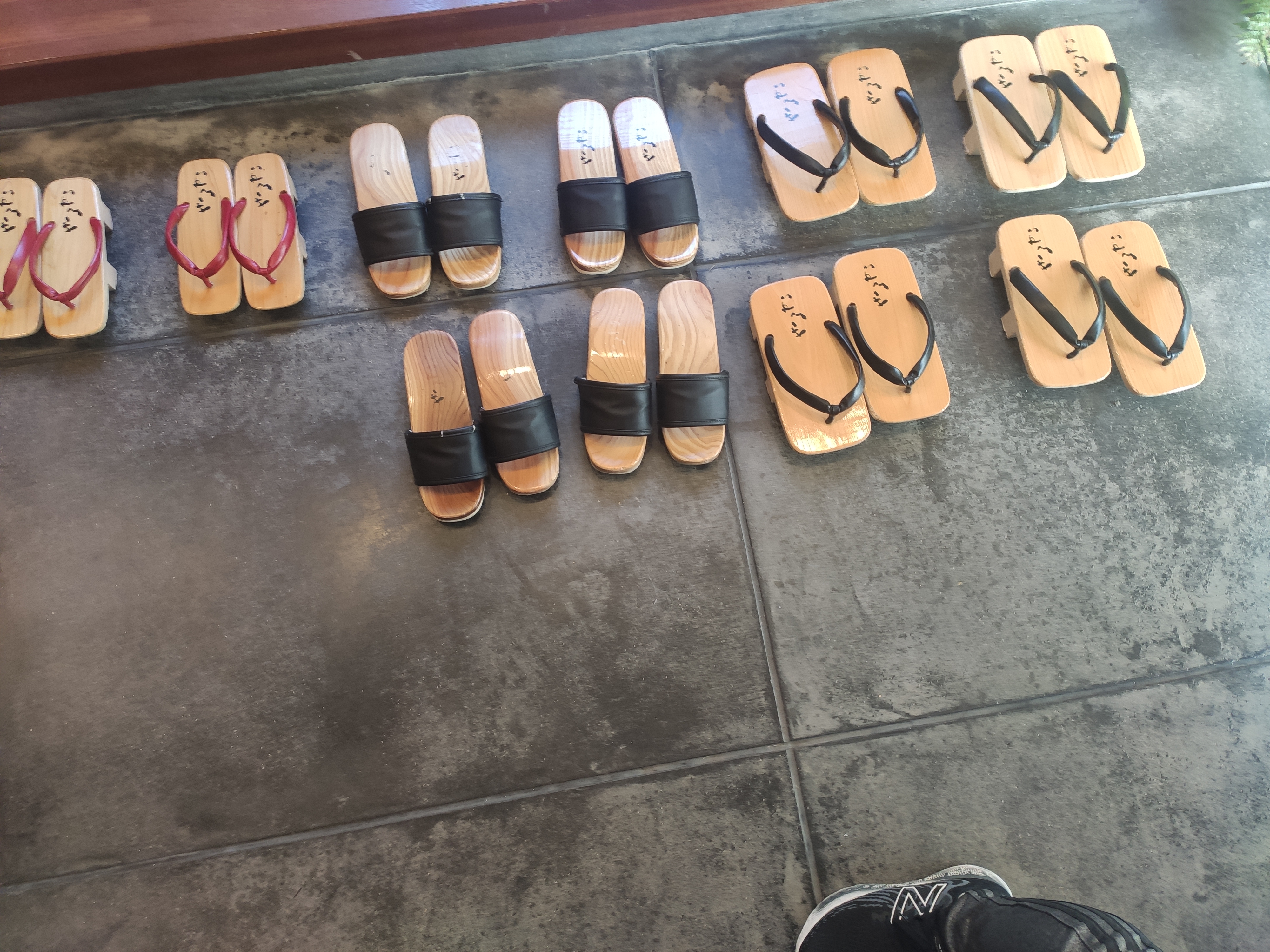
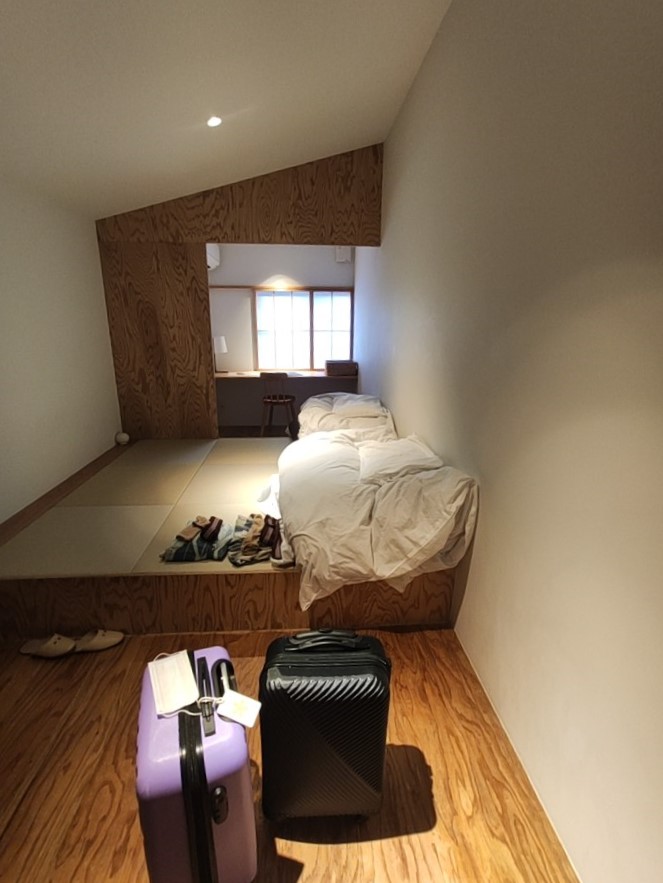
Approx. €88 a night for Economy Japanese Style Room
We stayed in Kinsui Annex, which is a lovely tradition ryokan, just off the main street of Kinosaki-cho. The economy room was comfortable with a raise platform for futons, a desk and a private bathroom. As with most accommodation in Kinosaki onsen town, we were provided with yukata and geta for going to the onsens. There was an option to pay a little extra to get more colourful and fancier looking yukata, we were happy in our free ones.
The Onsen

This tiny historic onsen town has seven public onsen, known as the ‘7 Mystic Onsen’. They had different characteristics, architecture and different temperatures. If you’re staying overnight in a hotel or ryokan, you get a free pass to go into the onsen, otherwise there is a pass, which I have read is ¥1300.

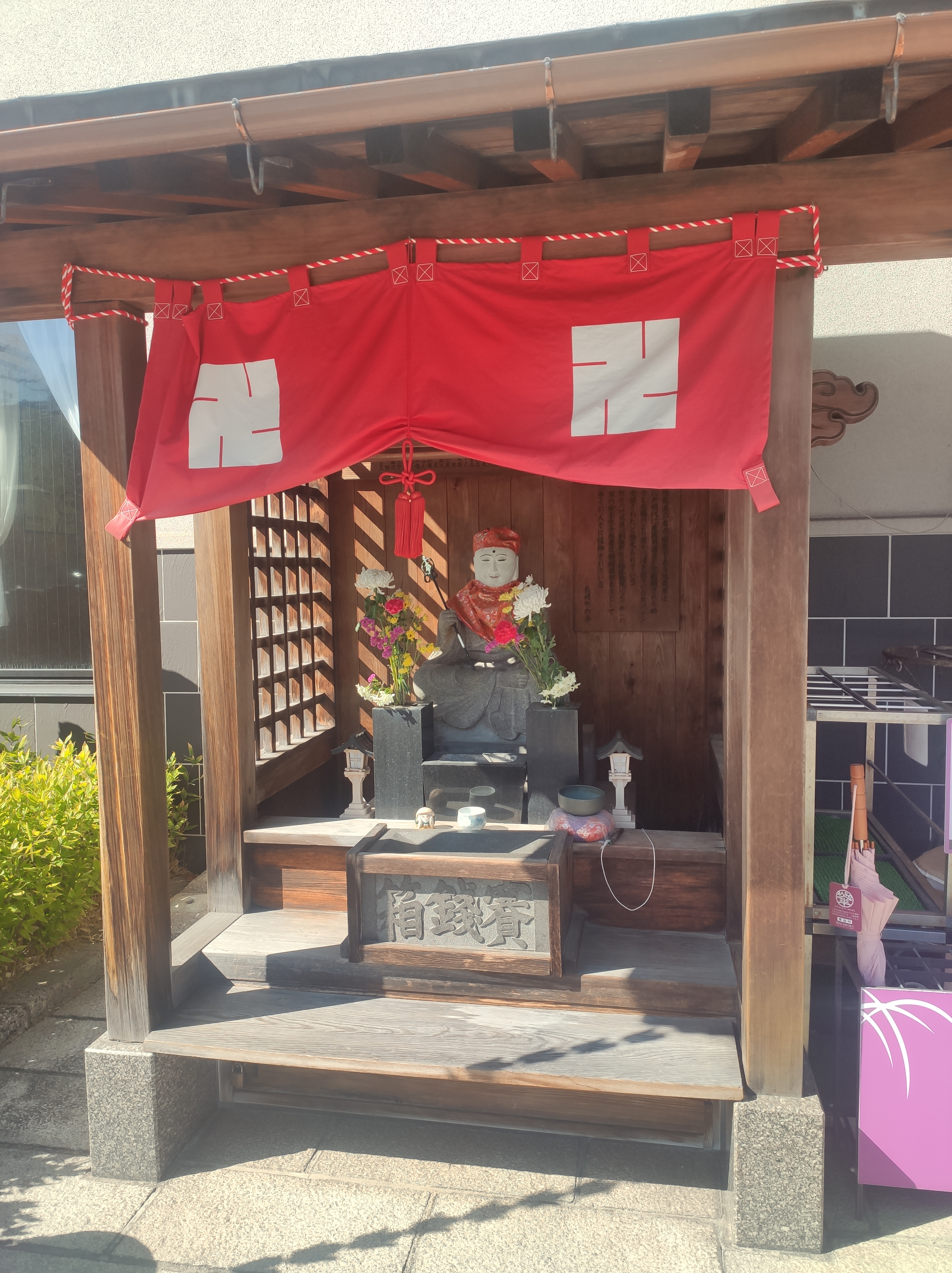
Jizo-yu, Kinosakionsen
The naturally hot spring waters were discovered in the 8th Century and immediately recognised to be healing. The town has been known since then and visitors have come from far and wide to experience the waters. It is traditional to visit the Onsen-ji Temple, to ask for permission from the temple guardian before entering the onsen. We missed this out because we were rushed but I asked him for in my head, if I went back again, I’d make a visit.
A map for seeing where the onsen and other historic sites are and for collecting stamps can be obtained at the visitor centre opposite the train station. The map also includes information for attractions such as the museums, shrines, temples and the ropeway.
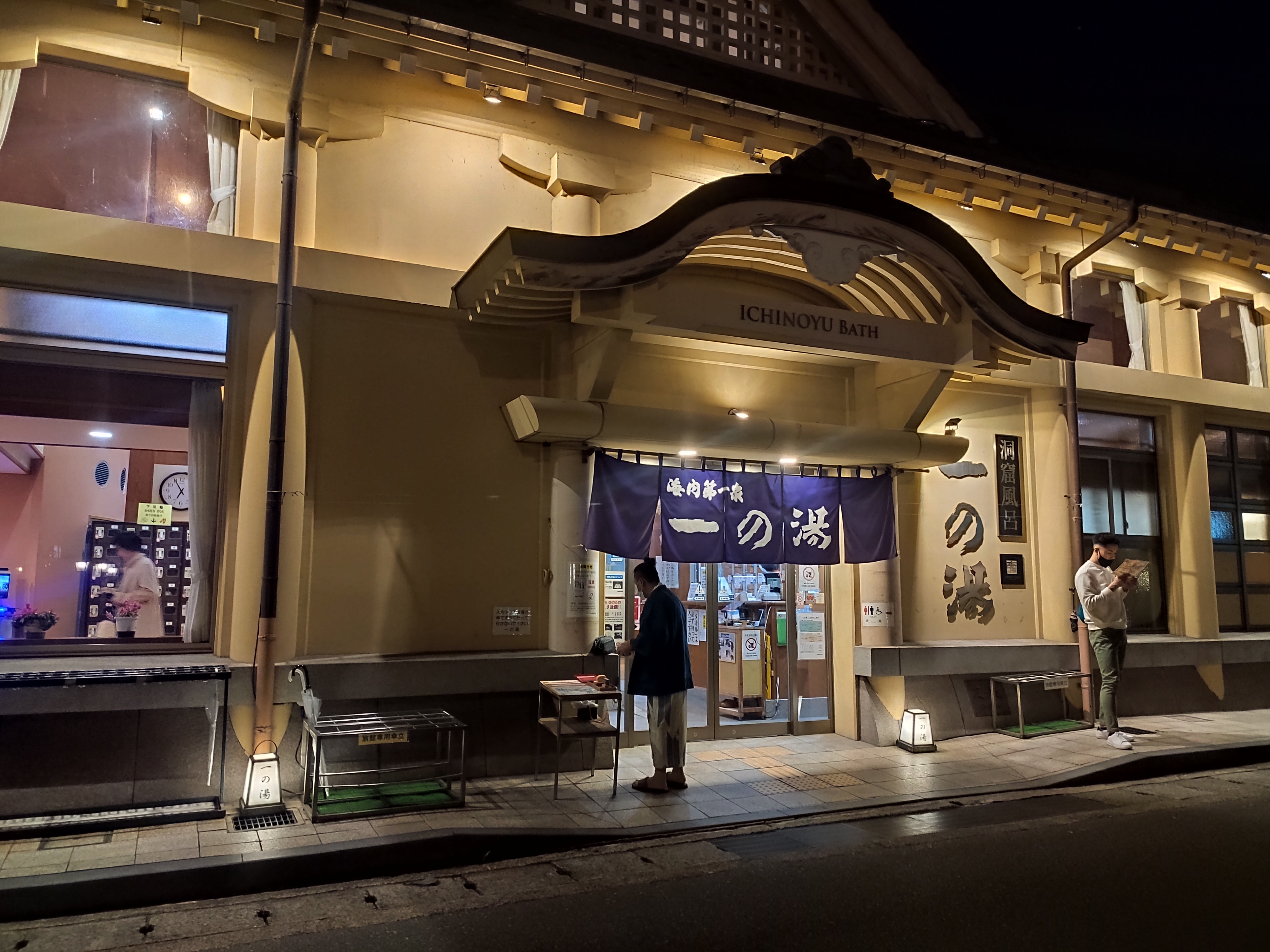
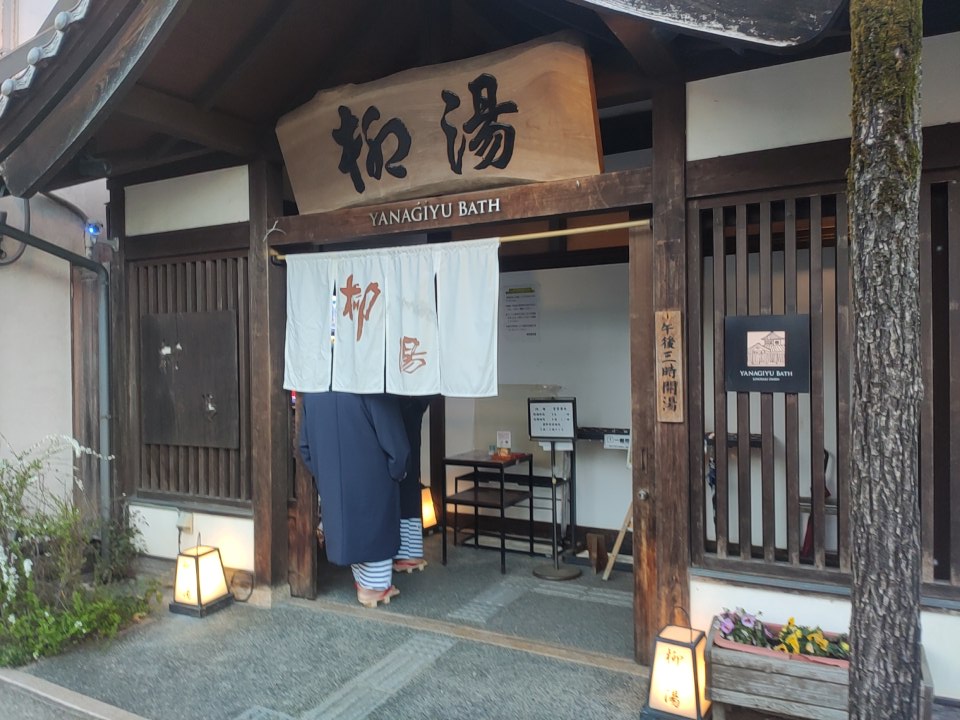
Ichinoyu & Yanagiyu, Kinosakionsen
As we were planning our itinerary for Japan, we were looking into visiting an onsen, the tricky part for us, is that we are both tattooed, and many, if not most, of the public onsen do not allow tattoos. My partner came across this town and the wonderful information that all the public onsen here are tattoo friendly. The onsen are segregated to male and female. This is an unclothed activity, I felt a little unsure in my first onsen, just to make sure I wasn’t making any faux pas, but after a few moments, quickly got used to it and relaxed.
We started our onsen crawl from the station and made our way through the town. Our first was Satono-yu, which as well as an indoor portion, had the most beautiful outdoor bath too, the sensation of dipping into the hot spring water and being outside in the slightly nippy March air, was wonderful.
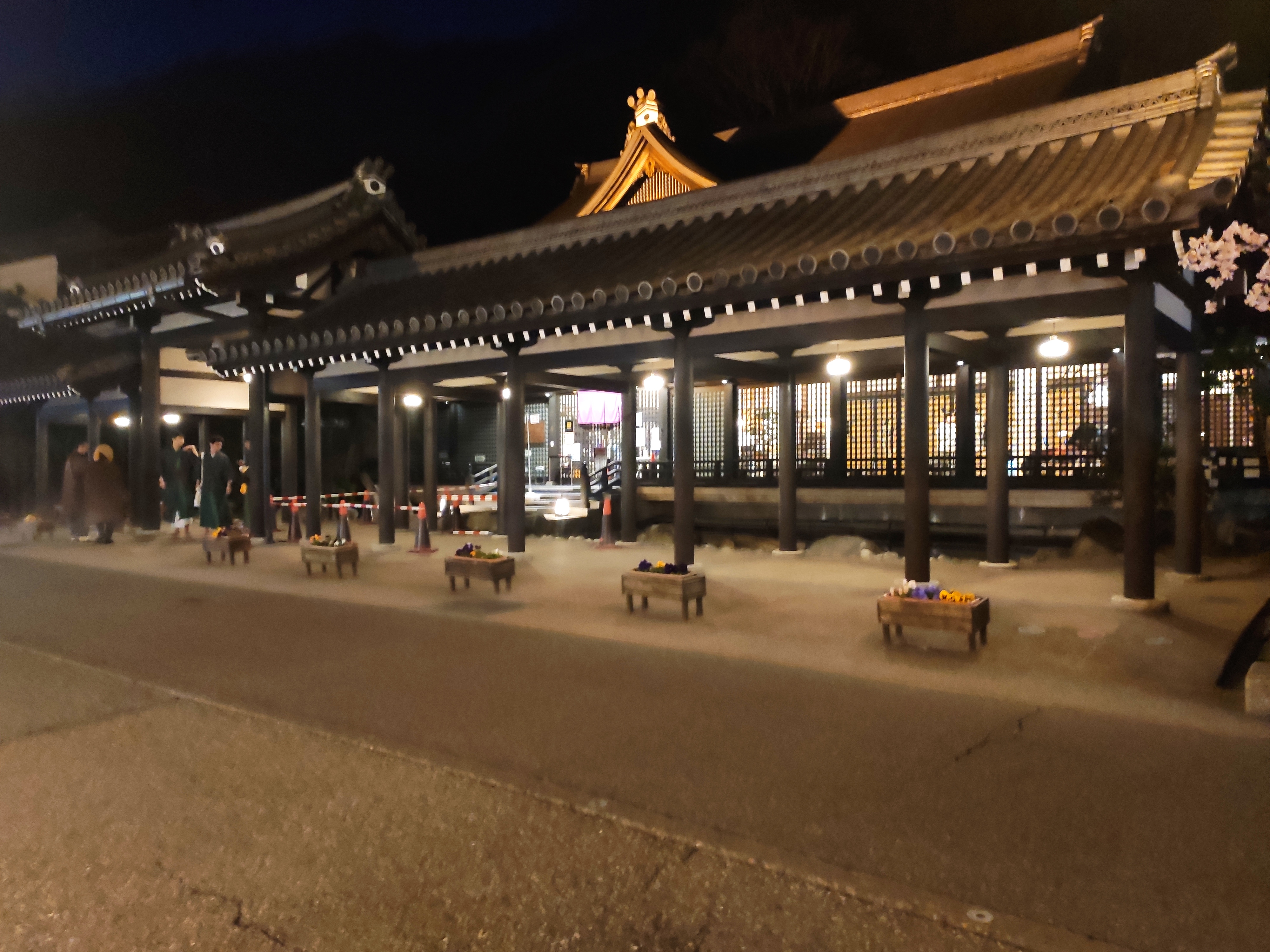
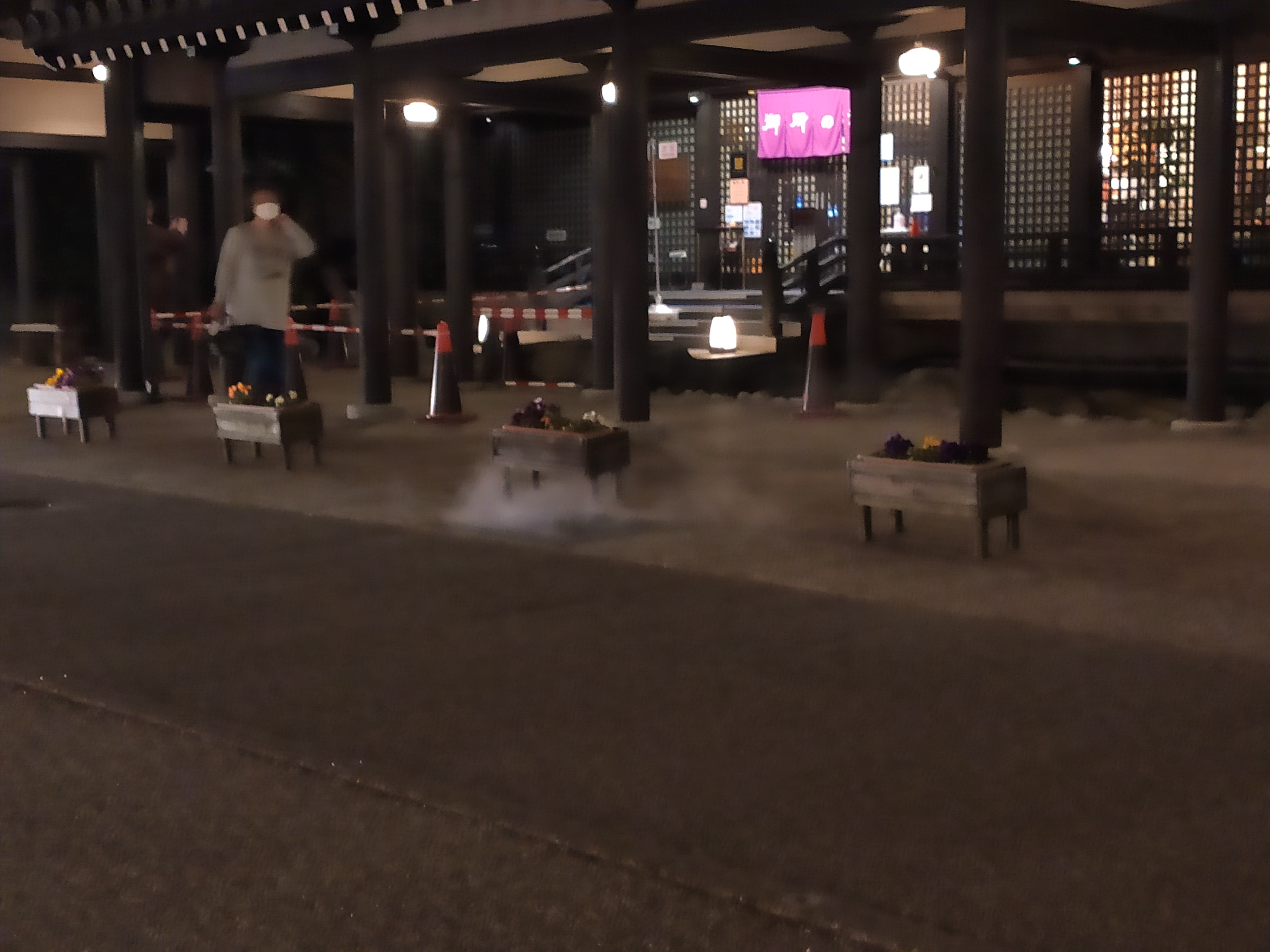
Goshono-yu, Kinosakionsen
Next was Jizoyu, which is a retro style bath house, and has a children’s pool too, which has cool water. Yanagiyu is different again, with a timber clad walls and roof, and is said to ensure fertility and safe childbirth for those who bathe in the waters here. Ichinoyu has an indoor modern bath and one of my favourite parts – also an area made of natural boulders where you can soak up the hot water in those surroundings too.
Goshono-yu has the most striking exterior and was built in the style of Kyoto’s Imperial Palace. It was in the dark of the evening when we got here, and we noticed the magical visual of the steam of the hot water coming up from the grates of the street. Goshon-yu is known as ‘Water of Beauty’ and lives up this inside and out.

Mandara-yu sits across a bridge, with an elaborate stone-built exterior, and a simple interior. Outdoor baths here are two barrel baths!
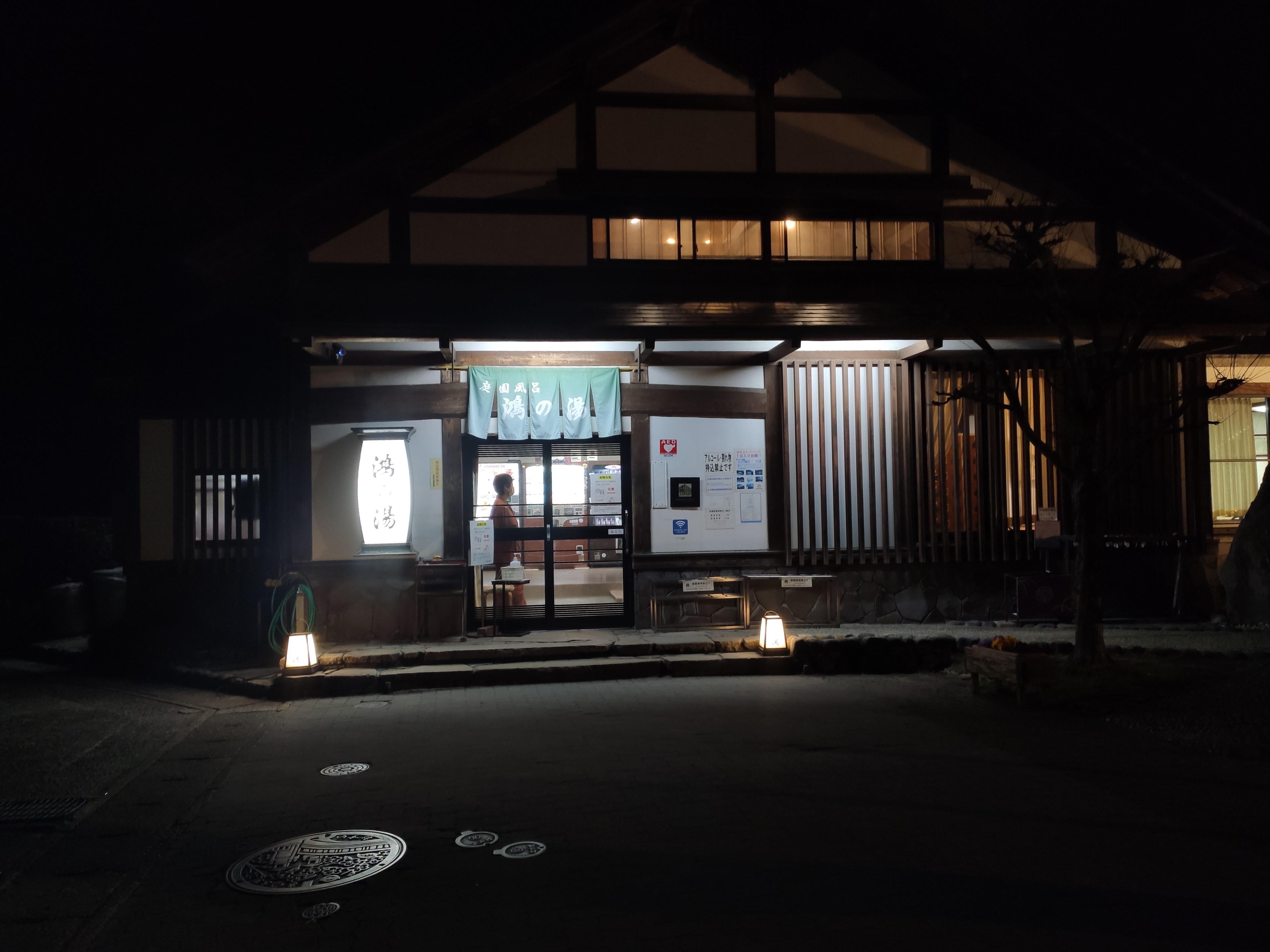
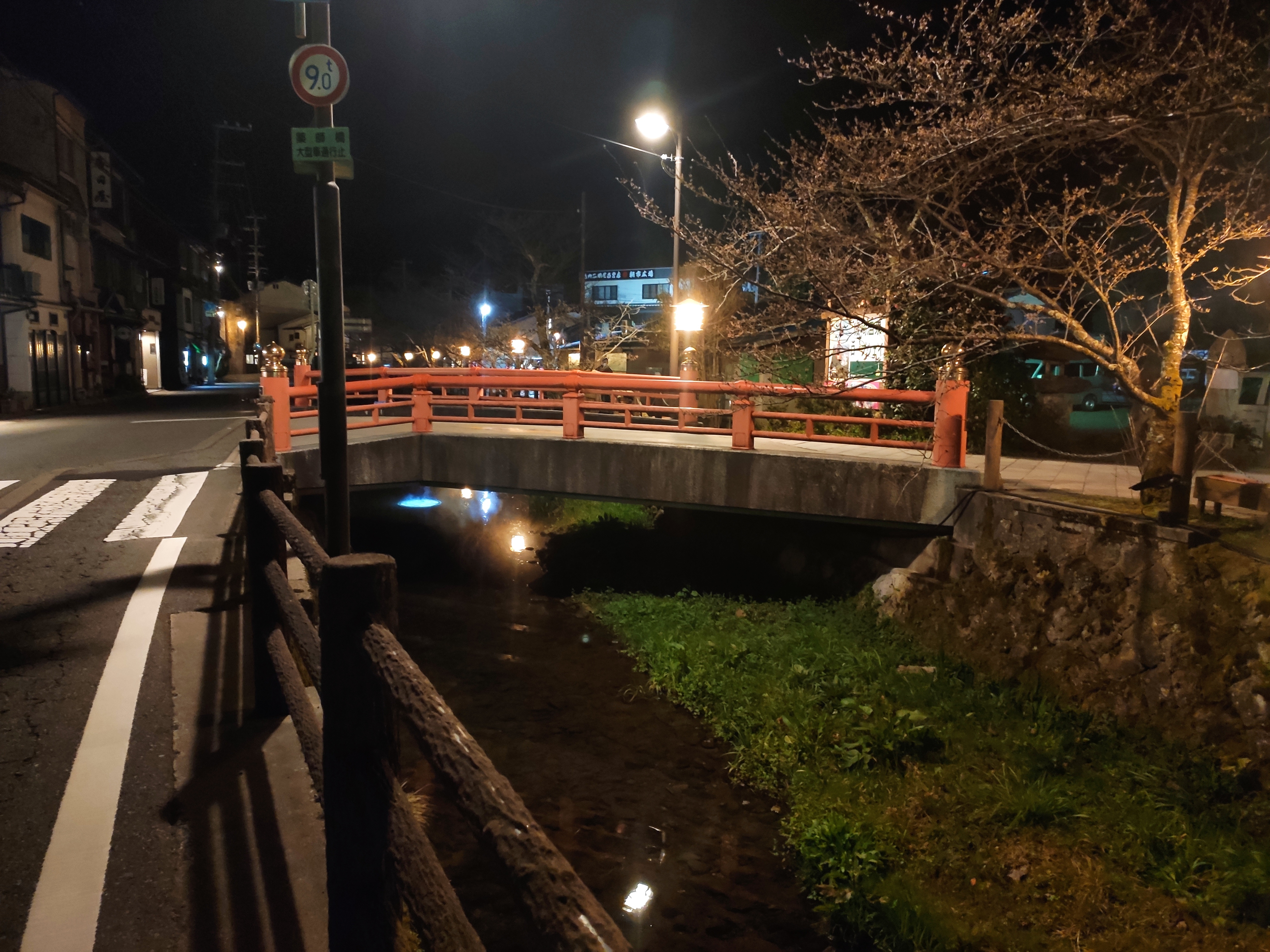
Konoyu, Kinosakionsen
Our final bath house to visit was Kono-yu, the oldest bath house building in Kinosaki. According to Visit Kinosaki Website, the story goes that the waters were discovered here when a wounded Oriental White Stork was spotted here. This onsen had my other favourite outdoor area – a beautiful rocks and greenery with various levels and smaller pools.
Remember when visiting onsen to drink lots of water; if you have long hair, don’t let it touch the water, as this is considered disrespectful; be respectful to all and any customs you come across.
The town

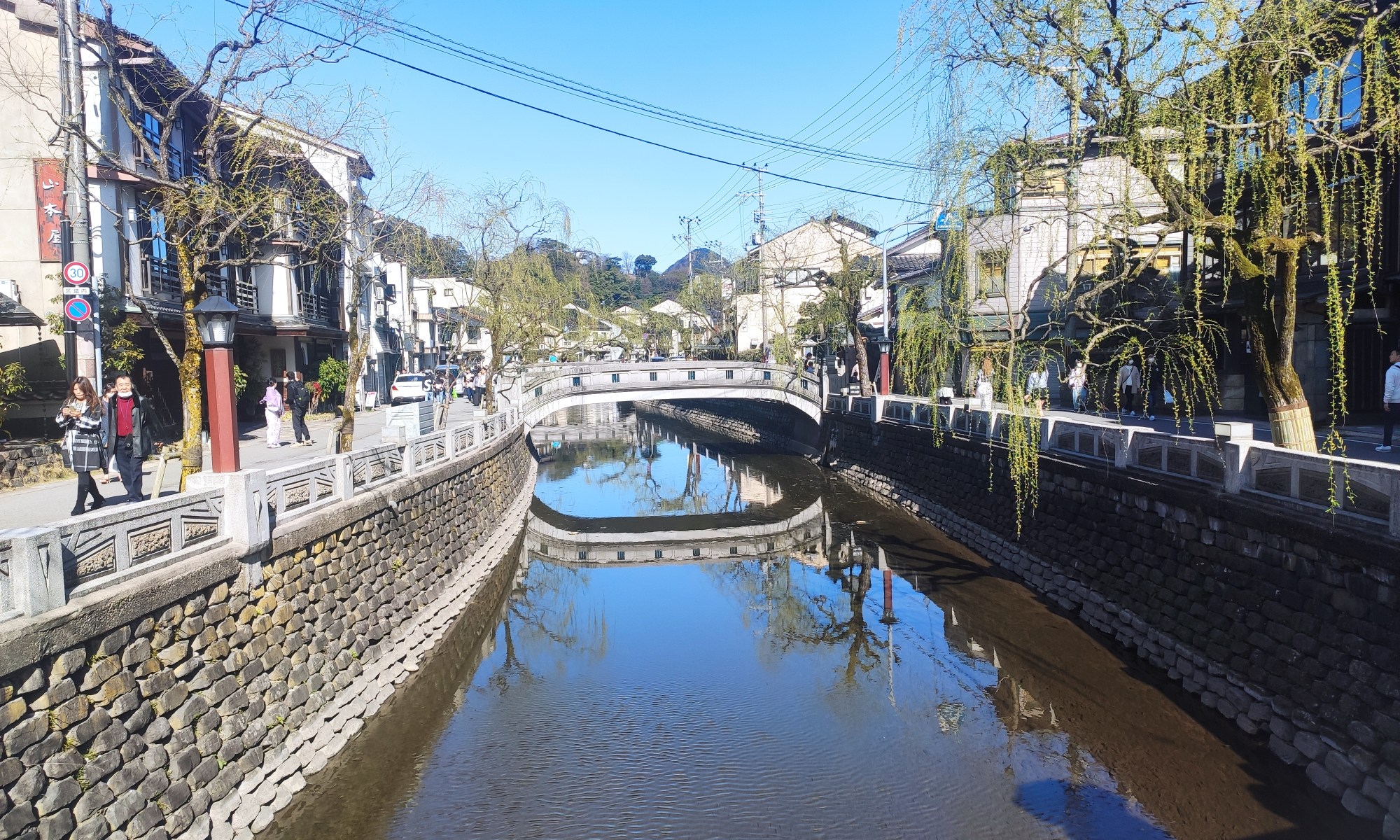
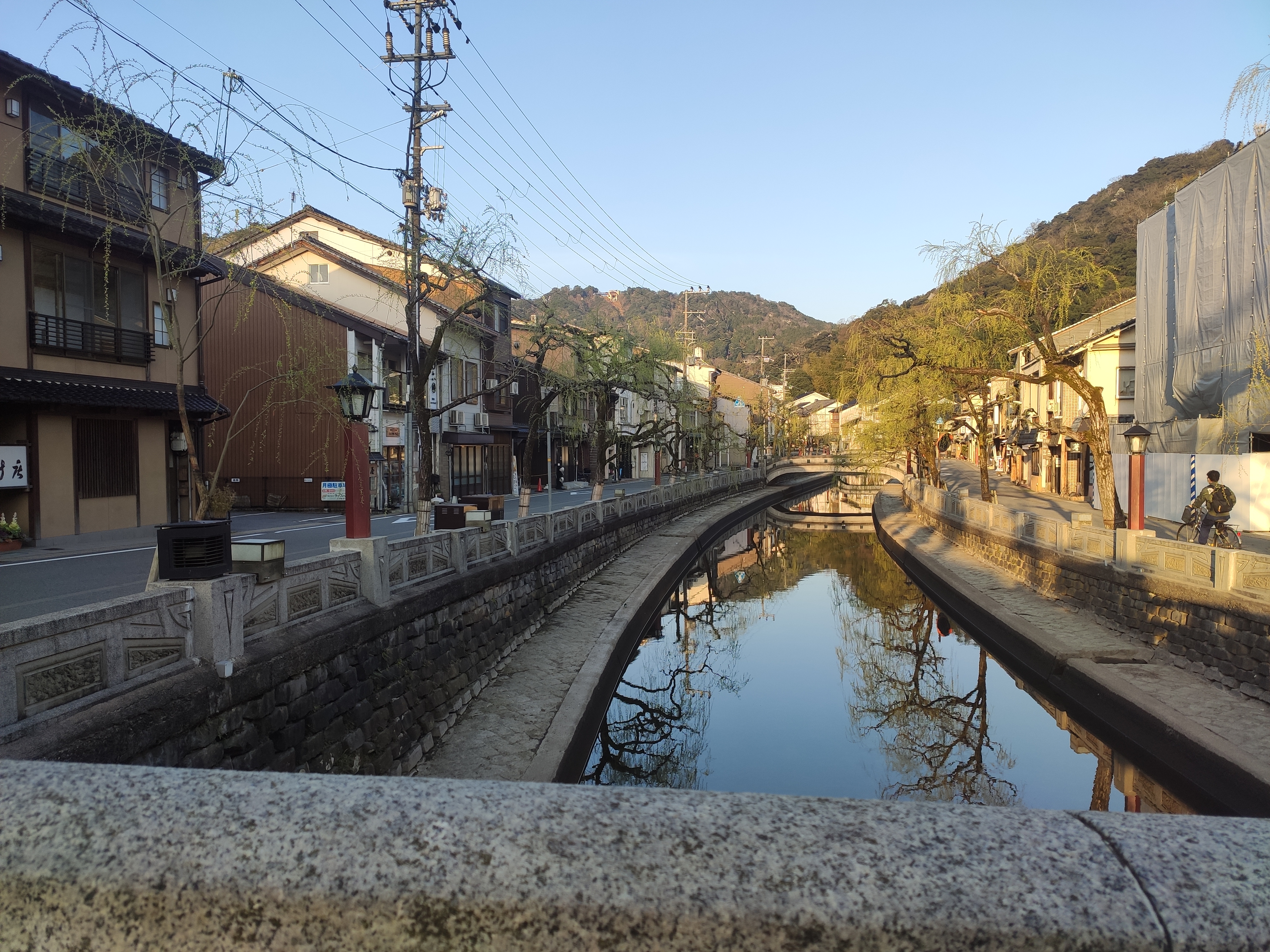
The town is not just its onsen, it is centred around the Otani River, cherry trees and other foliage, with hanging lanterns overhang the waterway. There are small cafes, souvenir shops, museums, and other heritage too. There’s a stork sanctuary nearby, and many festivals are held in Kinosaki and the surrounding area.
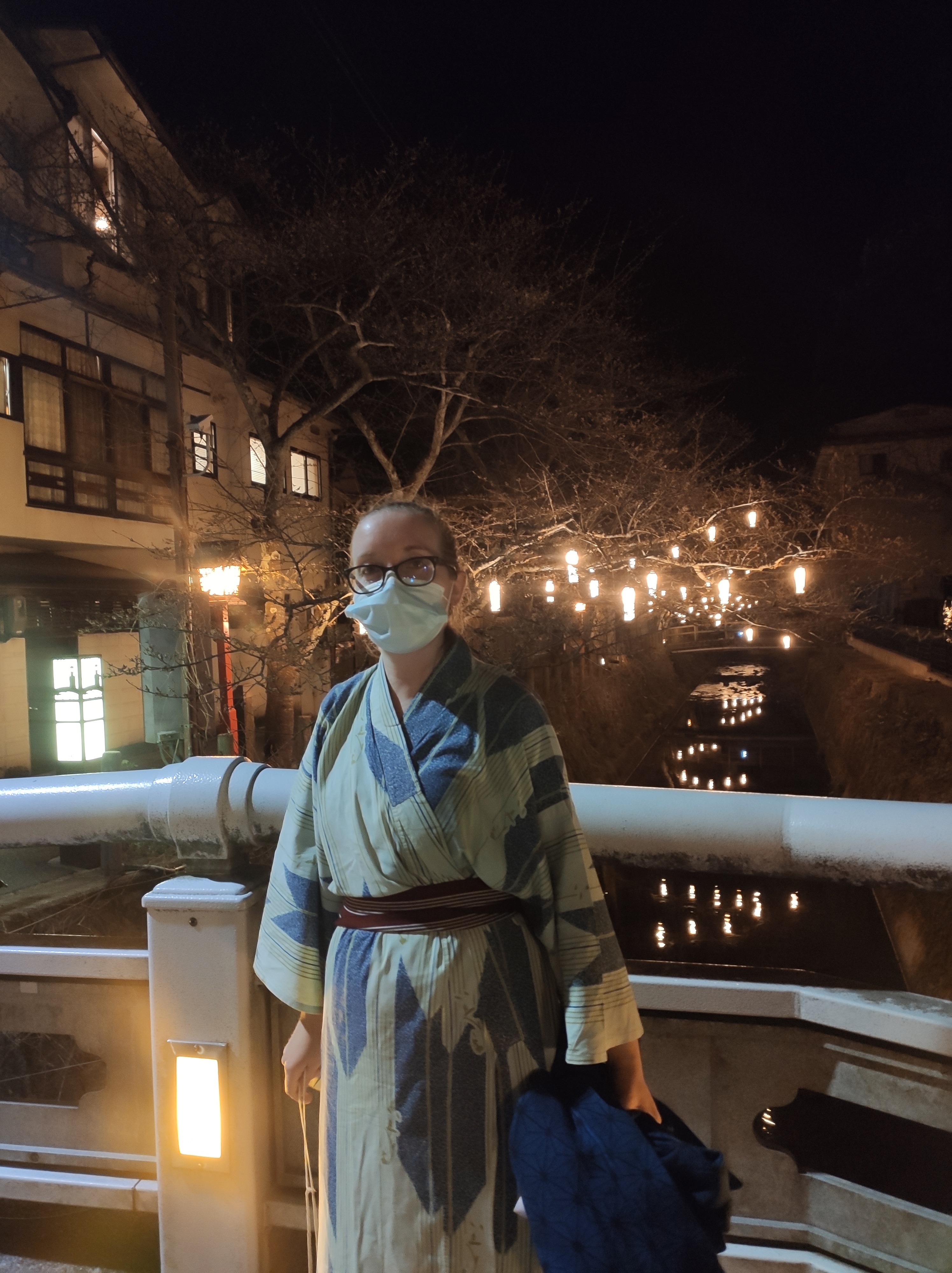
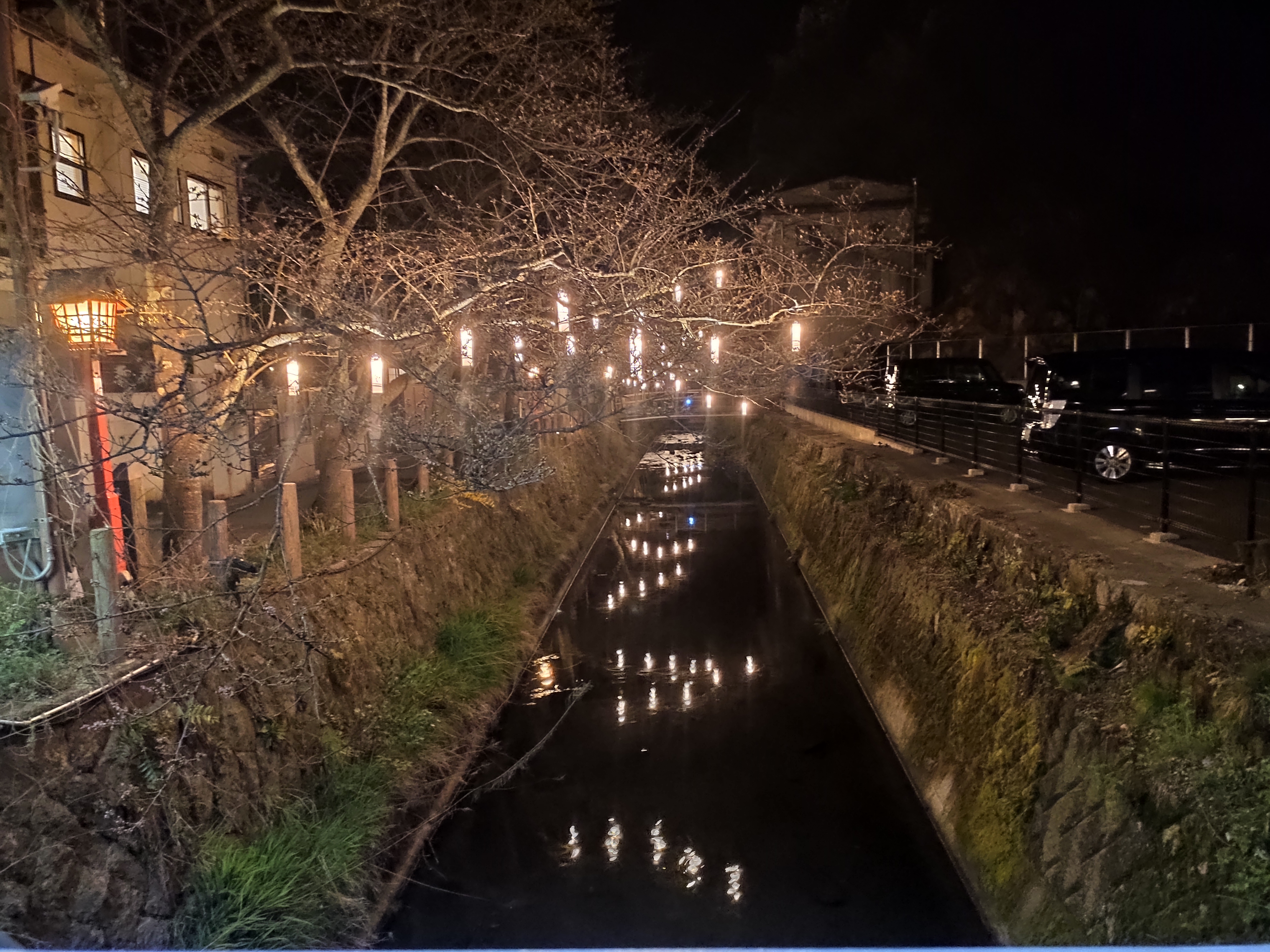
Lanterns lighting up the river at night, and me in a yukata
We didn’t find much vegan friendly grub to eat, if we spoke Japanese better we may have found something. We did pop into Kinosaki Burger and enjoyed a vegan friendly burger – just remember to try and ask for no cheese on the top. There are two Family Marts, so we picked up some bits and pieces there, the one restaurant that I had read had vegan options had closed early.
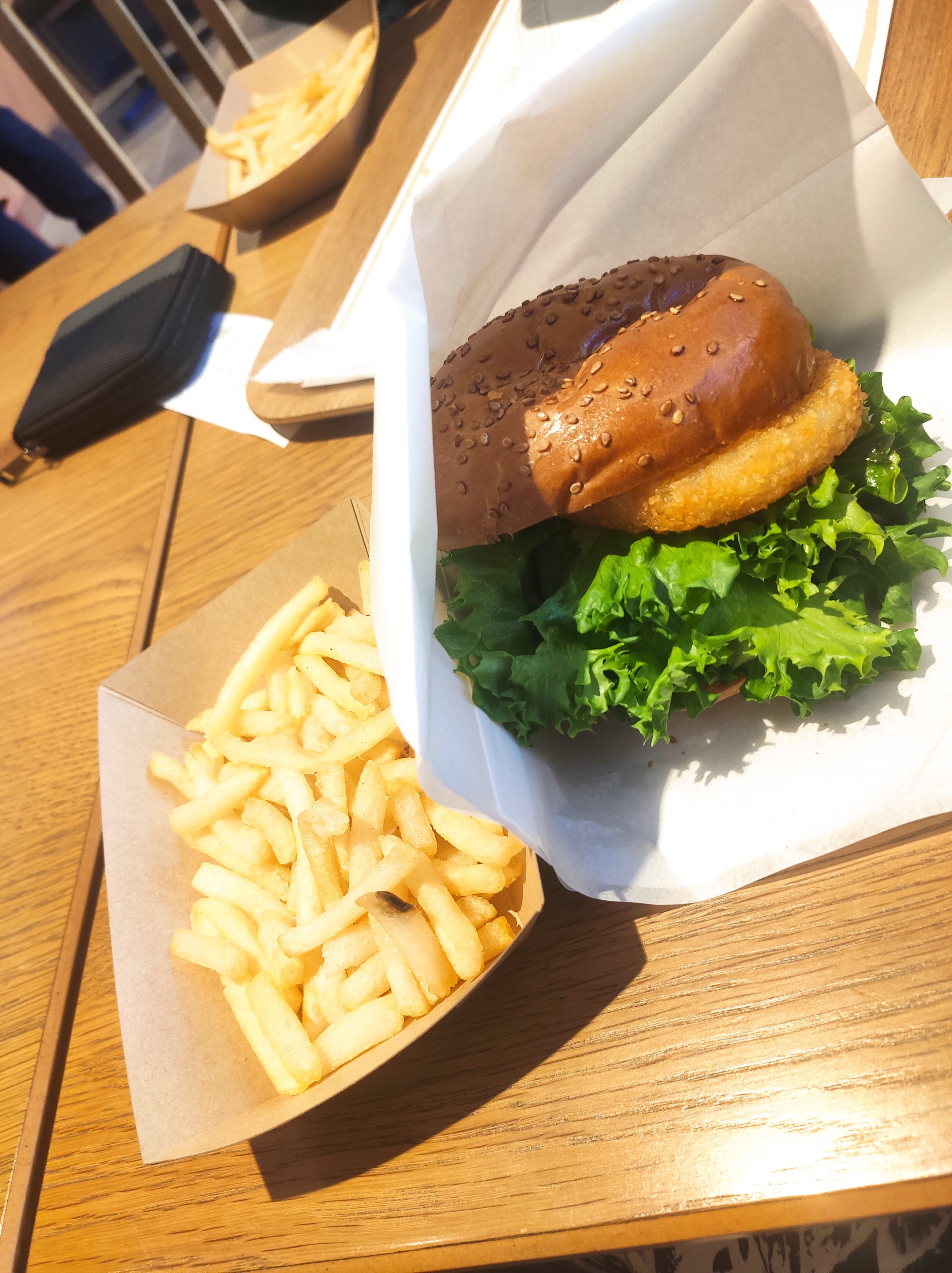
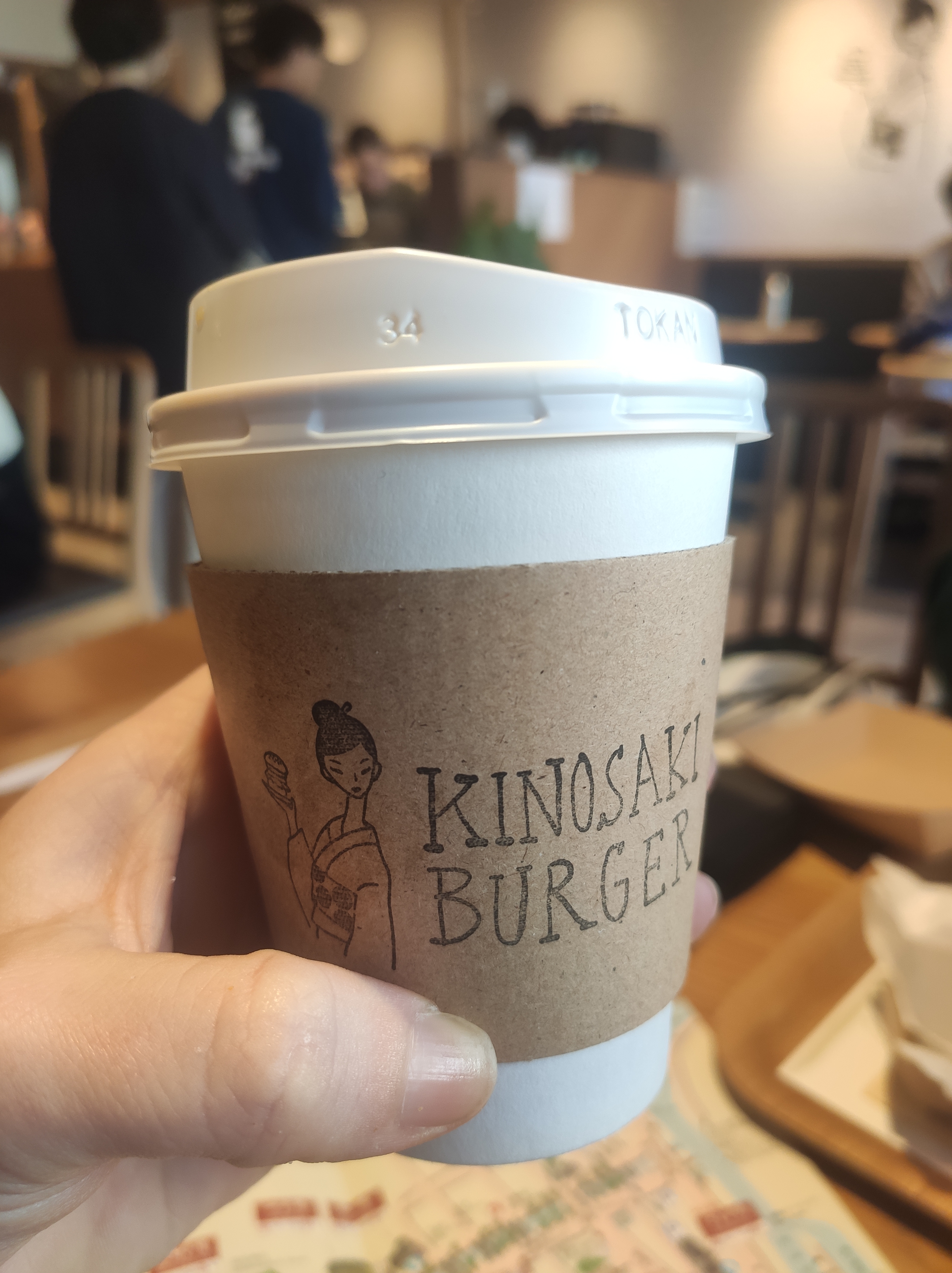
Vegetarian friendly burger, Kinosaki Burger
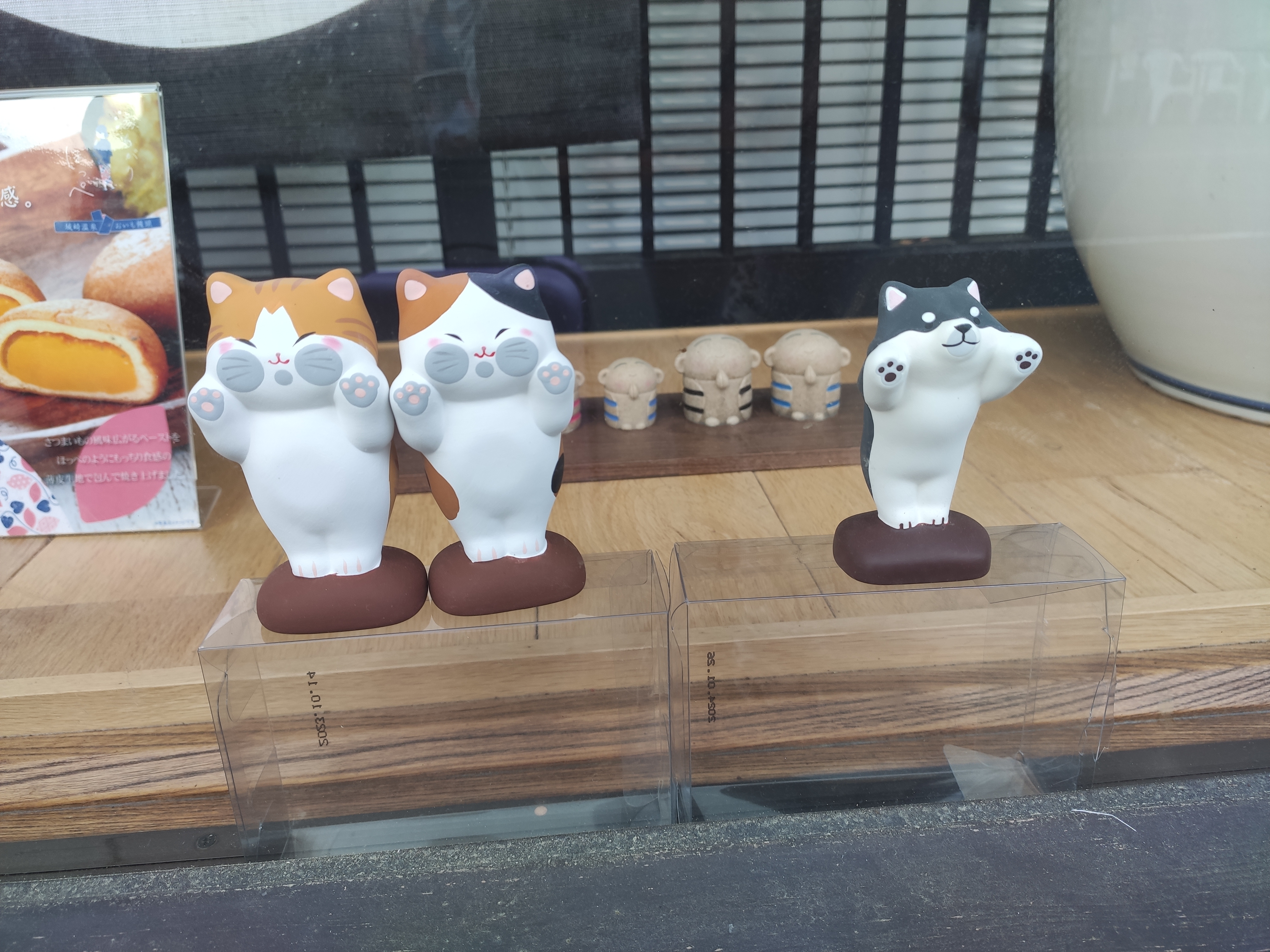
The area has some great mascots, you can look out for them all over the town, in souvenir shops and signs. My favourite was Gen-san, he is the mascot for nearby Toyooka City, made of basalt stone, he dreams to protect the natural world and greets visitors to Genbudo Cave too.
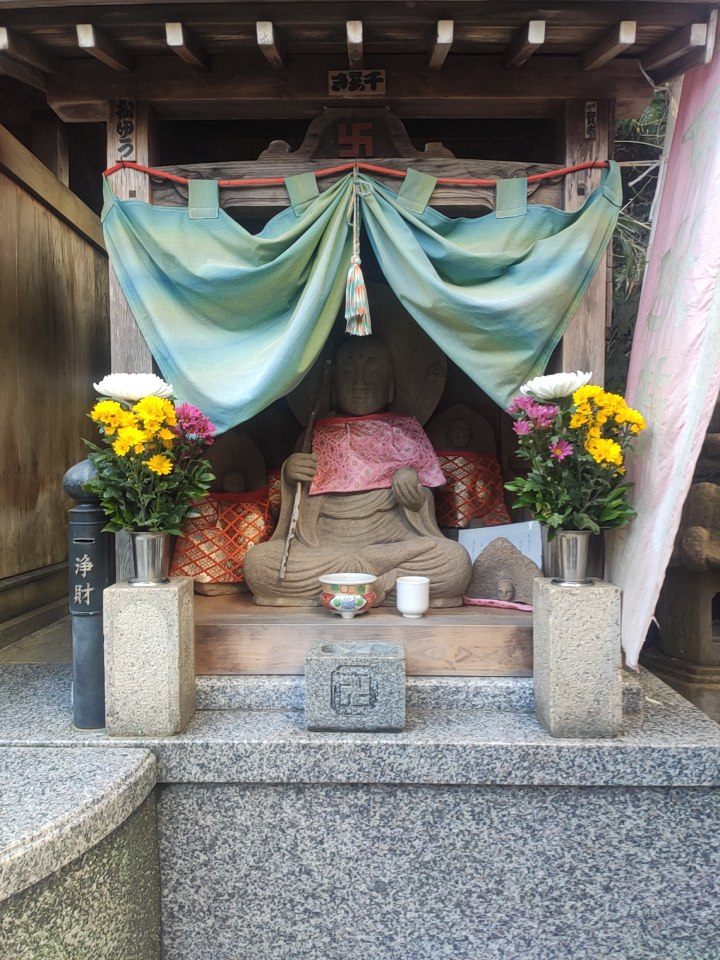
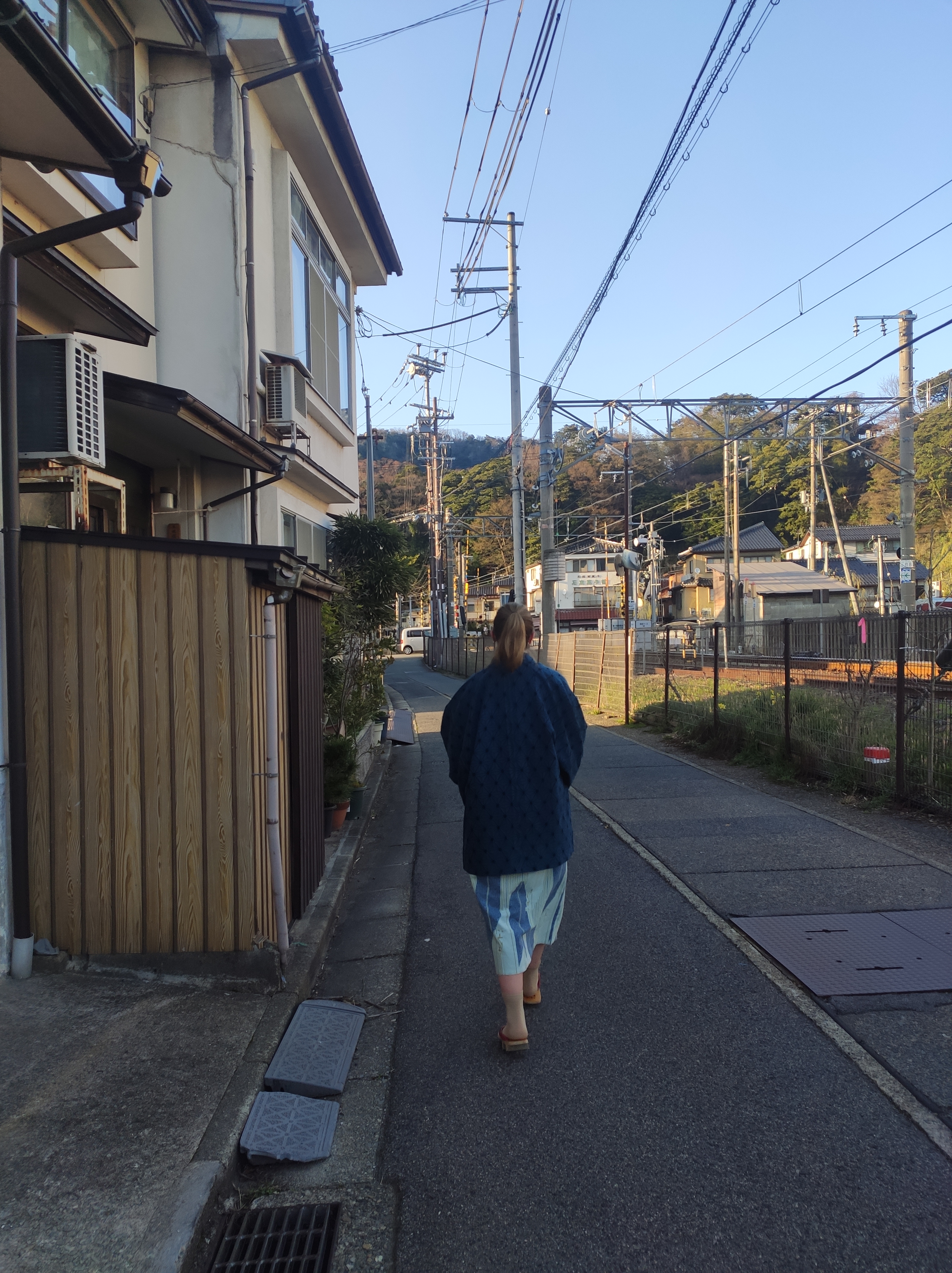
Jizo shrine and strolling the streets in a yukata and geta, Kinosakionsen
I’m so happy this slightly off the normal itinerary town was part of our trip. I would have loved to have spent more time here, but even in the short 24 hours we had, it was incredible to soak up the tranquility and tradition. The clapping of getas at night, the evening stroll along the lantern lit river, and the healing waters of the onsen culminate in the most magical of experiences.
Follow The Greedy Herbivore on Instagram and Facebook to keep up with my latest blog posts, reviews and ramblings, or follow through WordPress to receive notifications of new posts direct to your inbox.
 The Greedy Herbivore